

Audio By Carbonatix
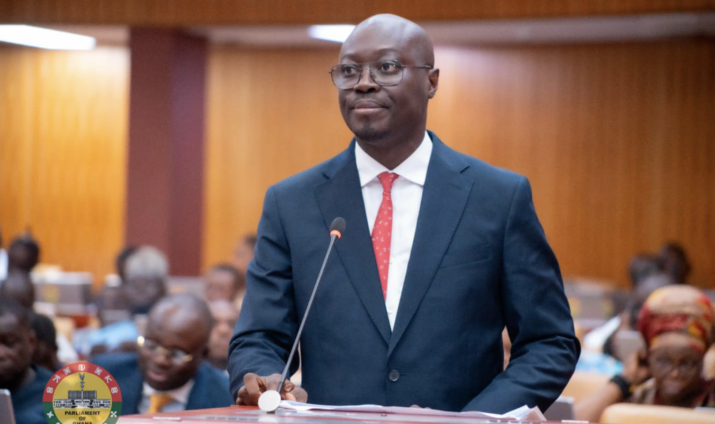
The Minister for Finance, Dr Cassiel Ato Forson, has defended the decision to increase taxes on mining companies in the 2025 Budget Statement, describing the move as a step towards ensuring that these firms contribute their fair share to national development.
He cited the increment of the Growth and Sustainability Levy on mining firms from 1% to 3% as a necessary adjustment, given the significant profits made by companies operating within Ghana’s lucrative mining sector.
According to the Minister, gold mining companies will also be required to pay higher taxes on super-normal profits, a measure designed to ensure that the country derives equitable benefit from its natural resource wealth.
In a statement released by the Finance Ministry on Thursday, 3 April, Dr Forson emphasised that “Mining companies make significant profits, and it is only right that they contribute more to national development.”
He further noted that the government’s broader economic reforms aim to achieve long-term financial stability while easing the burden on ordinary Ghanaians.
“This is about resetting Ghana’s economy for long-term stability and prosperity. We are putting money back into the pockets of Ghanaians while making sure government finances remain strong,” Dr Forson stated.
The Minister also outlined several benefits associated with the newly signed bills by President John Dramani Mahama, highlighting their role in delivering financial relief, fostering economic growth, and promoting disciplined fiscal management.
Among the key changes is the repeal of the Electronic Transfer Levy (E-Levy), which has been a point of contention since its introduction.
Other significant tax relief measures include the removal of taxes on lottery and betting winnings, allowing Ghanaians to retain their full earnings.
Furthermore, the government has eliminated taxes on unprocessed gold exports to encourage legal trading and reduce smuggling.
A VAT exemption on motor insurance has also been introduced, which is expected to lower transport costs for drivers and vehicle owners across the country.
In addition, Dr Forson revealed that GHS 3.8 billion will be redirected to critical social programmes by adjusting the tax refund ceiling.
These funds, he explained, will support initiatives such as free sanitary pads for schoolgirls, the school feeding programme, the capitation grant, and the LEAP programme, which targets vulnerable households.
“We are investing in areas that directly impact the lives of citizens,” the Finance Minister concluded.
Latest Stories
-
Kwabena Boamah appointed Board Chair for Impact Investing Ghana
5 minutes -
Striking teacher unions to meet Fair Wages and Salaries Commission on October 6
19 minutes -
EOCO working with AG to arraign Nana Baffour Awuah before weekend court
22 minutes -
Duraplast reassures customers after fire, announces October 5 reopening
31 minutes -
Call off strike, gov’t will not renege on promotion arrears pledge – Haruna Iddrisu appeals to teacher unions
33 minutes -
Committee set up to validate teachers eligible for 20% deprived-area allowance – Education Minister
37 minutes -
Five-member committee to search for new Black Stars coach after Sports Ministry-GFA meeting
1 hour -
Pinktober: Breast cancer survival exceeds 90% when detected early – Breast Society of Ghana
1 hour -
TCDA to adopt Upper West’s MATCO mango farm as northern prototype, issues warning against felling shea trees
1 hour -
‘Fear delegates’ tag: Afoko touts genuineness among delegates ahead of NPP delegates conference
2 hours -
John Boadu: The leader our party needs at this time – Amb. Edward Akwasi Boateng
2 hours -
Baffour Awuah: EOCO arrested, detained MP after hours of waiting, questioning – Afenyo-Markin
2 hours -
EOCO court warrant authorised search of Baffour Awuah’s law firm, not residence – Afenyo-Markin
2 hours -
NPP delegates conference: 3,000 to 4,000 police personnel deployed for security in Kumasi – Anthony Karbo
2 hours -
KGL Foundation commits $200,000 to support juvenile football for the next two years
2 hours