

Audio By Carbonatix
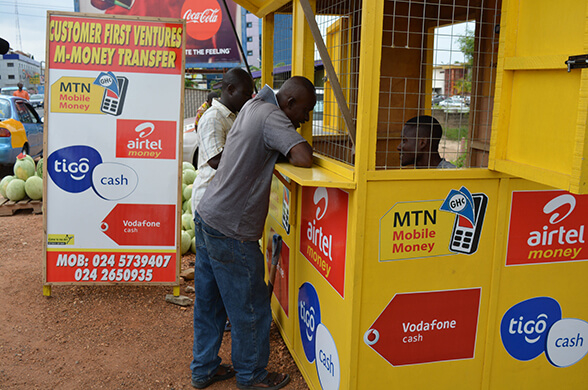
Mobile money services are growing faster than predicted around the globe, as digital services continue to rise in popularity, according to the GSMA’s annual ‘State of the Industry Report on Mobile Money 2023’.
The report, published annually by the GSMA and funded by the Bill and Melinda Gates Foundation, demonstrates that rates of adoption are even quicker than expected, with the number of registered mobile money accounts growing by 13% year on year, from 1.4 billion in 2021 to 1.6 billion in 2022.
While it took the industry 17 years to reach the first 800 million customers, this is extremely significant growth as it has taken just five years to reach the next 800 million.
In 2022, daily transactions via mobile money reached $3.45 billion, exceeding the $3 billion amount predicted in 2021. Total transaction value for mobile money grew by an incredible 22% between 2021 and 2022, from $1 trillion to around $1.26 trillion.
However, in many areas worldwide, more work is still needed to help give underserved communities access to safe, secure and affordable financial services. With 1.4 billion people worldwide remaining unbanked, the GSMA Mobile Money Programme is working with mobile operators and industry stakeholders worldwide to create a robust mobile money ecosystem, increasing the relevancy and utility of these services and ensuring their sustainability.
The 2023 report shows there are now 315 live mobile money deployments across the globe, with peer to peer (P2P) transfers and cash-in/cash-out transactions still among the most popular use cases. Bill payments using mobile money grew by 36% year-on-year – faster than any other use case - and the industry continues to focus on use case diversification, playing an important role in digitising economies.

Pandemic-driven uptake
As the world increasingly moves on from COVID-19, mobile money services have continued to show resilient growth that was instigated during the pandemic. Up to 400 million accounts were added during the pandemic alone. This rapid uptake is largely due to the technology’s role in enabling millions of people across low- and middle-income countries to access digital financial services. This upward trend continues, with the number of accounts active on a 30-day basis also growing by 13 per cent year-on-year to 401 million in 2022.
The report also shows that, during 2022, mobile money-enabled international remittances grew by 28% year on year – to $22 billion. During the pandemic, many diasporas sent more funds via mobile money to friends and family than ever before. As a result, international remittances grew significantly in both 2020 and 2021, as many senders favoured mobile money for its efficiency, speed, safety and cost-effectiveness. The trend continued in 2022, albeit at a slower rate.

Closing the gender gap
Mobile money is also continuing to drive financial inclusion for the world’s unbanked, particularly amongst women in rural communities, where access to mobile money can play a transformational and empowering role.
However, according to the latest GSMA data, there is still a mobile money gender gap that has shown signs of widening over the last year, particularly in India, Indonesia and Pakistan. Mobile phone ownership is one of the main drivers of the mobile money gender gap, however, a number of other barriers and cultural norms also prevent women from adopting mobile money. As a result, women in low- and middle-income countries are currently 28% less likely than men to own a mobile money account.
Growing agency networks
The number of mobile money agents also increased significantly last year, with a 41% increase between 2021 and 2022. The overall number of agents went from 12 million in 2021 to 17.4 million in 2022. The number of active agents increased by 25% to 7.2 million in 2022. A lot of this growth came from Nigeria, where a more liberal regulatory regime meant an increase in mobile money providers. Agents continued to prove to be an invaluable part of mobile money services and were responsible for two-thirds of all cash-in transactions in 2022.
“It is promising to see the continued growth of mobile money worldwide. Mobile money has afforded millions of unbanked and underserved people in low- and middle- income countries access to digital financial services, for the first time,” saidMax Cuvellier, Head of Mobile for Development, GSMA.
“However, even with this significant growth, there is still a long way to go to bring those services to over a billion people worldwide who remain unbanked.
The GSMA is therefore encouraging governments worldwide to keep developing the enabling policies that can support mobile money deployments and further boost the growth of this crucial ecosystem. Doing so helps accelerate the digitization of national economies and build financial resilience, allowing communities to support themselves in uncertain times.”
Latest Stories
-
Ghana, UNICEF strengthen partnership to advance child protection
3 minutes -
Day Two of 3rd Republic Bank-JoyNews Habitat Fair ends with great homeownership offers and financing solutions
7 minutes -
Guinness Ghana DJ Awards 2026 Pub Fest celebrates Ghana’s DJ culture as Accra turns up the energy
25 minutes -
10th woman found dead in South Africa’s string of killings
26 minutes -
French Embassy trains Ghana Police CTU in counter-terrorism operations
57 minutes -
UPSA uncovers mass results manipulation involving 178 students, over 500 results compromised
2 hours -
ECG announces planned power outages in parts of Tema from Sept. 29 to October 1
2 hours -
Sylvester Mensah urges Latenu FM to promote trade, export opportunities in Ga
2 hours -
Ga language under threat of decline as children shy away from speaking it – Sylvester Mensah
2 hours -
‘Let every Ga child you raise know the Ga language and story’ – Sylvester Mensah
2 hours -
‘We are not deterred’ – Ablakwa responds to backlash over South Africa evacuation
2 hours -
Day Two: Republic Bank-JoyNews Habitat Fair gains momentum at Junction Mall
3 hours -
NCA announces major voice and data disruption across Northern Ghana due to fibre cuts
3 hours -
Photos: Housing solutions take centre stage at Day 2 of the 3rd Republic Bank-JoyNews Habitat Fair
4 hours -
Nana Agyei Baffour Awuah denies GHS2.2m legal fee payment allegation
4 hours