

Audio By Carbonatix
A scientific milestone has been achieved in the heart of the Bia Tano Forest Reserve, as the world grapples with storms raising concerns about climate catastrophe.
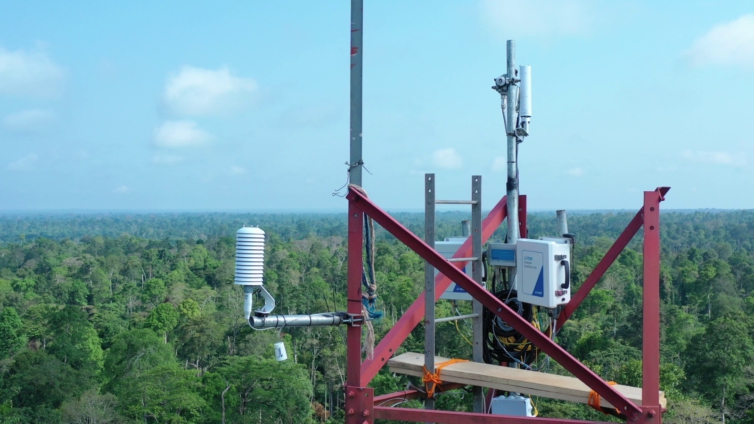
The Forest Reserve now hosts Ghana's only operational eddy-flux tower rising above the forest canopy.
The 56-meter-tall tower monitors the exchange of greenhouse gases between the atmosphere and the forest ecosystem, allowing scientists to precisely determine the carbon sink capacity within such a tropical Ghanaian moist semi-deciduous forest.
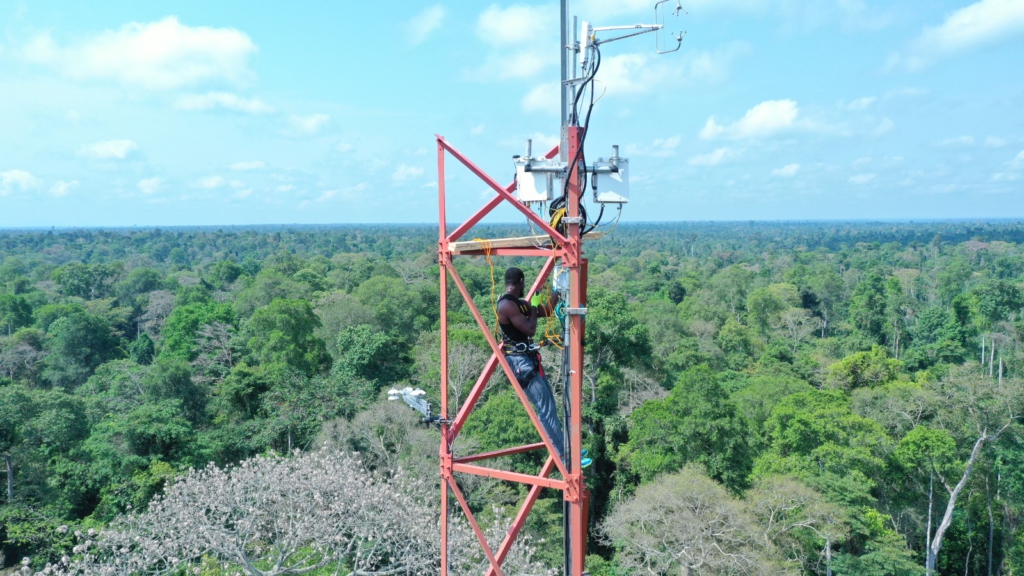
This is regarded as one of the critical nature-based solutions for reducing the amount of carbon dioxide in the atmosphere with the goal of mitigating global warming.
The activity of the Bia Tano Forest Station is expected to shed light on carbon cycling in this kind of ecosystem in Africa and, more generally, on the ecological feedback of tropical forests with respect to climate change.
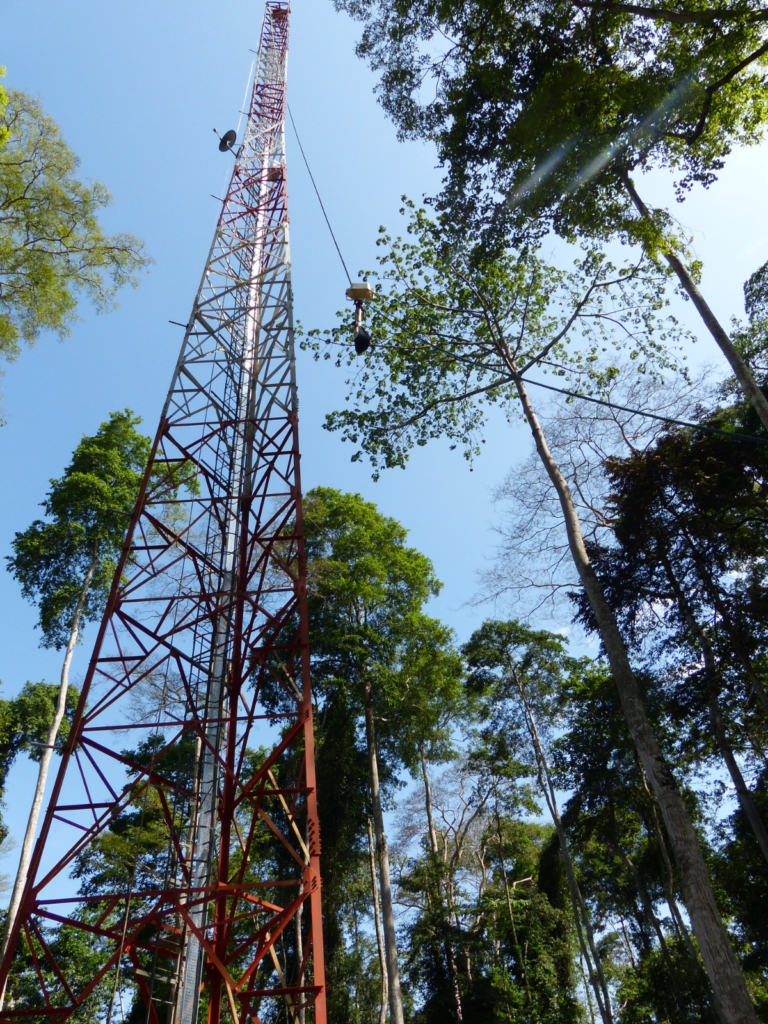
The Bia Tano forest reserve is located in Ghana's middle belt, and the forest is quite distinctive in the sense that it acts because it is located inside the transitional belt and is more likely to be a savanna zone kind of forest system.
“It also has some characteristics of the tropical rainforest kind of ecosystem so with this forest being within the middle or the transitional belt of Ghana, it gives out a very rich kind of data for us to understand how our forest is really behaving especially with those that might be in the northern savanna and also that in the southern tropical forest rainforest,” Dr. Caleb Mensah is with the Department of Atmospheric and Climate Sciences and a researcher with the Earth Observation Research and Innovation Centre (EORIC) at the University of Energy and Natural Resources.
Greenhouse gases (GHGs) such as carbon dioxide (CO2), methane (CH4), and nitrous oxide (N2O) are naturally prevalent in the atmosphere and help to control the Earth's climate.
As re-echoed by the Intergovernmental Panel on Climate Change (IPCC), experts emphasise the sudden increase in atmospheric GHG concentrations caused by human activities contributes to global warming.
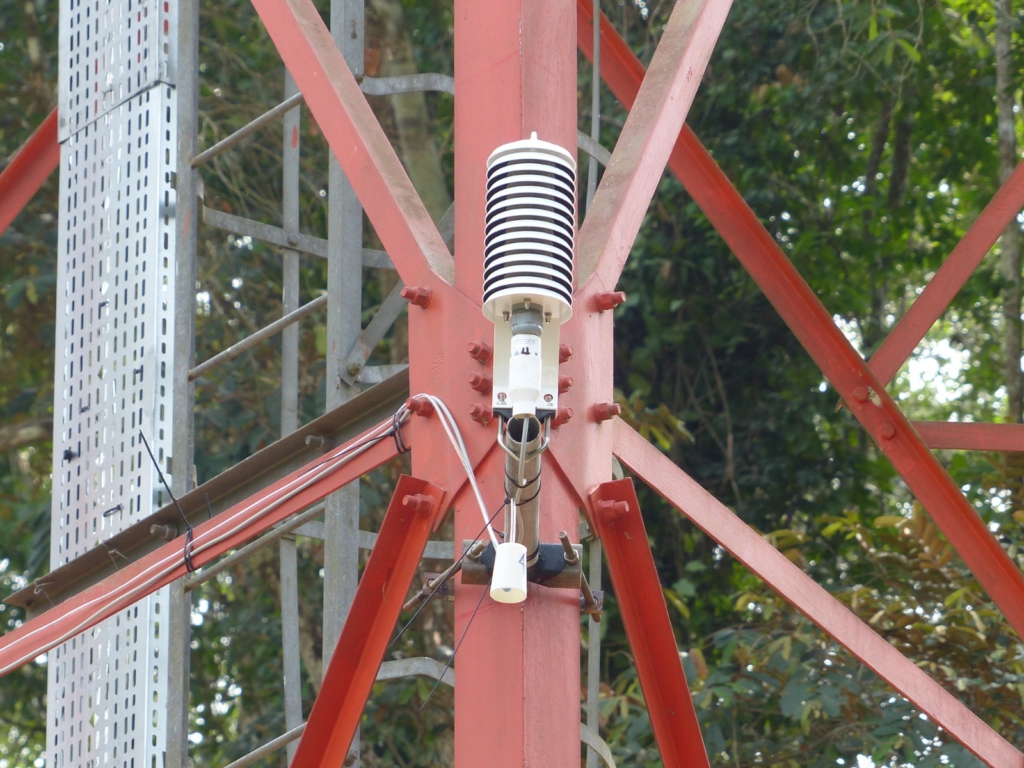
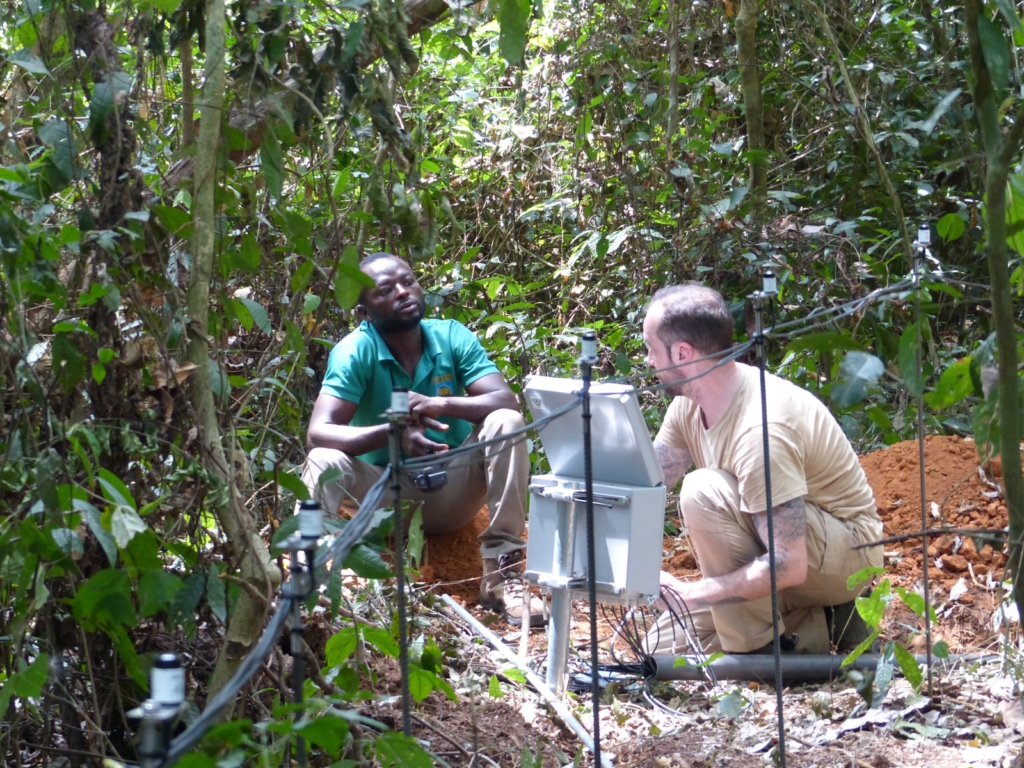
Dr Mensah says the eddy covariance sensors installed on the 56m tower are critical to understanding how much carbon the forest captures both seasonally and annually, especially under contrasting climatic conditions such as rising temperatures, droughts, and atmospheric pollution from biomass burning.
Forests are significant sources and sinks of greenhouse gases, and thus help to regulate atmospheric GHG concentrations. To determine the precise role that African tropical forests currently play and will play in the future, it is necessary to better understand the mechanisms that regulate GHG uptake and release by tropical forests.
Long-term and precise measurement of GHG fluxes over vast areas can be integrated into an ecosystem scale using the eddy covariance technique by measuring the covariance between vertical wind speed and GHG concentration variation.
According to Dr. Mensah, the eddy-flux tower is connected to a constant electricity source to ensure that the tower site operates constantly.

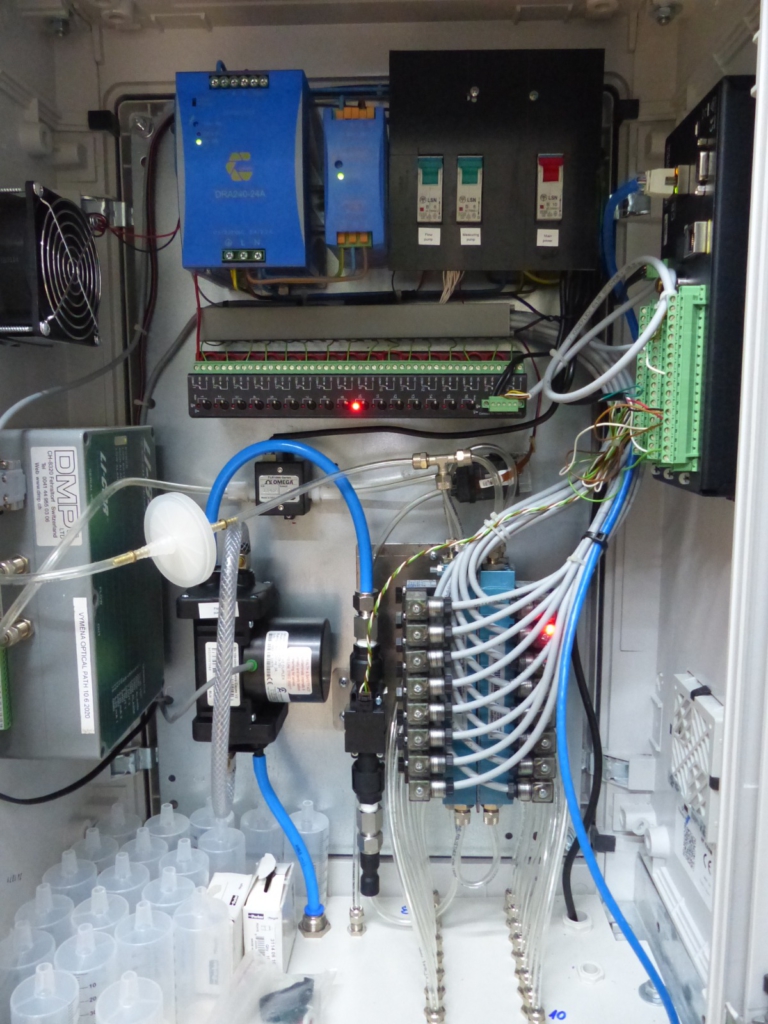
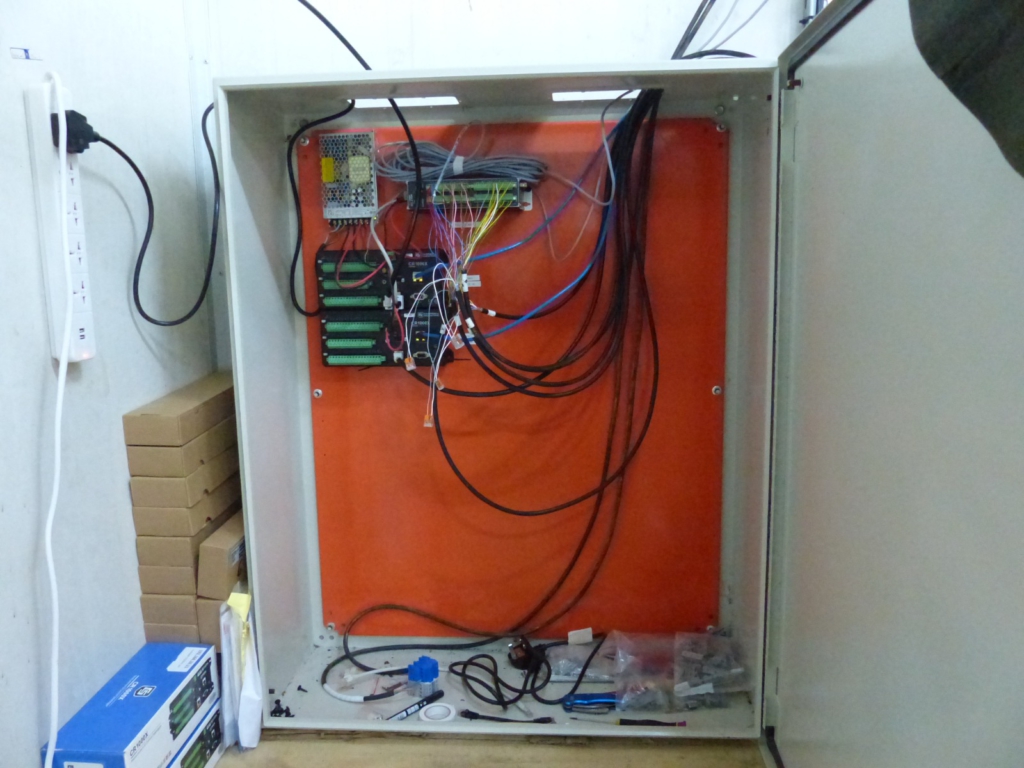
A mix of eddy covariance, radiation sensors, meteorological, and soil sensors will provide a complete energy and water balance of the forest, which will be connected to GHG exchanges. Other instruments at the GhanaFLUX station monitor biogenic volatile organic compounds and nitrogen oxide (NOx) soil fluxes.
The establishment of the experimental Eddy Covariance Research Station is part of a joint scientific research collaboration between the Global Change Research Institute in the Czech Republic and the University of Energy and Natural Resources (UENR).

Over 600 eddy-flux towers have been installed in different ecosystems around the world. The Ghana tower is one of the few flux towers on the African continent to provide accurate data on the exchange of greenhouse gases between the atmosphere and the tropical primary forest and will further strengthen the underlying greenhouse gas inventory management and Measurement, Reporting, and Verification (MRV) systems of Ghana’s annual report to the Intergovernmental Panel on Climate Change (IPCC).
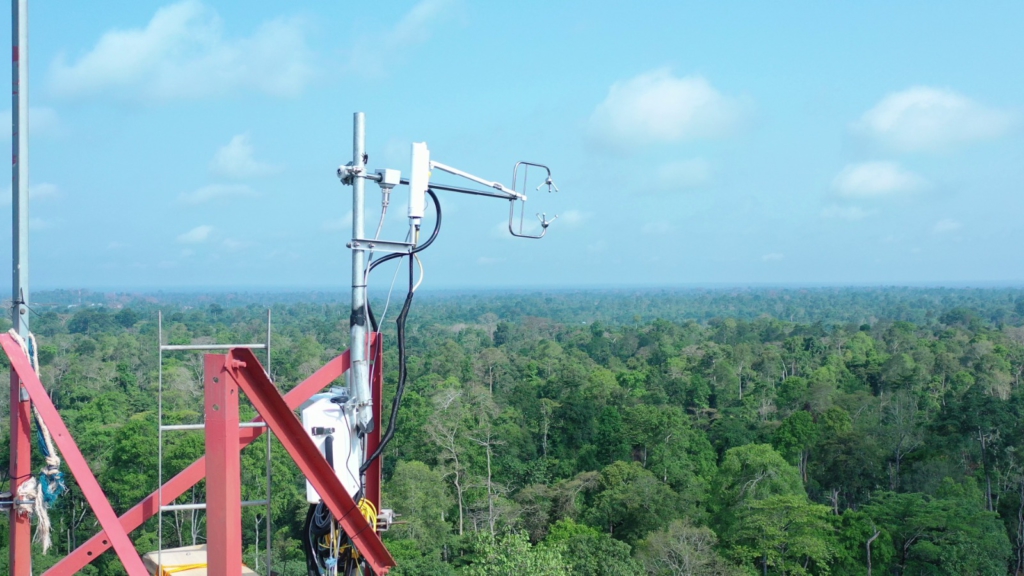
Researchers will have free access to the data generated by GhanaFlux. Data on evaporation and the exchange of greenhouse gases – carbon dioxide, nitrous oxide, methane – between the trees and the atmosphere will allow scientists to calculate the contribution of the forest to climate change mitigation and to better understand precipitation patterns in the area.
The station will be a national asset to support climate change research and national effort in addressing and reporting on the Sustainable Development Goals (SDG) 13 – Climate action.
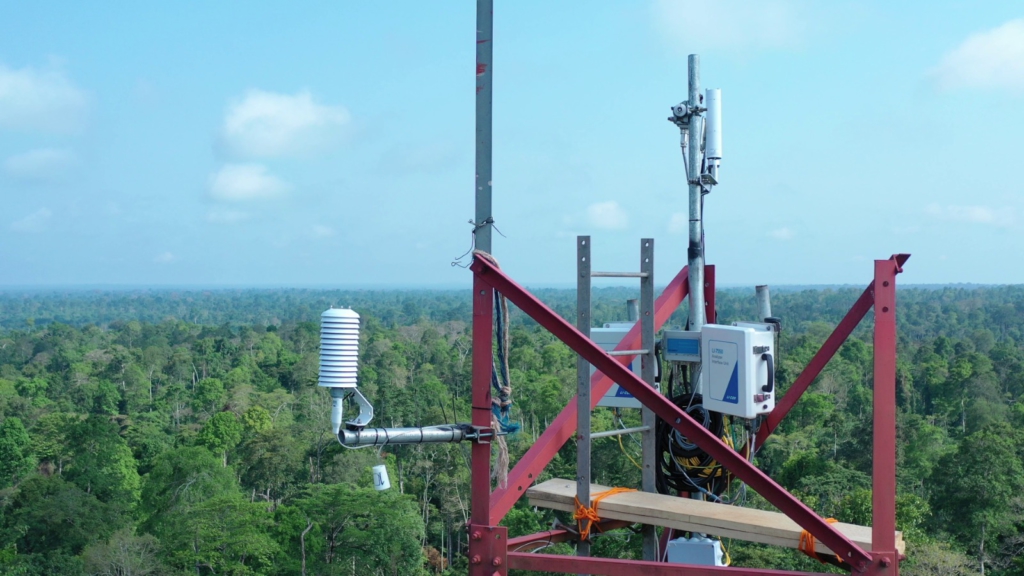
Understanding the physiological response of these productive tropical forests under extreme weather events will be crucial in formulating and implementing climate change mitigation and adaptative strategies/ policies on land use and land cover.
These include Reducing Emissions from Deforestation and Forest Degradation (REDD+) by governmental and non-governmental institutions.
Latest Stories
-
Free SHS suffering under NDC gov’t- Dr Bawumia
14 minutes -
NSA cannot manage all Ghana’s sports facilities alone – Ampofo Ankrah
16 minutes -
MoH announces mop-up recruitment for health professionals
18 minutes -
Turn Saltpond history into economic opportunity – Stakeholders
19 minutes -
Ampofo Ankrah opens up on ‘constant and unrelenting’ pressure at NSA
32 minutes -
I expect to win NPP Vice Chairman race – Nana B
38 minutes -
NDC’s failed 24-Hour Economy has become 24-Hour demolition – Dr. Bawumia
50 minutes -
Stampede at NPP conference leaves three injured in Kumasi
1 hour -
Use power to serve Ghanaians, not to intimidate – Okoe Boye to NDC
1 hour -
“I’ll have no honour if your arrears are not paid by October 30,” Haruna Iddrisu tells teachers
1 hour -
Billboard collapses at NPP delegates conference, 4 vehicles damaged
1 hour -
NPP Delegates Congress: The 14 approved constitutional amendments
1 hour -
EOCO’s handling of arrests could cost NDC power – Kpebu
1 hour -
Health sovereignty a priority for 1.4b Africans – President Mahama declares
2 hours -
NACOC begins pre-screening checks at Accra International Airport
2 hours