

Audio By Carbonatix
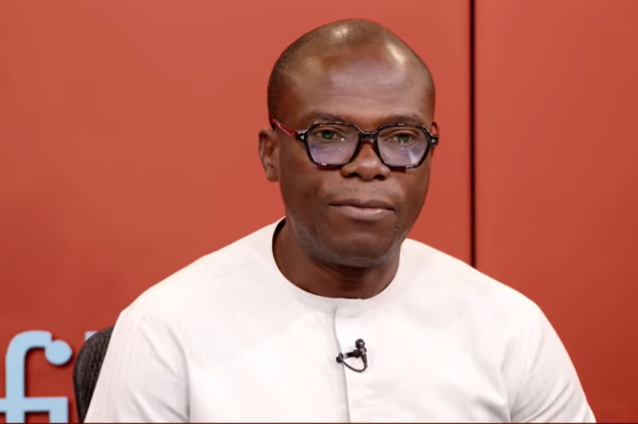
Sulemana Braimah, Executive Director of the Media Foundation for West Africa (MFWA), has questioned whether Ghana is genuinely committed to fighting corruption, saying that the continued creation of anti-corruption institutions has not stopped the problem from growing.
Speaking on JoyNews’ Newsfile on Saturday, August 29, during a discussion on the Office of the Special Prosecutor’s (OSP) decision to name five persons of interest in an alleged $1 million bribery case linked to the Accelerated Social Housing and Affordable Housing Project (ASKA), Mr Braimah said the country’s approach to fighting corruption needed serious reconsideration.
He said Ghana already had several institutions tasked with tackling corruption before the OSP was established, including the Economic and Organised Crime Office (EOCO), the Financial Intelligence Centre (FIC), the Criminal Investigations Department (CID) of the Ghana Police Service and the Commission on Human Rights and Administrative Justice (CHRAJ).
Despite the existence of these institutions, he said corruption remained a major problem.
“People are talking about the independence of the OSP or otherwise. But of course, we do know that even before the establishment of the OSP, we did have a number of state institutions that are supposed to be dealing with matters of corruption,” he said.
According to Mr Braimah, the OSP was created partly because existing institutions faced limitations, particularly in their ability to independently prosecute corruption cases.
He cited CHRAJ as an example, noting that although it is constitutionally independent, it has faced capacity constraints that affect its ability to deal with corruption cases.
“And I believe that the whole idea was that, look, these institutions, even though are supposed to, if you take CHRAJ for example, constitutionally independent, there are still limitations in terms of capacity to be able to deal with issues of corruption. And therefore they don't prosecute,” he said.
Mr Braimah also questioned whether appointing a Special Prosecutor through the President could, by itself, guarantee the independence needed to investigate and prosecute corruption cases, particularly where members of the governing party may be involved.
He said that the Special Prosecutor is still a Ghanaian appointed by the President, regardless of the political party in power.
“That person, of course, is a Ghanaian, but the person will still be appointed by a president, whether a sitting president or otherwise,” he said.
He used the current political transition as an example, saying that if the incumbent Special Prosecutor were no longer in office, the law would require President John Mahama to appoint a replacement.
“If Kissi is not there today, the law requires that President Mahama should appoint someone,” he said.
Mr Braimah questioned whether such an appointment would automatically make the person independent enough to prosecute members of the governing National Democratic Congress (NDC).
“If President Mahama appoints, is it because the name says Office of the Special Prosecutor and then that guarantees some independence and therefore that person will be able to prosecute NDC folks or otherwise?” he asked.
For him, the problem goes beyond the structure of the OSP and involves Ghana's broader attitude towards corruption.
“So for me, the way the law was created and our own attitudes towards the fight against corruption is where the problem lies,” he said.
Mr Braimah's biggest concern, however, is whether the OSP is delivering enough tangible results to justify the resources and public confidence invested in the institution.
He said Ghanaians were increasingly looking beyond press conferences and public announcements and wanted to see concrete outcomes from investigations.
“But my concern when it comes to the Office of the Special Prosecutor, again, is perhaps a concern expressed by many Ghanaians in terms of people want results,” he said.
“People don't really want a lot of narrations, a lot of the press conferences.”
He said the public had repeatedly heard announcements about investigations and allegations but expected the institution to ultimately deliver prosecutions and convictions where wrongdoing was established.
“We put you there, resource the office, pay you your staff to deliver results for us. It is either you do it or you are unable to do it, and you say, ‘Look, I was put here to do this job. I don't think that I'm able to do it and therefore I'm moving on,’” he said.
Mr Braimah also questioned what he described as the limited evidence of the OSP's impact after several years of operation.
He acknowledged that the institution had been inactive for about five months, but said the current Special Prosecutor, Kissi Agyebeng, had otherwise been in office for a considerably longer period.
“I heard you talk about the five months that the office was put in hiatus, as you say. But Kissi Agyebeng, my brother, has been there for the last 60 months,” he said.
“So even you take the five months away, and we are talking about 55 months.”
He said he struggled to identify results that would convince him that the establishment of the OSP had significantly improved Ghana's fight against corruption.
“And for me, I really struggle to be able to point to what realistically would convince me that the setting up of this institution has really helped the country in the fight against corruption,” he said.
He then delivered a stark assessment of Ghana's experience with anti-corruption institutions.
“It does appear that the more we have institutions, the more corruption grows,” Mr Braimah said.
He said recent developments, including the alleged ASKA bribery case, had further raised questions about whether Ghana's existing institutions were capable of investigating corruption involving politically connected individuals.
“If people really believed that our institutions are capable and able to deal with corruption, some of the things wouldn't be happening. But we still have the same things happening,” he said.
He pointed to the establishment of the Operation Recover All Loot (ORAL) initiative by the new government as another example of Ghana's continuing reliance on new mechanisms to address corruption.
“Then the new government comes in, sets up ORAL. Whether ORAL is going well or not, we are not too sure,” he said.
Mr Braimah also raised concerns over cases where allegations of wrongdoing involve people associated with the government in power.
He said this had led to questions about whether state institutions could be trusted to investigate and prosecute their political allies.
Mr Braimah ultimately said Ghana needed to look beyond establishing more institutions and examine whether there was genuine political and institutional commitment to fighting corruption.
He questioned whether successive governments were creating new anti-corruption bodies because they genuinely wanted to tackle corruption or simply because it was politically convenient to do so.
“For me, it is a general thing about: are we really ready to fight corruption or we just continue to create institutions in the name of fighting corruption?” he asked.
Latest Stories
-
Armah-Kofi Buah, Sam George, other MPs among newly qualified lawyers
3 minutes -
Ghana exporting eggs to Burkina Faso amid local surplus – Agric Minister
3 minutes -
Governance failure in Ghanaian football and a presidential reform agenda
9 minutes -
IJM Ghana welcomes country’s upgrade to Tier 1 in 2026 Trafficking in Persons report
11 minutes -
REAC urges stakeholders to comply with Real Estate Act or face sanctions
11 minutes -
‘Nkoko Nketenkete’ boosts local poultry production from 4.6% to 22% in one year – Agric Minister
35 minutes -
ARK Foundation boss warns against stigmatisation of abuse victims
42 minutes -
Health investment beginning to improve access to care – Akandoh
50 minutes -
“It is meaningless” – Parent laments as teachers’ strike leaves boarding school students idle
51 minutes -
Austin Gamey predicts possible end to teachers’ strike, urges better negotiation
54 minutes -
Mahama and Trade Minister champion local manufacturing during Ghato Foods visit
55 minutes -
Labour Minister, ILO Country Director strengthen partnership on decent work and jobs
56 minutes -
Approved vaccine for Yellow Fever to be rolled out in Upper West next week-GHS
59 minutes -
Trump wants to reduce the cost of fuel as the midterms loom – will it work?
1 hour -
Fear, institutional bias and lack of support deter domestic abuse victims from reporting – Lawyer
1 hour