

Audio By Carbonatix
As the temperatures rose in southern Pakistan, so did the body count.
The Edhi ambulance service says it usually takes around 30 to 40 people to the Karachi city morgue daily.
But over the last six days, it has collected some 568 bodies - 141 of them on Tuesday alone.
It is too early to say exactly what the cause of death was in every case.
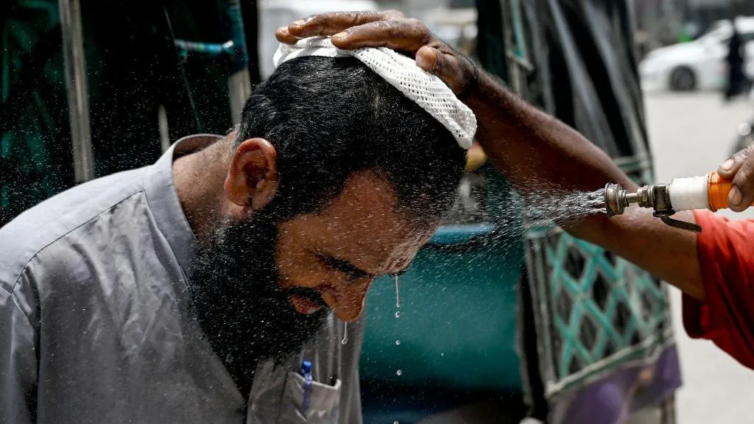
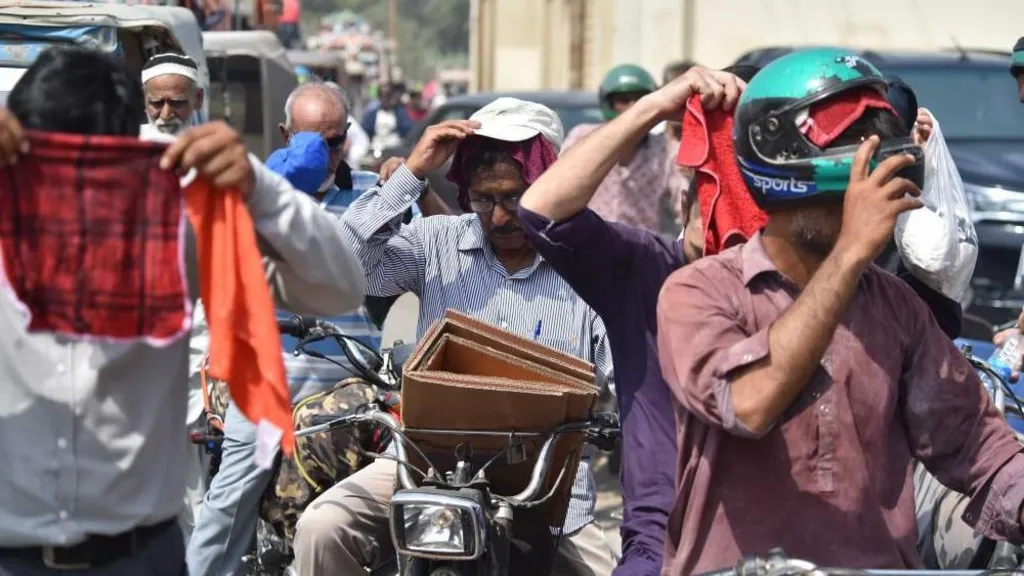
However, the rising number of dead came as temperatures in Karachi soared above 40C (104F), with the high humidity making it feel as hot as 49C, reports said.
People have been heading to hospitals seeking help.
Civil Hospital Karachi admitted 267 people with heatstroke between Sunday and Wednesday, said Dr Imran Sarwar Sheikh, head of the emergency department. Twelve of them died.
“Most of the people who we saw coming into the hospital were in their 60s or 70s, although there were some around 45 and even a couple in their 20s,” Dr Sheikh told the BBC.
Symptoms including vomiting, diarrhoea and a high fever.
“Many of those we saw had been working outside. We’ve told them to make sure they drink plenty of water and wear light clothes in these high temperatures.”
The high temperatures - described as a “partial heatwave” by one meteorologist – began at the weekend.
Heatwave centres and camps were set up to try to provide relief to the public.
Pictures show children playing in fountains as they tried to cool off.
“Look at me! My clothes are totally drenched in sweat,” Mohammad Imran told Reuters news agency as he struggled to keep cool on Monday.
Not all those who needed help made it to the hospital.
Wasim Ahmed knew he wasn’t feeling well when he arrived home.
The 56-year-old security guard had just finished a 12-hour overnight shift outside. Even then, he had found the temperatures too much.
“He came through the door and said I can’t deal with this hot weather,” Adnan Zafar, Wasim’s cousin, told the BBC. “He asked for a glass of water. Soon after he finished it, he collapsed.”
By the time Wasim’s family got him to hospital, the medics said he had already died of a suspected heart attack.
He had an existing heart condition, Adnan says, but he hadn’t suffered in the heat before.
Karachi’s struggle to cope with the high temperatures is, some fear, being made worse by regular power cuts which cut off the fans and air conditioning many rely on to keep cool.
Muhammad Amin was among those who was suffering with load-shedding - where the electricity supply was cut off; a common practice across Pakistan by the electricity board to try to preserve supply.
His relative says their flat experienced consistent constant power cuts.
According to his family, Muhammad who was in his 40s suddenly became sick, then died.
Cause of death has not been established, but his family suspect it was heat-related.
According to Dawn newspaper, almost 30 people have been found dead by emergency services on the city’s streets.
Many are suspected drug addicts, Police Surgeon Summaiya Syed told the newspaper. They did not, however, have any signs of injury.
EPA
Karachi is not the only part of Pakistan that is struggling to cope.
Last month, the province of Sindh - of which Karachi is the capital - recorded an almost record-breaking temperature of 52.2C, according to Reuters.
Pakistan's neighbours have been suffering from extreme, deadly temperatures in recent weeks as well.
Across the border in India, the capital Delhi has been enduring an “unprecedented” heatwave, with daily temperatures crossing 40C (104F) since May, peaking at nearly 50C.
Doctors in the city say they’ve never seen anything like it before.
For Karachi resident Mohammad Zeshan, it is clear what the problem is.
“This is due to climate change,” he told Reuters. “This is happening all around the world. This is happening in Europe. They have faced intense heat but they have taken steps about it.
“But here, it is sad that the government has not taken any effective measures.”
Experts agree these sorts of extreme weather events are becoming more frequent and intense as a result of climate change.
The heatwave roasting Karachi is expected to last into next week, albeit with slightly lower temperatures forecast.
Weather experts are now turning their attention to the monsoon season, which is expected to arrive early and bring as much as 60% more rain, according to experts who spoke to Dawn.
Latest Stories
-
Congolese-born golfer to represent Ghana at Turkish Airlines World Cup grand final
1 minute -
Amazon wins global rights to stream Emmys in six-year deal
3 minutes -
European Film Festival returns to Ghana after a 5-year break
7 minutes -
PTA backs teachers’ strike, threatens street protest if gov’t misses October 30 deadline
11 minutes -
Paramount takes over Warner Bros in $110bn Hollywood merger
11 minutes -
Suspend offshore gold exploration licence – NAFAG urges gov’t
12 minutes -
Investigators meet family, community over deaths of 3 children found in car trunk
21 minutes -
Teacher strike: FWSC blames new allowance demand for deadlock with teacher unions
53 minutes -
Aboboyaa Company Ltd CEO donates 5 tricycles to Ghana Prisons Service
1 hour -
National Cathedral: ‘There’s no clarity as to what they want to use the site for’ – Afenyo-Markin on site’s future
1 hour -
Investigators meet family, community over deaths of 3 children found in car trunk
1 hour -
Teachers have legitimate concerns, but prolonged strike will affect pupils – Joseph Kumah
1 hour -
Ahafo NHIA Beats 2025 Target to Secure Second Year of Universal Health Coverage
1 hour -
Innovative Teachers threatens legal action over exclusion from Collective Bargaining Agreement negotiations
2 hours -
17-member committee formed to address concerns over Adipa landfill
2 hours