

Audio By Carbonatix
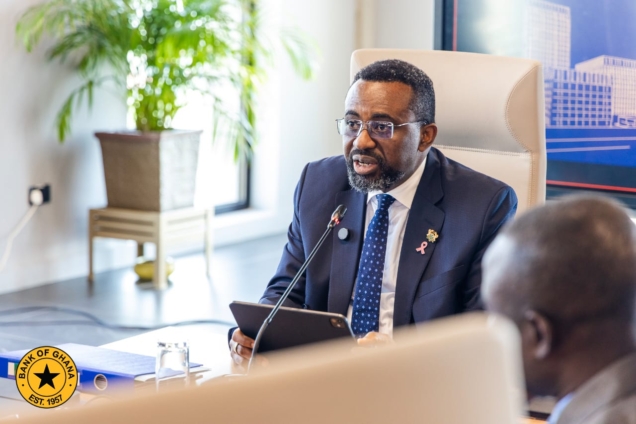
The Governor of the Bank of Ghana has pledged to build an agile central bank ready for emerging risks.
According to him, financial technology and crypto pose real challenges and therefore his outfit is updating legislation, creating capacity, and strengthening its balance sheet to withstand shocks.
Speaking in an interview with the Director of the International Monetary Fund’s Director of Africa Department, Abebe Selassie, the Governor said, “My vision is a central bank with the manpower, agility, and resilience to manage future risks—crypto today, something else tomorrow”.
“My mandate is clear: achieve price and financial stability, and I believe we’re on course. But two priorities stand out. First, tackling dollarisation. I’ve seen this challenge for decades, and making the cedi the sole legal tender is critical for effective monetary policy. My second priority is to build an agile central bank ready for emerging risks.”
To safeguard the independence of the central bank, Dr. Asiama said the Bank of Ghana has introduced legislative reforms to eliminate central bank financing of the government and clearly define emergencies.
“The impact on banks from sovereign exposure has been significant and should never happen again. But corporate bond activity is picking up, and we’re trying to list more banks on the stock exchange to attract long-term capital and strengthen equities”, he mentioned.
“On the central bank side, domestic debt restructuring hit our balance sheet hard, and rebuilding is a medium-term priority. To safeguard independence, we’ve introduced legislative reforms to eliminate central bank financing of the government and clearly define emergencies”, he explained.
In describing the framework for managing foreign exchange, he pointed out that his outfit followed a managed float to smooth volatility, not to dominate the foreign exchange market. “Recent intervention was due to large payments to independent power producers, bondholders, and declining remittances due to currency appreciation”.
He added that conditions have improved with mining inflows now going through banks, and “unused foreign exchange offers flow into reserves”. “We are increasing local processing of commodities to address our reliance on raw materials such as gold, oil, and cocoa”, he concluded.
Latest Stories
-
Interior Minister urges traditional authorities to enforce anti-bushfire bye-laws
12 seconds -
3rd Republic Bank-JoyNews Habitat Fair Clinic ends on a high note after three days of strong patronage
2 minutes -
Ten climbers missing after avalanche hits Himalayan base camp
39 minutes -
NPP had more permanent fuel relief measures than current GH¢2 diesel cut – Amin Adam
1 hour -
Photos from the 3rd Republic Bank-JoyNews Habitat Fair Clinic
1 hour -
Ethiopia’s army promises restraint amid fears of new civil war
1 hour -
Amin Adam calls for review of fuel taxes as diesel prices remain above GH¢18
2 hours -
World Vision Ghana, Ahafo districts sign MoU for universal WASH coverage
2 hours -
When the gold engine stutters: What Ghana’s Cedi and reserves are telling us about the new economic architecture
3 hours -
Two reportedly die after being trapped in mining pit at Juaboso
3 hours -
Petrosol cleans up Wa Municipal Hospital, to donate medical equipment
3 hours -
‘If NPP was ‘insensitive’ over fuel prices, NDC must accept same description now’ — Amin Adam
3 hours -
KiDi brings the hits to London in sold-out UK headline concert
3 hours -
The last goodbye of Ghanaian shot dead in the US
4 hours -
MCC opens door to Ghana again as MiDA revives development partnership
4 hours