

Audio By Carbonatix
Executive Director, National Population Council (NPC), Dr Leticia Appiah has called for a national dialogue on how to operationalise the prioritization of reproductive health to create an enabling environment for national development.
“There is the need to consider reproductive health in the wider context of the national development strategy and to embark on a well-coordinated and sustained programme spearheaded by strong government commitment and the support of development partners,” she said.
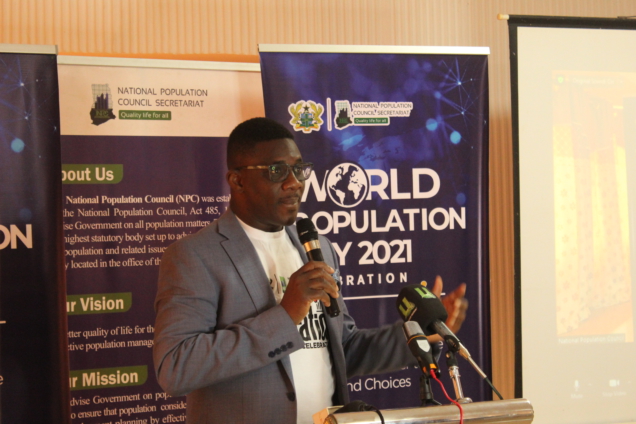
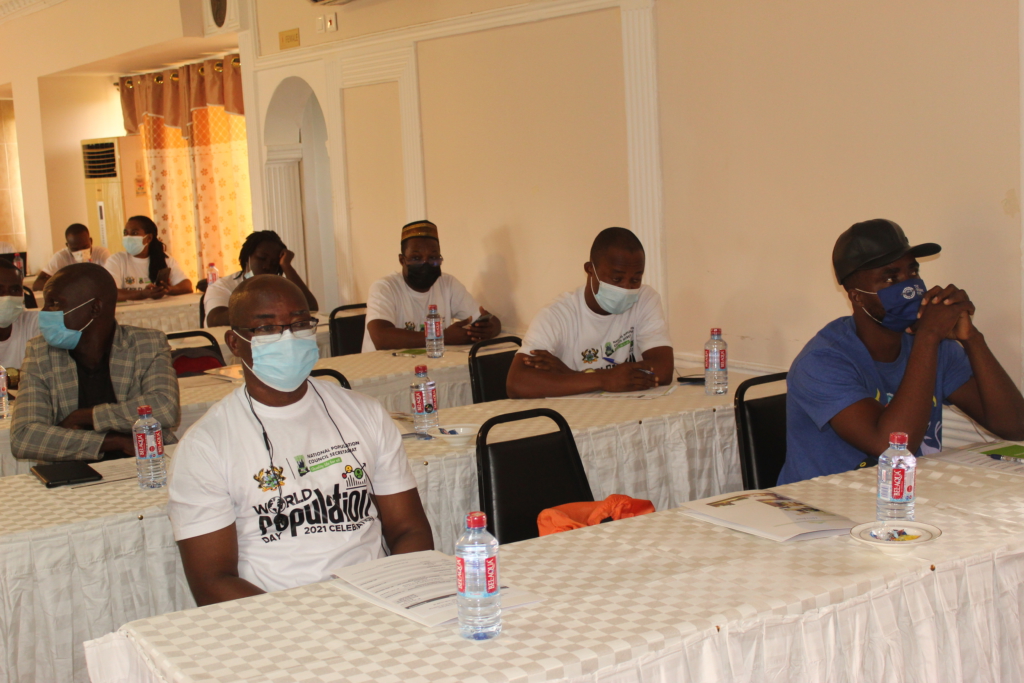
The Executive Director made the call at this year's World Population Day on the theme: "Prioritising Reproductive Health as an Answer to Rights and Choices".
She said the theme could not have been more appropriate with Covid-19 compelling individuals and governments to prioritise and pay much attention to programmes and interventions that yielded significant benefits far beyond their primary focus.
Dr Appiah said the pandemic had compromised health care systems particularly in the area of sexual and reproductive health, stressing that disruptions in the supply of contraceptives in combination with lockdowns were predicted to result in a sharp rise in unplanned pregnancies for the most vulnerable.
She noted that it was extremely difficult to achieve Sustainable Development Goal without giving the appropriate attention to reproductive health and family planning, saying, “Women are half the population and they know how to take care of themselves and contribute their quota if they are given access to quality reproductive healthcare information and services”.
“Prioritising reproductive health will save our national health insurance, reduce the cost of inequality, give us value for money in education, keep us healthier, happier, and more prosperous,” and these are the SDGs, Dr Appiah emphasized.
She said: “when reproductive health is prioritised, women are empowered both with information and services, maternal mortalities and morbidities will significantly reduce with the associated social and economic benefits to families and the nation as a whole.”
Dr Appiah stated that prioritising reproductive health would also reduce the cost of meeting multiple indicators such as HIV and AIDS, malaria, cholera, and malnutrition with social and economic costs to families and nations.
“It also helps to bridge the inequality and inequity gaps and the associated costs. With widening inequality, the poor become poorer and more numerous, and the middle-class shrinks and their income stagnates.”
The 2020 Annual Report of the Family Health Division of the Ghana Health Service recorded an increase of 4.3 per cent in the anti-natal care visits.
She said the figures called for an attention to prioritise reproductive health rights and choices to meet the 2030 agenda of the Sustainable Development Goals.
Mr Niyi Ojuolape, the UNFPA Country Representative to Ghana, said Covid-19 had exposed serious gaps and challenges in the provision of sexual and reproductive health services for women and girls.
The situation, Mr Ojuolape said had worsened gender inequality, gender-based violence, and harmful practices including child marriage, which called for urgent attention.
UNFPA research in March estimated 12 million women experienced disruptions to family planning services leading to 1.4 million unintended pregnancies.
Ghana Health Service 2020 report on teenage pregnancies shows that 2,865 girls got pregnant between the ages of 10 and 14 years while 107,023 girls got pregnant between 15 and 19 years.
The report also shows that nearly 301 girls are impregnated every day and 13 teenage pregnancies are recorded every one hour.
Mr Ojuolape said teenage pregnancies were due to lack of access to education and reproductive health services, sexual violence and coercion, gender inequality, child marriage, national policies restricting access to contraception, and poverty.
He said the UNFPA had undertaken interventions to address challenges of Adolescent and Reproductive Health issues by procuring 45 per cent of national public sector contraceptive requirements, ensuring the survival of women, young girls during childbirth, midwifery, and capacity building of health care providers.
Latest Stories
-
Journalists look back on a decade of breast cancer reporting in Ghana
18 minutes -
President Mahama ends Resetting Ghana tour of Ahafo Region
2 hours -
African negotiators seek delivery of climate commitments at COP31
2 hours -
BoG develops AI rules for financial sector
2 hours -
‘Big Push’: Government assures contractors of prompt payments
2 hours -
Court fines miner for breaking into gold buying shop
2 hours -
Tarkwa court jails labourer for three years over GH¢123,000 theft
3 hours -
GAEC must retain nuclear scientists for Ghana’s nuclear ambitions – Minister
4 hours -
Man reportedly mistaken for game and shot by hunter dead in forest
4 hours -
19-year-old mason jailed 15 years for defiling seven-year-old pupil
4 hours -
Ghana’s banking sector assets rise 20.47% to GH¢500.2bn – BoG Governor
4 hours -
22 injured as Sprinter bus overturns at Sege after tyre burst
4 hours -
UN housing expert urges Ghana to strengthen Rent Control Department amid housing affordability concerns
4 hours -
Delta-BCI partnership reaches 166,000 people with breast cancer education
4 hours -
Power restoration fault suspected in Kumasi Central Market fire
10 hours