

Audio By Carbonatix
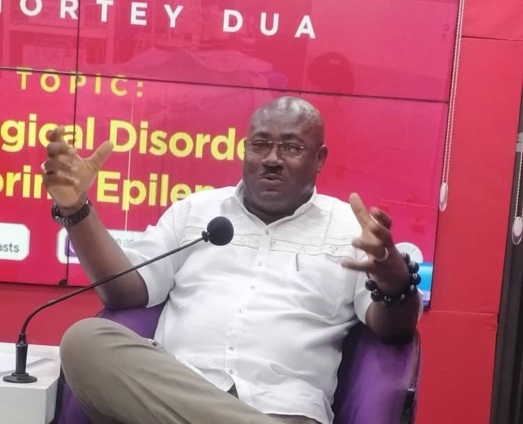
Neurologist and Head medical SubBMC at Korle-Bu Teaching Hospital has offered crucial advice on how to properly assist someone experiencing a seizure.
Prof Patrick Adjei's guidance was aimed at dispelling common misconceptions and promoting safe, effective ways to help those with epilepsy.
In an interview on Joy FM’s Ultimate Health show, Prof. Adjei emphasised the importance of not putting anything in the person’s mouth during a seizure. Contrary to popular belief, attempting to insert an object, such as a spoon, can cause more harm than good.
"If you try to force something into their mouth, you could push the tongue backward, potentially blocking the airway, which could be fatal," he explained to host Nortey Dua.
Additionally, the force of muscle contractions during a seizure is so strong that it could cause the person to bite down hard enough to break a tooth, which might then obstruct their airway.
Instead, Prof. Adjei recommended that bystanders focus on ensuring the person’s safety by helping them lie down and protecting their head.
“Place something soft under their head to prevent injury as they convulse,” he advised adding that if nothing soft is available, using your foot as a cushion can be an alternative.
He also cautioned against restraining the person, as this could lead to broken bones due to the intense muscle contractions.
The distinguished professor highlighted the importance of recognizing when a seizure turns into a medical emergency.
"A regular seizure typically lasts about three minutes," he noted. "However, if it extends beyond five minutes, it's critical to seek immediate medical attention."
He reassured listeners that all medical professionals in Ghana are trained to handle epilepsy emergencies, underscoring the importance of getting the person to a healthcare facility promptly.
These actions can make a significant difference in preventing harm and ensuring the well-being of persons with epilepsy.
The medical practitioner also explained that the term 'epileptic' influences the stigmatisation. He urged all to rather say "Persons living with epilepsy, or persons with epilepsy" as the former connotes a certain level of denigration, disregard for the individual having the condition.
Latest Stories
-
A source of excellence across generations – Vice President Opoku-Agyemang lauds Mfantsipim
7 minutes -
(Photos) Mfantsipim School launches historic 150th anniversary
30 minutes -
Knights and Ladies of Marshall group backs Catholic Bishops’ stance on anti-LGBTQ+
1 hour -
Bright Simons writes: All the Filla in the Ibrahim Mahama/E&P – Gold Fields Saga
2 hours -
Monetise Idiocy In Ghana
2 hours -
The Ghanaian prophet and the mysterious death of his scottish wife Charmain Speirs
3 hours -
Nearly 400 sentenced in Nigeria for links to militant Islamists
3 hours -
Ghana’s recovery supported by gold strength despite global oil price pressures – Standard Bank Research
3 hours -
Methodist Church hails Mfantsipim@150; calls for “fresh consecration” to excellence
4 hours -
‘Excellence is our inheritance’ – Nana Sam Brew-Butler hails Mfantsipim’s 150-year reign in leadership
4 hours -
Kwaku Azar writes: A-G vs OSP
4 hours -
Mfantsipim–Adisadel rivalry built excellence, not division – Sam Jonah
4 hours -
Vice President launches Mfantsipim’s 150 years of shaping Ghana’s greatest mind
4 hours -
I assure Otumfuo, Mahama will join him to commission KNUST Teaching Hospital by end of this year – Haruna Iddrisu
5 hours -
Barcelona dominate derby to extend La Liga lead
5 hours