

Audio By Carbonatix
Nigeria is betting on green finance to drive its energy transition with the president unveiling plans for a $2 billion climate fund on Tuesday, saying oversubscribed green bonds were proof of investor appetite.
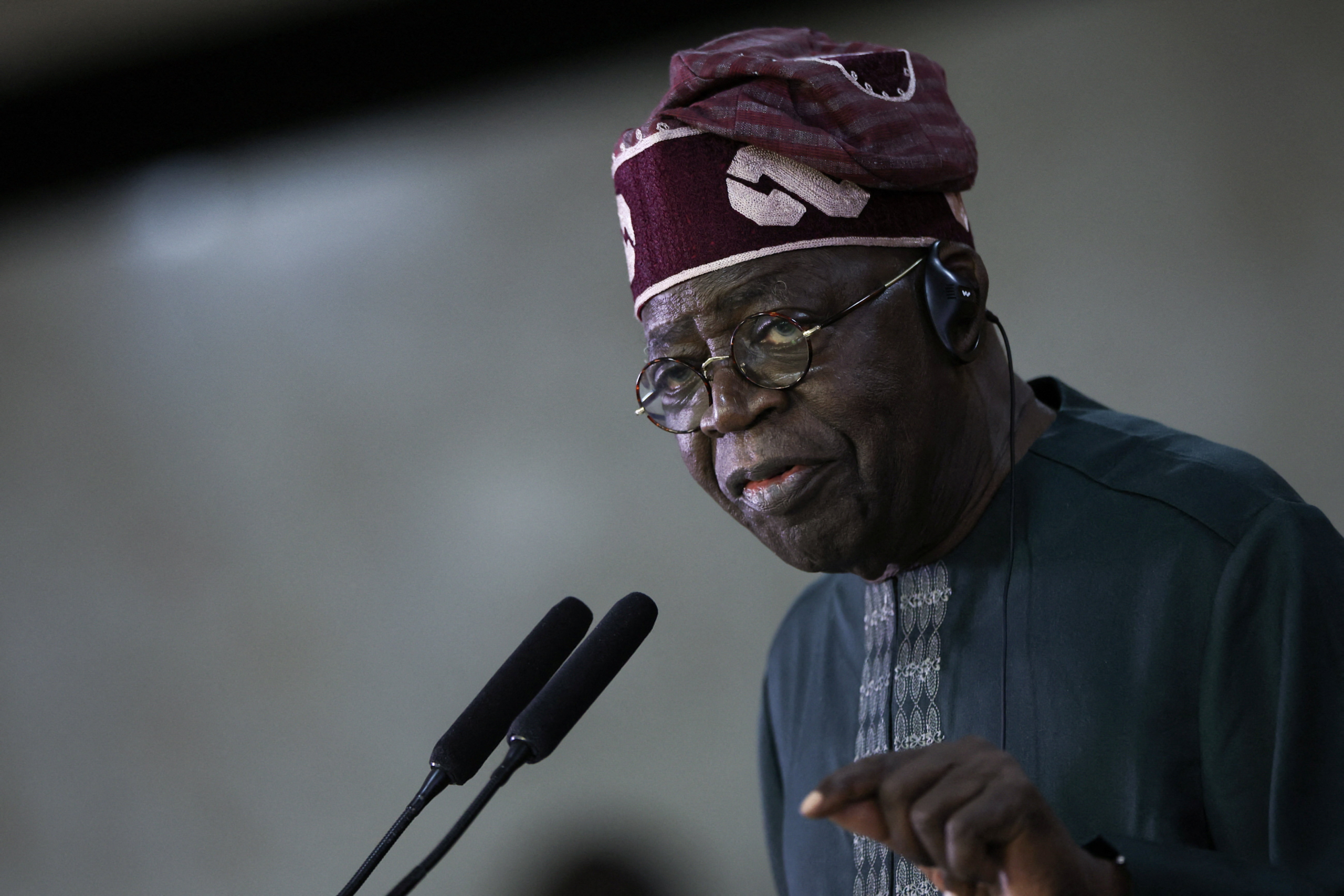
Speaking at the Abu Dhabi Sustainability Week summit, President Bola Tinubu said Nigeria’s Climate Investment Platform aims to mobilise $500 million for climate-resilient infrastructure, while the National Climate Change Fund targets a $2 billion capitalisation to back projects that cut emissions and boost resilience.
Tinubu also announced that Nigeria and the United Arab Emirates had signed a Comprehensive Economic Partnership Agreement (CEPA) that aims to boost trade and investment across sectors, including renewable energy, aviation, logistics, agriculture, digital trade, and climate-smart infrastructure.
Nigeria faces major environmental and climate policy challenges, including reducing gas flaring and methane emissions, as it works towards its Energy Transition Plan, which targets net-zero emissions by 2060 while delivering universal energy access.
Nigeria’s green bond programme has drawn strong investor interest. A 50 billion naira ($38 million) sovereign green bond issued in 2025 attracted 91 billion naira in subscriptions, while Lagos State’s green bond was oversubscribed by nearly 98%, the president said.
Tinubu said his government was also seeking to unlock an ambitious $25–$30 billion in climate finance annually. A new Climate and Green Industrialisation Investment Playbook will help private investors and other stakeholders navigate manufacturing policy and the regulatory landscape.
This builds on past initiatives, including the Nigeria Sovereign Investment Authority's $500 million Distributed Renewable Energy Fund, launched in March 2025 to catalyse local financing.
“These reforms show Nigeria is ready for business,” the president said, adding that non-oil exports have grown by 21% and investment commitments now exceed $50 billion across key sectors.
Nigeria is prioritising technology partnerships to modernise its grid and deploy artificial intelligence for efficiency, alongside pilot projects in electric mobility and green industrialisation, he added.
The president called for a shift towards more blended finance — which combines public and philanthropic capital with private investment and can absorb initial losses if the project underperforms — rather than sovereign guarantees, which he said unfairly penalise emerging economies.
Latest Stories
-
Trump says he is considering firing US ambassador to Greece
4 hours -
Man City bananas ‘brought fun back’, says Varadi
4 hours -
Meta releases Muse Wonder AI models to challenge Anthropic and OpenAI
5 hours -
Daily Insight for CEOs: The CEO as Chief Decision Maker
5 hours -
Burnham had formal meeting with Man City chair while mayor
5 hours -
Is Ghana producing too many lawyers? What is the best lawyer-to-citizen ratio?
5 hours -
NDC sinking Ghana’s democracy with Emelia Agbenyo’s appointment – Miracles Aboagye
5 hours -
Seedorf back in football as Corinthians head coach
5 hours -
Hincapié and Zubimendi injured in post-match training session
5 hours -
Fridges in French supermarkets hit by cyberattack
5 hours -
Qantas flight grounded after bedbug outbreak
6 hours -
Reality Zone with Vicky Wireko: International Day of the Girl, shaping today’s girl for tomorrow’s future – ZONTA Clubs lead the way
6 hours -
Global health must be led by countries, not designed for them – Mintah Akandoh
7 hours -
Mahama honoured at 2026 World Health Summit in Berlin for global health leadership
7 hours -
Breast cancer is not a death sentence – Besease Kontire Obaapanin, Magmina Foundation lead awareness campaign
7 hours