

Audio By Carbonatix
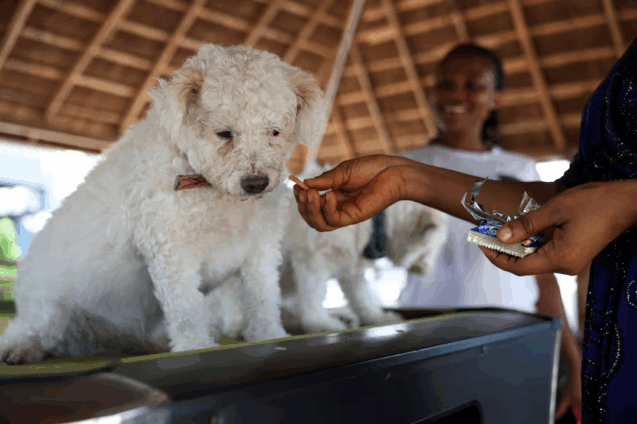
Nigeria's two-year-old cost-of-living crisis, which has seen the price of grocery staples like rice rise over 100% since 2023, has reached the relatively affluent class of dog owners, who are struggling to feed their pets because of soaring food costs.
Keeping animals as pets is a recent trend in Nigerian society, where traditionally, people were more likely to live with chickens or goats reared for food.
Over the past two decades, there was a rise in the number of households in urban areas keeping pet dogs, often for security in a country plagued by violent crime, but also for companionship.
No precise data are available on dog ownership, but a 2023 survey by research agency TGM Statbox indicated that around 42% of Nigerians own pets.
However, in a sign of economic hard times hitting across society, that is an increasingly expensive luxury.
One dog owner, Peter Anthony, a student who lives with his parents in the southwestern city of Ibadan, said feeding his German Shepherd, Flora, was never previously a concern for the family.
"Before the whole high cost of living saga, feeding her was so easy," he said, waiting for Flora at a pet hospital where she had been treated for an ear condition.
"But now, by the time you pick out that money from your pocket, you'd know that something has left you," he said.
The family now feeds Flora a smaller daily ration of noodles mixed with fish or eggs, Anthony said.
Flora's owners are among the lucky ones who are still able to keep their dog healthy, even footing vets' bills.
In a crisis that began when government removed a fuel subsidy and devalued the naira currency in May 2023, inflation has been in double-digit territory, hitting 34.80% last December, the highest in three decades, before easing to 23.71% in April.
Latest World Bank data shows that 31% of Nigeria's more than 200 million citizens live below the international extreme poverty line of $2.15 per day.
FEELING THE PINCH
While pet owners are not among the country's poorest, they are feeling the pinch. Some dog breeders say they are reducing their activity because so many pet owners are struggling.
Sarah Mokelu, who has a business importing dogs from Russia, has reduced the frequency of her trips there to about once every three months, from twice a month previously, because of surging prices and a drop in sales.
During her twice-a-month trips, she said she would bring between 15 and 20 dogs. Now, during her last trip in May, she brought in six dogs.
"Feeding has really humbled a lot of people," said Mokelu, 63, at her home in the Ejigbo neighbourhood of Lagos.
"There was a feed we bought about six months ago for 40,000 naira ($25.70), now we're buying for 70,000 naira."
This price, for a 15-kg (33-lb) bag, is the same as the country's minimum monthly wage of 70,000 naira.
Akindele Olunloyo, CEO of a dog importing company called Pet Lovers Nigeria, said all of his costs - animals, food, transport, permits, airport fees - had risen so much that he had changed his business model.
Olunloyo runs an online platform that helps Nigerians buy and sell pets. He said 90% of the people on the site were interested in buying and selling dogs at a price range of 20,000 to 100,000 naira, well below the price he might charge for an imported dog, which could be in the 300,000-500,000 naira range.
"I now import only for clients who are interested in buying their own food, high net worth Nigerians who place specific orders," he said.
CHANGE OF DIET
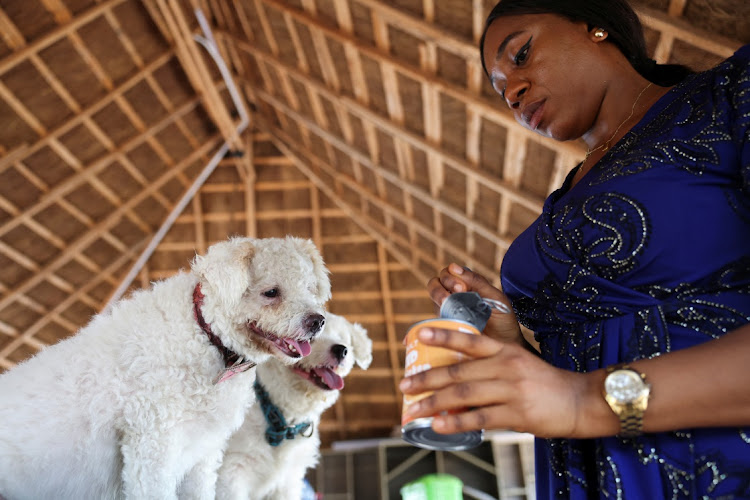
Several breeders said they had switched from imported dog foods to cheaper alternatives, like mixing rice or noodles with fish eggs.
As imported dog food has become unaffordable for many, business has improved for local pet food producers.
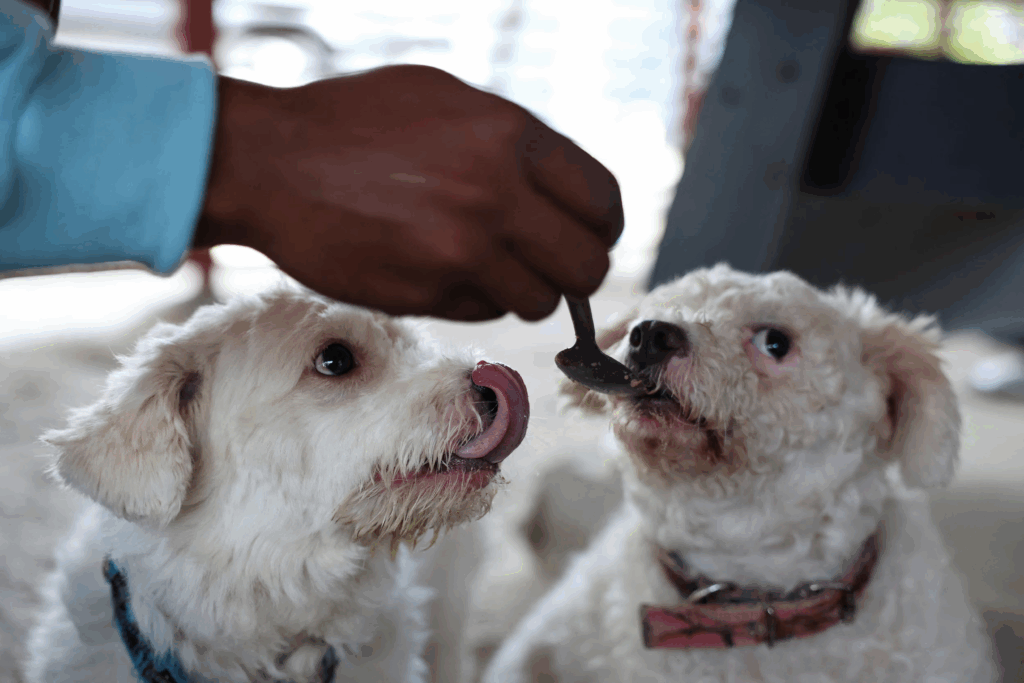
"People not being able to afford the foreign kibbles ... made people to look in our direction," said Theresa Iwhewhe, who owns a pet hospital and pet food producing company in Ibadan.
There is hardly any data on locally produced pet foods. But research firm ReportLinker says imports into Nigeria are expected to decline to 769,000 kg by 2028, down from around 1.3 million kg in 2023.
($1 = 1,558.3100 naira)
Latest Stories
-
2026 Women’s Super Cup: FC Savannah beat Epiphany Warriors to win trophy for first time
57 minutes -
AFCON 2027Q: ‘The last time Ghana won was eight games ago’ – Carlos Queiroz
1 hour -
AFCON 2027Q: Gambia defeat doesn’t make me a loser – Carlos Queiroz
1 hour -
2027 AFCONQ: Late goals seal 2-0 for Côte d’Ivoire against Somalia
2 hours -
AFCON 2027Q: My resignation won’t solve Ghana football issues – Queiroz
2 hours -
Morocco call off Ghana friendly after Black Stars’ AFCON setback
2 hours -
‘We have to say sorry’ – Queiroz apologises after Ghana’s humiliating defeat to Gambia
2 hours -
New Yorker identified as Yaw Boahene, 57, killed after bag was caught in subway train doors
2 hours -
Former American Idol contestant and pastor found guilty of murdering wife
2 hours -
Trump rules out joint US-China venture to develop AI
2 hours -
‘Beating Ghana did not surprise me’ – Gambia boss
2 hours -
OpenAI agents get rebrand – as ‘dots’ – while safety worries delay new model
3 hours -
US ban on Canadian alcohol and dairy takes effect as trade war drags on
3 hours -
Baffour Awuah’s EOCO case reopens Equity Savings & Loans file as SIC recovery battle emerges
3 hours -
Ghana ranked 5th source of cocaine seized at Antwerp, Belgium in 2025
3 hours