

Audio By Carbonatix
In the first quarter of 2025 alone, the Bank of Ghana reported that mobile money transactions exceeded 2.8 billion cedis in value, a clear sign that digital finance is no longer a niche experiment but a daily reality for millions of Ghanaians. And yet, despite this remarkable growth, something curious is happening on the streets of Accra: fintech billboards are multiplying faster than the quality of the services they promote, which should concern not just the companies behind them but every single person who depends on these platforms to send money, pay bills, or keep a small business running.
You have seen the billboards' bold, glossy promises of zero-fee transfers, instant loans, and seamless payments plastered across the major streets of Accra. That investment in awareness makes sense because no customer will use a product they have never heard of. But here is the uncomfortable truth that the fintech industry in Ghana needs to honestly face: awareness without excellent customer experience is not marketing; it is a trap for customers.
Think about what actually happens after a billboard does its job. You download the app, register your details, and try your first transaction, only to be met with a frozen screen, a failed payment with no explanation, or a customer service line that rings endlessly until you give up and put your phone down in frustration. The gap between what the billboard promises and what actually appears on the screen is not just a small inconvenience; it's a betrayal of trust. In a country where financial decisions are often based on word of mouth rather than advertising, betraying trust quickly leads to losing the market.
This is something every Ghanaian already knows instinctively. When a trader in Makola chooses which mobile money platform to trust with her daily sales, she is not Googling comparison reviews or reading analyst reports; she's turning to the woman in the next stall and asking, "Sister, which one actually works?" When a young professional in Osu chooses a savings or lending app, the most convincing recommendation does not come from a celebrity endorsement but from a colleague who has used the product and has something genuinely good to say about it. That word-of-mouth economy is the real engine of fintech growth in Ghana, and no amount of advertising spend can create it because it can only be earned through consistent, reliable service that makes customers feel respected rather than exploited.
MTN Mobile Money understood this early. Its dominance in Ghana was not built primarily through flashy campaigns but through years of showing up reliably at the corner shop, at the market, and in moments of real financial urgency until trust became its most powerful advertisement. The challengers trying to take market share need to learn that lesson quickly: you cannot outspend your way to trust, so you have to outserve your way there instead.
And for those of us on the other side of the transaction, the market women, drivers, teachers, students, and every Ghanaian who has ever stared at a loading screen praying that their money did not vanish, we also have a role to play. We must stop settling for poor experiences just because a product is new or flashy, and we need to start demanding better. Our complaints, switching, and honest recommendations to friends and family are the forces that will ultimately distinguish serious Fintechs from those that are merely loud.
Ghana's fintech sector has all it needs to change how millions of people handle money. The infrastructure is expanding, mobile usage is widespread, and demand is everywhere. However, none of that potential will be realized if companies continue to spend on billboards while neglecting the product and customer experience. The most effective advertisement any fintech in Ghana can have isn't a billboard, a jingle, or a celebrity endorsement; it's a customer who has never had a reason to complain. Until more companies understand that, the rest is just noise.
******
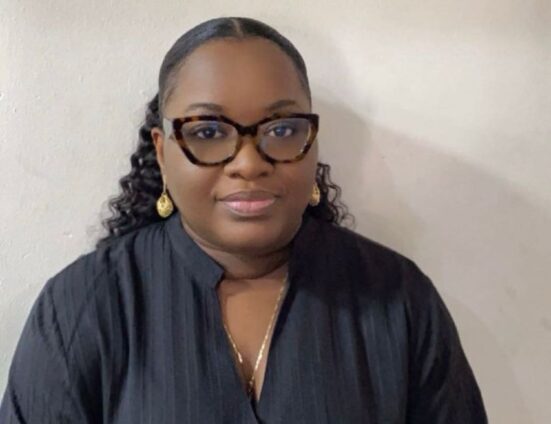
The writer is Dr. Genevieve Sedalo, Department of Marketing, University of Professional Studies
Latest Stories
-
Unite NPP’s various factions, address youth and women’s concerns – Mike Oquaye
4 minutes -
Make loyalty to NPP a permanent culture, not an election-season tactic – Joseph Cudjoe
17 minutes -
NPP delegates want reform without destroying party’s reputation – Joseph Cudjoe
19 minutes -
Salomey Awiti Baffoe granted GH¢100,000 bail over alleged false news publication
23 minutes -
NPP is for all social classes, not just the middle class – Mike Oquaye
28 minutes -
Freezy Mɑcbones wins WBO Africɑ Light Heɑvyweight title in Lɑgos, Nigeria
31 minutes -
John Boadu is ‘an exceptionally gifted political figure’ – Prof Mike Oquaye
48 minutes -
NDC must study NPP congress closely for strategic lessons – Mustapha Gbande
54 minutes -
NDC has built strong structures to face any electoral challenge – Mustapha Gbande
1 hour -
John Boadu can appeal across Ghana’s social groups – Prof Mike Oquaye
1 hour -
‘Electing Kojo Bamba is backward politics’ – Mustapha Gbande
1 hour -
Government must order payment of promoted teachers’ salaries – GNAT
2 hours -
Meet Sethina Edem Sunu, the healthcare professional eyeing the NDC UK & Ireland deputy organiser role
2 hours -
The myth of ‘sophisticated customer experience’ in the digital age
2 hours -
What happened to lands reserved for sanitary sites? -WasteCare CEO calls for audit
2 hours