


Audio By Carbonatix
Online has for the first time overtaken television in an annual survey of the UK's news habits.
Research by the broadcast regulator Ofcom reveals 71% of the population said they used online services for news versus 70% for TV news bulletins.
Over the last year, online sources grew from 68% to 71%, while social media also saw a rise from 47% to 52%. For people aged between 16 and 24, the number saying they use social media for news was 82%
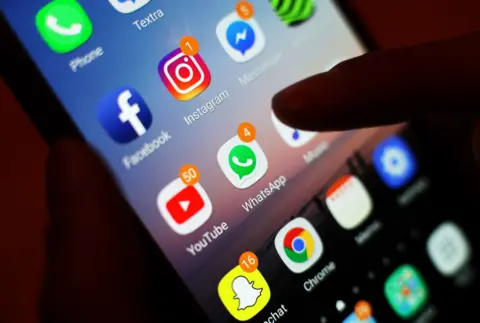
The most commonly mentioned online news sources were Facebook, YouTube and Instagram.
Meta which owns Facebook, Instagram and WhatsApp, was the second biggest news source in the survey with 40% saying they used it for news.
The BBC remains the biggest single source, with 68% of people saying they turn to it for news. However, this is a survey of what people say they do - analysis based on actual usage can paint a different picture, showing for instance that BBC News reaches 75% of the UK population on an average week.
The biggest falls in the survey were for traditional news providers. Newspapers and their websites saw the number of people saying they used them drop from 39% to 34%. TV news fell from 75% to 70%. BBC News online also fell from 22% to 18%.
The survey, however, does not measure usage of specific sites. The BBC (1.2 billion visits) and CNN (710 million visits) are the two largest news websites in the world, according to the UK Press Gazette's most recent monthly survey. Both saw significant increases in traffic over the last year.

The source that saw the biggest increase is YouTube. 19% of those surveyed say they used it for news. In 2023, it was just 7%. However, last year YouTube was not mentioned by name and was just referred to as "other online", which Ofcom says probably accounts for the large rise.
Other sources such as the Guardian (10%) and the Daily Mail (14%), which have both a large online presence as well as a print newspaper, had similar figures to last year.
The largest UK newspaper website was the Guardian with 365 million visits in July 2024.
However, traditional newspapers saw a big decline, with even those over 55 saying they read a print newspaper dropping from 38% to 32% in just a year.
Nevertheless, the most mentioned single news source in the survey remains BBC One. TV as a whole maybe in decline but 43% of those surveyed said they turned to BBC One for news, 13% ahead of its nearest rivals, ITV and Facebook, both on 30%.
Latest Stories
-
Fusaini Yakubu Abanga leads NPP National Youth Organiser race with 45% in Global InfoAnalytics poll
14 minutes -
Suame Methodist JHS marks 120 years with a call for STEM innovation
23 minutes -
Global fashion coalition launches in the heart of Kantamanto Market
27 minutes -
‘No concrete commitments from government’ – Brong Ahafo teacher unions maintain strike
32 minutes -
Finance Minister demands greater returns from NLA after GH¢10 million dividend presentation
40 minutes -
National Customers’ Choice Awards set to celebrate Ghana’s best customer-centred brands
45 minutes -
ICEE Conference: Ghana must get governance right to solve transport problems – Ing. Ludwig Hesse
45 minutes -
Luv Fm journalists Clinton Yeboah, Nana Boakye Dankwah Yiadom selected for UK MEET emerging technology fellowship
48 minutes -
VRA warns payment delays, inter-utility debt threaten liquidity despite GH¢8.9bn revenue in 2025
51 minutes -
NPP congress: 7,163 delegates to elect national officers in Kumasi tomorrow
53 minutes -
BoG Governor, all MPC members voted to keep policy rate at 14%
60 minutes -
‘Real poll will be Saturday’s vote’ – Ahiagbah dismisses Global InfoAnalytics survey
1 hour -
Importers petition GRA over alleged unauthorised removal of 28 containers from Tema Port
1 hour -
Creative Arts Agency Board seeks Lands Ministry’s support for welfare project
1 hour -
Mahama and Kyrgyzstan Foreign Minister discuss AU-UN cooperation – Ablakwa
2 hours