

Audio By Carbonatix
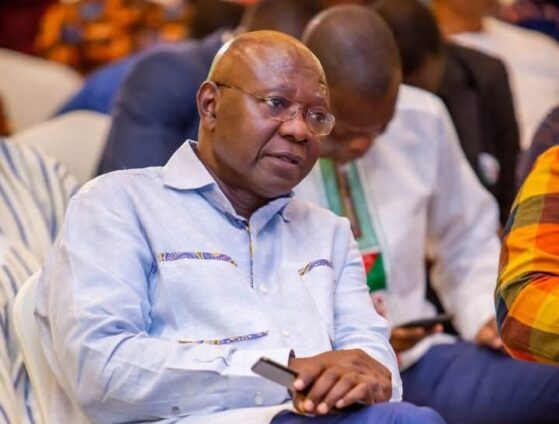
A former Minister for Local Government and Rural Development, Akwasi Opong-Fosu, has raised concerns over what he describes as a steady erosion of patriotism and nationalism in Ghana, warning that the country’s political culture is increasingly being driven by individualism and opportunism.
According to Mr Opong-Fosu, Ghana’s national values have shifted significantly from the ideals that once defined the country’s political and social life, particularly during the independence era and early years of nation-building.
Drawing parallels with Washington Irving’s classic tale Rip Van Winkle, he likened the current state of Ghana to a society that has undergone a quiet but profound transformation, where familiar structures remain but core values have changed.
According to him, politics, which was once rooted in service, integrity, and sacrifice, has gradually evolved into a transactional system dominated by personal interests and material gain.
He noted that leadership is increasingly viewed as a means of accessing power and privilege, rather than a responsibility to serve the public.
He expressed concern that this shift has created what he termed a “transaction society,” where opportunists, political financiers, and other actors shape outcomes in ways that often undermine the broader national interest.
Mr Opong-Fosu, who is the Board Chairman of Ghana Investment Promotion Centre (GIPC), further highlighted growing frustration among grassroots supporters and ordinary citizens, who feel excluded from the political process despite their contributions.
He said this has contributed to a perception that major political parties, including the National Democratic Congress (NDC) and the New Patriotic Party (NPP), are increasingly indistinguishable in practice.
He recalled cautions by the late President Jerry John Rawlings, founder of the NDC, who warned against the loss of ideological clarity and moral direction within political movements.
While acknowledging the challenges, Mr Opong-Fosu stressed that the current trajectory is not irreversible.
He called for a deliberate effort to restore the foundational values of governance, including social justice, accountability, inclusiveness, and service to the people.
He urged the NDC in particular to reconnect with its core principles, emphasising that the task ahead goes beyond electoral success and requires a broader commitment to rebuilding trust and renewing hope in Ghana’s democratic system.
Latest Stories
-
Journalists look back on a decade of breast cancer reporting in Ghana
13 minutes -
President Mahama ends Resetting Ghana tour of Ahafo Region
2 hours -
African negotiators seek delivery of climate commitments at COP31
2 hours -
BoG develops AI rules for financial sector
2 hours -
‘Big Push’: Government assures contractors of prompt payments
2 hours -
Court fines miner for breaking into gold buying shop
2 hours -
Tarkwa court jails labourer for three years over GH¢123,000 theft
3 hours -
GAEC must retain nuclear scientists for Ghana’s nuclear ambitions – Minister
4 hours -
Man reportedly mistaken for game and shot by hunter dead in forest
4 hours -
19-year-old mason jailed 15 years for defiling seven-year-old pupil
4 hours -
Ghana’s banking sector assets rise 20.47% to GH¢500.2bn – BoG Governor
4 hours -
22 injured as Sprinter bus overturns at Sege after tyre burst
4 hours -
UN housing expert urges Ghana to strengthen Rent Control Department amid housing affordability concerns
4 hours -
Delta-BCI partnership reaches 166,000 people with breast cancer education
4 hours -
Power restoration fault suspected in Kumasi Central Market fire
10 hours