

Audio By Carbonatix
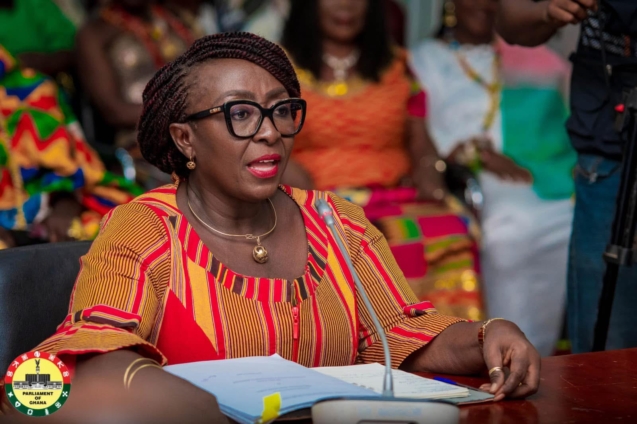
Ghana’s marine and coastal resources must be safeguarded and harnessed sustainably as they remain vital to national prosperity, Abla Dzifa Gomashie, the Minister of Tourism, Culture and Creative Arts, said.
Speaking at the opening of a three-day national consultation workshop on Ghana’s draft Blue Economy Strategy in Accra on Wednesday, she stressed the need for a holistic approach that balanced economic growth with environmental stewardship and cultural preservation.
The workshop presents a unique opportunity to reaffirm the immense importance of ocean resources to the collective prosperity and wellbeing of all.
It brought together more than 260 participants from government ministries, civil society, academia, private sector organisations, and development partners.
It forms a crucial step towards finalising Ghana’s first-ever Blue Economy Strategy – a national framework to promote sustainable ocean-based development.
“Our ocean heritage, livelihoods, and ecosystems must be developed with foresight and protected for future generations,” Madam Gomashie said.
She said it was important to protect underwater cultural heritage and support sustainable coastal tourism and reiterated her ministry’s commitment to community-led marine conservation initiatives.
Madam Emilia Arthur, Minister of Fisheries and Aquaculture Development, described the Blue Economy as “a national vision” with transformative potential for job creation, food security, environmental protection, and innovation.
She said: “This is not merely a technical exercise. It is a national vision,” commending the collaborative work of a 16-member expert committee, led by Senior Presidential Advisor, Dr Valerie E. Sawyerr.
The committee’s work was supported by the African Union – InterAfrican Bureau for Animal Resources, the Fisheries Commission, the National Development Planning Commission, and key academic partners.
The workshop has been structured to facilitate in-depth discussions across sectors.
The Blue Economy Strategy is aligned with key Sustainable Development Goals (SDGs) – notably SDG 14 (Life Below Water), SDG 8 (Decent Work and Economic Growth), and SDG 13 (Climate Action), and positions Ghana to lead in sustainable ocean governance within the West African sub-region.
The strategy seeks to integrate economic growth with climate resilience, social inclusion, and environmental sustainability, with stakeholders expected to validate its contents and align on actionable next steps.
These include the establishment of a Blue Economy Commission (BEC), creation of a Stakeholder Forum, and drafting of supporting legislation for Parliamentary consideration.
By finalising this strategy, Ghana aims to unlock the full potential of its ocean resources while ensuring long-term benefits for its people, environment, and economy.
Latest Stories
-
Don’t let speed of information become your judgement – CJ tells new lawyers
35 minutes -
World Cup visa scandal: People have leveraged public office to facilitate fraud – Senyo Hosi
40 minutes -
Glut! Farmers count losses as prices crash, customers happy
1 hour -
GSA postpones auction of unserviceable vehicles
1 hour -
Man charged with attempted murder after stabbing
1 hour -
World Cup visa scandal: Senyo Hosi says issue goes beyond calls for Sports Minister’s resignation
1 hour -
Yaw Ampofo Ankrah hasn’t taken or received any money to facilitate visas – Lawyer insists
2 hours -
World Cup visa scandal: Senyo Hosi urges focus on constitutional accountability
2 hours -
La Beach demolition: Senyo Hosi condemns lack of consultation
2 hours -
Russian glide bomb attack on Zaporizhzhia kills at least 15 people
2 hours -
Jinapor warns underperforming energy sector CEOs of consequences, says no protection for failure
2 hours -
Fire destroys head of tipper truck on Lower Volta Bridge
2 hours -
Palmer signs new Chelsea contract until 2034
2 hours -
World Cup visa scandal: Mahama will act on corruption allegations – Abass Nurudeen
2 hours -
Abass Nurudeen accuses Minority of ‘scandal scavenging’ over World Cup visa controversy
2 hours