

Audio By Carbonatix
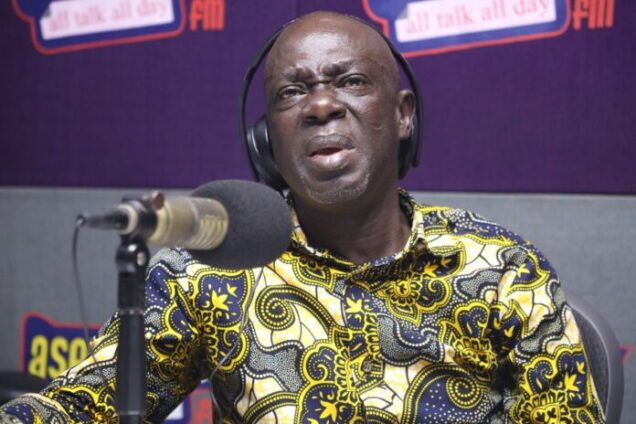
The President of the Renal Patients Association, Baffour Kojo Ahenkorah, has highlighted the extreme financial sacrifices kidney disease patients in Ghana are making to afford life-saving treatment.
In a candid interview on Joy News’ PM Express, he revealed that some Ghanaians, facing high dialysis costs, are now turning to desperate measures, such as paying millions of cedis or even exchanging property for a kidney.
His comments follow Vice President Dr Mahamudu Bawumia’s announcement that starting December 1, 2024, the government will provide free dialysis treatment under the National Health Insurance Scheme (NHIS) to alleviate the financial burden on kidney patients.
Reflecting on his journey, Mr Ahenkorah shared that his dialysis costs over the past decade have been financially crippling.
“If I’m to calculate the 10 years now, the money I’ve spent, I could have done a transplant easily with that money,” he said.
“But the point is, I don’t have the bulk money to go and do it. So at least then, if I get ¢1000, I go and do a session and see if I can get bulk money. Day in, day out, the time is running. So it’s all about the money.”
According to Mr Ahenkorah, many patients are trapped in a cycle of paying for dialysis without ever being able to save enough for a kidney transplant, which is now available at Korle Bu and Bank hospitals in Ghana.
“If this thing was there for the last 10 years, probably I could have saved enough or the money that I have, I would have used it to do my transplant, and I’m off,” he explained, expressing hope that the upcoming free dialysis treatment might help patients save towards transplants in the future.
When asked about the availability of kidney donors, Mr Ahenkorah shed light on a troubling reality: people in Ghana are quietly selling their kidneys to survive.
“We need to get it, because now, for somebody even to give this kidney to, people are selling it. People are doing it indirectly. In Ghana, people are doing it indirectly,” he disclosed.
He explained that the traditional route of receiving a kidney donation from a family member is becoming less common as economic hardship pushes some people to offer their kidneys for sale.
“Now, the country is hot; people need money. So if I can live on one kidney, why not?” Mr Ahenkorah stated.
“Some people don’t mind. If they check and you are compatible, that’s it. Some people are selling it for about ¢3 million or ¢4 million. Once you do the labs and you are compatible, it’s ready; they are willing to give it to you. Somebody will say, ‘Get me a two-bedroom apartment, let me go and stay there, and I’ll give you one of my kidneys.’”
Mr Ahenkorah highlighted that the costs don’t stop at purchasing the kidney. Patients must then pay an additional $25,000 for the transplant surgery.
“So you buy the ¢3 million or ¢4 million kidney, and then you have to now go and pay for the procedure of about $25,000,” he noted, stressing the double financial burden that many Ghanaians simply cannot bear.
Reflecting on the ongoing expenses associated with dialysis, Mr Ahenkorah pointed out that he has spent enormous amounts on medication alone.
“If I’m to sit down and calculate the Erythropoietin injections alone that I have bought, and the BP medication that I have bought, that money, I could have done transplant way back,” he said.
But due to a lack of funds, he’s been forced to continue paying for dialysis sessions, balancing the costs of treatment with his responsibilities as a parent.
“I have children. You have to take care of them, you know, in between the dialysis,” he added, underscoring the toll kidney disease takes on patients and their families.
Latest Stories
-
The 7-foot giant of Ngleshie Amanfro: Seven-foot Ghanaian Ephraim Saawa dreams of joining the national basketball team
32 minutes -
Government promises support for Kumasi Central Market fire victims
38 minutes -
Vibes The Movie: Big Ghun’s Ghanaian film earns five nominations at 2026 REFFA
1 hour -
MamaCare CEO warns unresolved conflicts among health workers could undermine maternal and neonatal care
2 hours -
Health professionals urged to translate medical knowledge into practice to save mothers
2 hours -
Conflicts among care providers linked to maternal, neonatal deaths – Expert
3 hours -
GIS marks 10th TIME conference, champions improved teaching practices
3 hours -
BRICS Or Balance? What Ghana’s bid really means
4 hours -
GPRTU wants full TRAFFITECH-GH implementation to start in 2027
4 hours -
Mahama announces plans to import electric wheelchairs for PWDs
4 hours -
KGL U17 Colts 2026: Western beat Prempeh Elite Academy to set up final final with Greater Accra Region
4 hours -
Late Solanke strike salvages 10-man Spurs draw at Man United
5 hours -
Gender Ministry to monitor welfare of Nana Akua Addo’s children amid domestic violence case
5 hours -
Benedict Okyere Yeboah: Ghana’s football problem goes beyond sacking a coach
5 hours -
GPL 2026/27: Darkwah Wiafe’s winner sees All Blacks beat Kotoko
5 hours