

Audio By Carbonatix
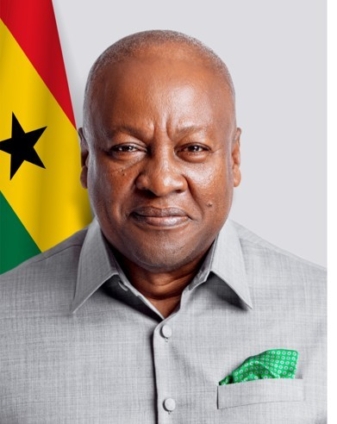
The first 100 days of any presidency are not merely ceremonial; they are foundational. They set the tone, reveal the vision, and give citizens a sense of the direction their leader intends to take the country. For Ghana’s new president, these initial days have been marked by swift and strategic moves, particularly in the area of leadership selection. From ministerial portfolios to the top brass of state-owned enterprises and public institutions, the appointments made so far reflect the early architecture of the president’s agenda.
The Formation of Government
Within weeks of assuming office, the president unveiled his ministerial list, lean, strategic, and seemingly purpose-driven. In a departure from previous administrations that leaned toward bloated governments, this new list was compact, signalling a renewed commitment to fiscal prudence and governance efficiency. Ministries were streamlined, some merged, and others restructured to reflect emerging priorities like digital transformation, youth empowerment, and industrial growth.
This prompt action was widely interpreted as a president eager to hit the ground running. For a country battling economic uncertainty, youth unemployment, and rising public debt, such clarity of purpose inspired optimism.
Appointments to State Institutions
Beyond ministerial roles, the president’s appointments to key state institutions have also come under public scrutiny, and rightly so. These are the engines through which government policy is implemented, and the individuals chosen to lead them often wield as much influence as ministers.
So far, appointments to agencies like the Ghana Revenue Authority, Ghana Cocoa Board, National Petroleum Authority, National Health Insurance Authority, Ghana Ports and Harbours Authority, and even state media houses have signalled a strong desire for competence, loyalty, and results.
Some of these positions went to technocrats and professionals with long-standing industry experience. Others went to loyal party foot soldiers and campaign strategists, raising the usual debate: loyalty or merit? For a government still earning its stripes, the hope is that political loyalty does not come at the expense of institutional effectiveness.
Competence, Diversity, and Youth Empowerment
One of the most notable features of the appointments so far has been the mix of youth, experience, and gender balance. A good number of young professionals have been elevated to roles previously held by career bureaucrats. For many in Ghana’s growing youth population, this is not just symbolic; it is empowering.
The president has also demonstrated a deliberate effort to increase women’s representation across government. While the percentage of women in top roles is still not at parity, there is marked progress. Several female professionals, academics, and civil society leaders now occupy influential positions in ministries and state boards, an encouraging sign for gender advocates and progressive governance.
The Political Balancing Act
Every president must navigate the delicate politics of regional balance, party loyalty, and public expectations. This administration has mostly maintained regional equity, with key roles distributed across the country to promote national cohesion. However, the presence of familiar political names and the re-emergence of past government operatives have sparked both praise and criticism.
To some, these are experienced hands needed to stabilize governance in a challenging time. To others, it smacks of recycling old elites. The real test, however, will be in delivery. Ghanaians are more concerned with outcomes than with names.
Civil Society and Public Reaction
The public response to these appointments has been mixed, tempered hope on one hand, and healthy scepticism on the other. Civil society organizations have called for performance contracts and independent audits to ensure these appointees are not just placeholders but active drivers of transformation.
Public expectations are high. People want to see immediate improvements in service delivery, efficiency, and accountability; especially in key sectors like energy, transport, education, and agriculture. If these expectations are not met, public goodwill may quickly erode.
The Appointments Are Only the Beginning
Appointments are not achievements; they are enablers. The team the president is building will define the success or failure of his vision. While there have been commendable efforts in terms of speed, diversity, and strategic alignment, the real measure lies in performance.
As the first 100 days close, Ghanaians are not merely applauding titles or press statements. They are watching closely, looking for leadership that delivers, systems that work, and a government that listens. The blueprint has been drawn. The real work begins now.
The Author, Ephraim Ofori Numosuor, is a Financial Economist | Research & Policy Analyst
Email: numosuorephraim@gmail.com
Latest Stories
-
Bobby Banson condemns EOCO’s attempted arrest of Nana Agyei Baffour Awuah
3 minutes -
When Kumasi begins to look like somebody is in charge
3 minutes -
Parliamentary probe into cocaine seizure would be a waste of time – Inusah Fuseini
10 minutes -
Cocaine seizure: Focus on Ghana’s reputation, not partisan blame – Osae-Kwapong
16 minutes -
Two Invitations, Three Interrogations: Did Baffour Awuah tell the whole story?
25 minutes -
Drug cartels may be seeing Ghana as easy route – Lenin Anane Agyei
1 hour -
Ghana risks gaining notoriety as drug-trafficking hub – Bobby Banson
1 hour -
Government dismissed my drug trafficking warning, then tried to arrest me – Ntim Fordjour
1 hour -
Day Two: 3rd Republic Bank-JoyNews Habitat Fair Clinic underway at Junction Mall
1 hour -
NACOC addressing inherited gaps in fight against drug trafficking – Deputy Director-General
2 hours -
Taekwondo goes to school as GTF launches five-region youth campaign
2 hours -
The issues Mourinho is struggling to fix at Real Madrid
2 hours -
Hundreds throng EducationUSA College Fair in Kumasi in pursuit of abroad studies
2 hours -
Drug bust: NACOC should be part of port inspection team – Twum-Barimah
2 hours -
Ward appointed Liverpool’s sporting director
2 hours