

Audio By Carbonatix
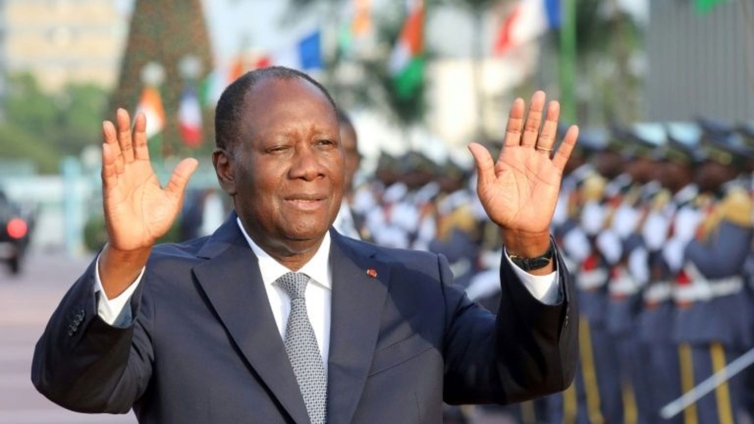
Ivory Coast President Alassane Ouattara was formally chosen by his ruling party on Saturday to run for a third term in an October election, despite furious opposition charges that the move is unconstitutional.
Ouattara, who has been in power since 2010, said in March that he would not stand again but changed his stance after the death of Prime Minister Amadou Gon Coulibaly - seen as his anointed successor -- of a heart attack in July.
Ouattara's decision has triggered outrage among opposition and civil society groups, who labelled it a "coup" that risked triggering chaos.
The constitution limits presidents to two terms, but 78-year-old Ouattara -- who has served two five-year terms since 2010 -- and his supporters argue that a 2016 constitutional tweak reset the clock.
After Ouattara's re-election announcement earlier this month, mass protests descended into three days of violence in which six people died and a hundred were injured.
His ruling Houphouetist Rally for Democracy and Peace (RHDP) party said Ouattara was nominated as its candidate at an event attended by 100,000 people in an Abidjan stadium.
"We remain focused on the election, with a record to defend and a project to propose to Ivorians," party spokesman Mamadou Toure told AFP, branding the street demonstrations against Outtara's candidacy a "dismal failure".
Ouattara's change of heart has heightened tensions before October 31 vote, which takes place in the shadow cast by violence following 2010's election that killed around 3,000 people.
On Friday, election authorities rejected appeals by former president Laurent Gbagbo and former rebel leader Guillaume Soro to be allowed to run in the election.
Gbagbo and Soro had appealed to the Independent Electoral Commission (CEI) against a decision to not include them in electoral lists for the ballot.
Gbagbo was freed conditionally by the International Criminal Court (ICC) after he was cleared in 2019 of crimes against humanity.
His return to Ivory Coast would be sensitive before the presidential election. His Ivorian Popular Front (FPI) party urged him to throw his hat in the electoral ring.
Soro, a former rebel leader, has been forced into self-imposed exile in France in the face of a long list of legal problems at home.
He was a leader in a 2002 revolt that sliced the former French colony into the rebel-held north and the government-controlled south and triggered years of unrest.
He was once an ally of Ouattara, helping him to power during the post-election crisis in 2010. The two eventually fell out.
Latest Stories
-
GPL 2025/26: Dreams FC stage stunning comeback to hammer Eleven Wonders
1 hour -
Livestream: The Probe examines Kumasi’s looming water crisis
1 hour -
MTN Ghana gears up to lead Africa’s AI revolution
1 hour -
Philanthropist Alhaji FuZak donates Da’wah bus to Ambariya Sunni community
1 hour -
GUTA calls for suspension of Publican AI system over trade disruptions
2 hours -
TTAG raises alarm over proposed recruitment of 7,000 teachers, demands national posting roadmap
2 hours -
Civilians feared killed after reports of air strike on Nigerian market
2 hours -
Bishop Simon Kofi Appiah installed as new Jasikan Diocese Bishop
2 hours -
Trump’s Strait of Hormuz blockade threat raises risks and leaves predicaments unchanged
2 hours -
US Court backs extradition of former MASLOC CEO Sedina Tamakloe-Attionu to Ghana
3 hours -
Seven arrested as NAIMOS dismantles illegal mining camp, seizes firearms at Boin River
3 hours -
Fire erupts at Madina Ritz Junction, destroys multiple wooden structures and containers
3 hours -
Daniel-Kofi Kyereh returns from long-term injury, registers assist for Freiburg U23
3 hours -
Knifeman calling himself ‘Lucifer’ slashes three at NYC’s Grand Central
3 hours -
Brands are built from within to without
3 hours