

Audio By Carbonatix
An economist at the Institute of Statistical, Social and Economic Research (ISSER), Professor Charles Ackah, has said that the principle underpinning the Domestic Dept Exchange Programme is unacceptable.
According to him, although the current economic crisis has compelled the Finance Ministry to take desperate measures, he is of the view that the underlying principle of the programme would ruin the country's banking sector.
This, he said, could further aggravate the challenges the country is currently experiencing.
"To be honest, to be fair to the Ministry of Finance, I think we're in a difficulty and therefore they're taking desperate measures and I think they have improved. The current proposal is a very good improvement over the previous.
"The first one was really oppressive and I don't know how they came about it, but this particular one seems to have made some accommodation. Nevertheless, the whole principle is wrong and that's what we basically need to discuss," he said on the AM Show on JoyNews, Tuesday.
Justifying his statement, the Economist opined that although government has managed to "coerce" some banks into agreeing to its new terms regarding the programme, the ramifications thereafter would be quite dire for these banks and people would lose their jobs.
Professor Ackah explained that the new terms will affect profitability, liquidity, capital adequacy amongst others, because operation cost for banks and the financial sector at large is huge.
According to him, although the Bank of Ghana has directed that banks operate on less than 70% cost to income ratio, the directive is not being heeded, in that most banks now operate on a 90% cost to income ratio.
The economist added that the Central Bank itself operates on 80% because doing business in Ghana has become costly.
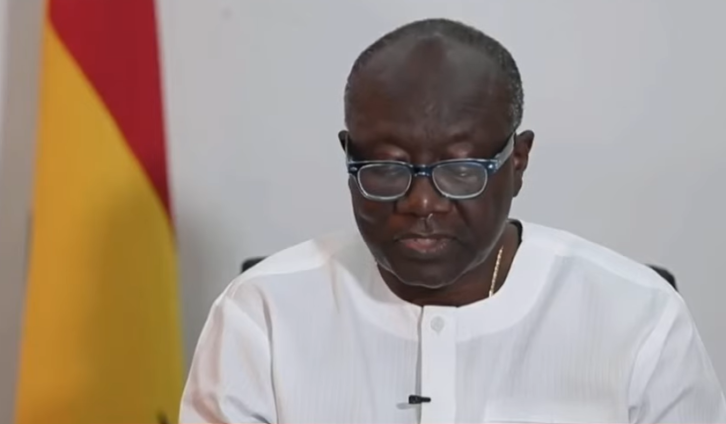
The latest development on the Domestic Dept Exchange Programme (DDEP) indicates that the Finance Minister, Ken Ofori-Atta has urged individual pension bond holders to accept 15% interest on their coupons.
In reaction to this, individual Bondholders, including pensioners took to the streets to protest the directive.
Some soon to be pensioners have also argued that they have served the country long enough. As such, they should be exempted from the programme.
They lamented that they have no other sources of income to survive on should government include them in the exchange programme.
Meanwhile, in the wake of disagreements on the programme, the Finance Minister, Mr Ofori-Atta has lamented the need for an urgent International Monetary Fund (IMF) bailout by March, without which he said the economy will crush.
However, Prof. Ackah contended that government's resort to a debt exchange programme in the wake of economic turmoil is "illogical", saying the government would inflict more hardship on the economy by doing so.
Latest Stories
-
Political protection could be masking Ghana’s cocaine trade – Global Organised Crime Index
2 seconds -
AFCON 2027Q: ‘We have to dissolve the GFA’ – Effia MP after Black Stars lose to Gambia
2 minutes -
NPP announces voting schedule and ID requirements for October 3 national elections
4 minutes -
Lupus can mimic HIV symptoms and damage kidneys if untreated – KNUST expert
7 minutes -
Focus on Sickle Cell Foundation seeks to introduce sickle cell education through comics in Ghanaian schools
13 minutes -
NPP rewrites the campaign playbok as opposition reality shapes National Executive contest
14 minutes -
Road safety education will fail without enforcement – NRSA boss
15 minutes -
Daily Insight for CEOs: Finishing Q3 strong and entering Q4 with purpose
16 minutes -
National Ambulance Service begins ‘Operation Restore Fleet’ to restore grounded ambulances
17 minutes -
GNFS rescues 35-year-old driver trapped in overturned tipper truck in Upper East
18 minutes -
Unlicensed fuel trucks endanger Ghanaians – Transparency International Ghana
19 minutes -
Akyem Hemang residents demand justice for man shot and killed at mining site by suspected military men
20 minutes -
Okada riders must belong to registered unions or companies from 2027 – NRSA
20 minutes -
CRC recommendations: Christian Council rejects proposed five-year presidential term
21 minutes -
UKGCC/Ecobank PLC Golf Invitational caps off investment summit with renewed focus on partnerships and growth
21 minutes