

Audio By Carbonatix
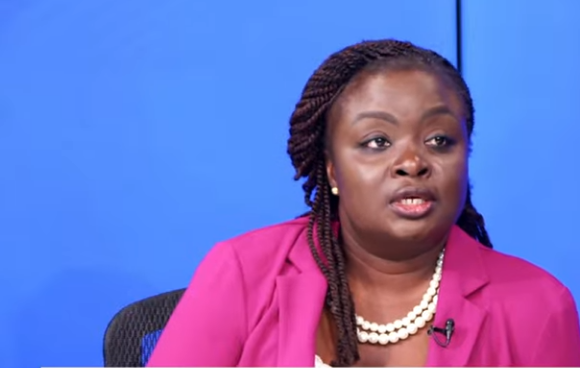
An economist at the University of Ghana Business School (UGBS), Prof. Agyapomaa Gyeke-Dako, has stated that Ghana’s economy has transitioned from crisis management to a recovery phase, pointing to sustained macroeconomic stability as a key indicator.
She made the remarks during a JoyNews roundtable discussion themed “Mahama at 16 Months: Do Economic Narratives Match Real-Sector Outcomes?" where she assessed the country’s economic trajectory.
Introducing her central argument, Prof. Gyeke-Dako said, “So first of all, I’ll say that we have moved from managing crisis to a point where we are actually managing recovery.”
Explaining the basis for her position, she noted, “I say this on the basis that macroeconomic stability has largely been successful, but then maybe the transmission of that success to households and firms is what is taking some time.” She, however, acknowledged emerging improvements, adding that "some firms are experiencing some large successes.”
Turning to the key driver of the recovery, she identified exchange rate stability as pivotal. Emphasising its importance, Prof. Gyeke-Dako stated, “Now the game changer here has been the exchange rates, in my opinion.” She further stressed, “The stability that we are experiencing with the exchange rate has changed everything.”
Providing context, she pointed to global geopolitical tensions and their potential economic implications. Referencing these developments, she remarked, “Looking at the Iran and Israel war, because of that, the Strait of Hormuz has been closed.” Despite this, she underscored Ghana’s resilience, stating, “We are not really feeling the pain that we would have felt if the exchange rate were troubled.”
Highlighting recent currency performance, she noted, “For the first time since 1994, we’ve seen an appreciation of the exchange rates.” She provided further detail, saying, “We saw it in 2025 at about 41%, and year on year, in 2026, we are seeing roughly about 27%.”
Attributing these gains to policy measures, Prof. Gyeke-Dako explained that this is largely being driven by the gold purchase programme, where the Bank of Ghana has been able to build quite a lot of reserves. She added that close to about six months of import cover is what the country currently has, which she said has ensured credibility.
She further noted that this has helped curb speculative activities because the Bank of Ghana is able to intermediate more easily, having built up reserves.
Linking exchange rate stability to inflation trends, she observed, “Now this same exchange rate stability has helped in inflation control.” She elaborated, “The spiral in inflation that we have been seeing has actually gone down. We now have inflation around about 3.2% or so, which is extremely good for us because at least prices are stable.”
On monetary policy interventions, she acknowledged both their impact and cost. Addressing this, she stated that "Bank of Ghana activities in terms of open market operations have also been very helpful, although that has come at a cost.” She emphasised the necessity of such measures, adding that no policy intervention comes without a cost.
Prof. Gyeke-Dako highlighted the broader implications for economic planning and stability.
Summarising the gains, she said, “With exchange rates stable, with inflation also down to about 3%, at least there’s some certainty in the environment.” She added, “Businesses are able to plan; households even can plan. So there have been some gains.”
Latest Stories
-
La Beach demolition: Senyo Hosi condemns lack of consultation
8 minutes -
Russian glide bomb attack on Zaporizhzhia kills at least 15 people
23 minutes -
Jinapor warns underperforming energy sector CEOs of consequences, says no protection for failure
24 minutes -
Fire destroys head of tipper truck on Lower Volta Bridge
29 minutes -
Palmer signs new Chelsea contract until 2034
30 minutes -
World Cup visa scandal: Mahama will act on corruption allegations – Abass Nurudeen
32 minutes -
Abass Nurudeen accuses Minority of ‘scandal scavenging’ over World Cup visa controversy
33 minutes -
US Embassy recognised NSA, GFA and GTA as separate entities for visa applications – Sports Minister’s aide
40 minutes -
Only 30% of Ghanaian teachers satisfied with their jobs – CAPCOE data reveals
51 minutes -
Communities affected by construction of Akosombo Dam urge government to speed up compensation process
1 hour -
World Cup visa scandal: Sports Ministry not shielding anyone – Sports Minister’s special aide
2 hours -
World Cup visa scandal: Over 30 people misrepresented as GTA board members to US Embassy – Vincent Assafuah alleges
2 hours -
Fire destroys wooden structure near Yesu Mo Villa at Bush Road
2 hours -
NDC threatens sanctions over oversized campaign posters, gives aspirants 5 days to comply
2 hours -
Star Oil paid GH¢2.7bn in taxes, levies in nine months of 2026
3 hours