

Audio By Carbonatix
By: Joseph Makinde
The successful execution of any large-scale infrastructure project depends not just on technical expertise but also on structured project management methodologies. When managing a complex infrastructure project, where multiple stakeholders, timelines, and risks converge, good innovations and best practices are critical in ensuring smooth execution, cost control, and quality assurance.
As a Certified Project Management Professional (PMP), a holder of Master of Science (MS) in Project Management and a seasoned project manager, I had spent the past decade managing large-scale infrastructure projects across Ghana and Nigeria in West Africa.
This article covers and explores how globally recognized project management principles—as outlined in frameworks such as PMBOK (Project Management Body of Knowledge), PRINCE2, and Agile Project Management—were applied in the planning, execution, monitoring, and completion of the infrastructure projects managed successfully and delivered by me.
Project Initiation: Defining Objectives and Stakeholder Alignment
One of the fundamental project management knowledge areas defined by PMBOK is Project Initiation, where project goals, feasibility studies, and stakeholder requirements are assessed before execution begins.
For Infrastructure Project, this phase involves:
✔ Defining project scope and deliverables – Establishing clear objectives, including the project importance, compliance with government regulations, and benefits of such infrastructure project to the society is vital .
✔ Stakeholder engagement – Collaborating with government agencies, the private sector, and other stakeholders to secure approvals, coordinate timelines, and ensure alignment.
✔ Preliminary risk assessment – Identifying potential constraints, including supply chain delays, technical complexities, and challenges.
In this phase, a comprehensive feasibility study needs to be conducted, incorporating cost-benefit analysis, environmental impact assessment (EIA), and compliance with relevant standards. Without this step, we risk scope creep, regulatory issues, and unforeseen roadblocks.
Project Planning: Structuring the Execution Using PMBOK Knowledge Areas
“Failing to plan is planning to fail.” This is one of the core principles in project management, and it could not have been more relevant to infrastructure projects.
The Planning Phase involves structuring the entire project based on PMBOK’s ten knowledge areas, ensuring that each aspect—scope, cost, time, risk, procurement, and communication—is properly managed.
- Work Breakdown Structure (WBS) and Scheduling (Time Management)
It is important to develop a Work Breakdown Structure (WBS), breaking the project into manageable components such as:
✔Engineering Design- FEED (Front-End Engineering Design), Basic & Detailed
✔ Procurement of all project Items and components
✔ Construction such as Civil, mechanical and electrical works
✔ Installation of all project components and accessories
✔ Testing and commissioning
This structured breakdown ensures that each task has clear ownership, timelines, and dependencies, preventing bottlenecks. Critical Path Method (CPM) is utilized to sequence activities efficiently.
- Risk Management and Mitigation Strategies
Every infrastructure project comes with risks. It is important to follow an effective risk management process, which includes:
Identifying Risks – Supply chain disruptions, regulatory approvals, and unforeseen delays.
Analyzing Impact – Assessing risks using qualitative and quantitative risk assessment tools.
Developing Response Strategies – Implementing contingency plans for procurement delays and budget overruns.
- Procurement and Supply Chain Management
Procurement plays a major role in Infrastructure project, and adhering to global procurement standards (ISO) ensures seamless sourcing, delivery, and installation of project critical components.
Given the challenges poses by procurement for example, shipping or delivery delays of critical & long lead project items and components, It is important to structure procurement strategies using:
✔ Just-in-Time (JIT) Procurement – Avoiding unnecessary storage costs while ensuring materials arrived as needed.
✔ Preferred Supplier Agreements – Establishing long-term contracts with trusted manufacturers.
✔ On-Site Quality Inspection – Conducting Factory Acceptance Testing (FAT) for project critical items and components.
Project Execution: Implementing Agile and PRINCE2 Principles
The execution phase is where project plans become reality, and it is good to adopt a hybrid project management approach—combining PRINCE2’s structured governance with Agile’s flexibility—to navigate unexpected challenges.
- Adapting to Unexpected Changes Using Agile Project Management
No matter how well you plan, on-site realities often require adjustments. During execution, there could be some challenges such as:
- Delays in the delivery of critical project items – Adjust scheduling to fast-track other critical path tasks.
- Unfriendly Site/Field conditions and difficulties – Implement real-time scope adjustments to address the real site conditions.
By implementing Agile methodologies, one could conduct weekly sprint reviews, allowing for continuous feedback, quick adaptation, and problem-solving without compromising project goals.
- Leadership and Team Coordination
As a Project Manager, it is important to focus on team dynamics and stakeholder coordination, ensuring that engineers, procurement specialists, subcontractors and the entire project team are aligned.
✔ Daily stand-up meetings ensures efficient decision-making.
✔ Regular progress updates helps avoid miscommunication.
✔ Conflict resolution mechanisms keeps the team working harmoniously.
Project Monitoring and Control: Ensuring Compliance and Quality
A key pillar in Project management’s framework is Monitoring and Controlling, where project performance is continuously tracked against the project management plan.
- Key Performance Indicators (KPIs) and Earned Value Management (EVM)
The KPIs and EVM are useful to track:
- Cost Variance (CV) and Schedule Variance (SV) – Ensuring financial and time targets are met.
- Quality benchmarks – Ensuring installed project items, components and systems meet operational standards.
- Risk response effectiveness – Measuring how well mitigation strategies are working.
- Testing, Commissioning, and Handover
Before handing over the project, it is important to conduct:
Testing and Commissioning- Testing of all items installed, commissioning and carrying out quality checks as well as verifying the integrity of the entire construction.
Once all quality checks are cleared, the project transitions to handover and operational acceptance by the Owner.
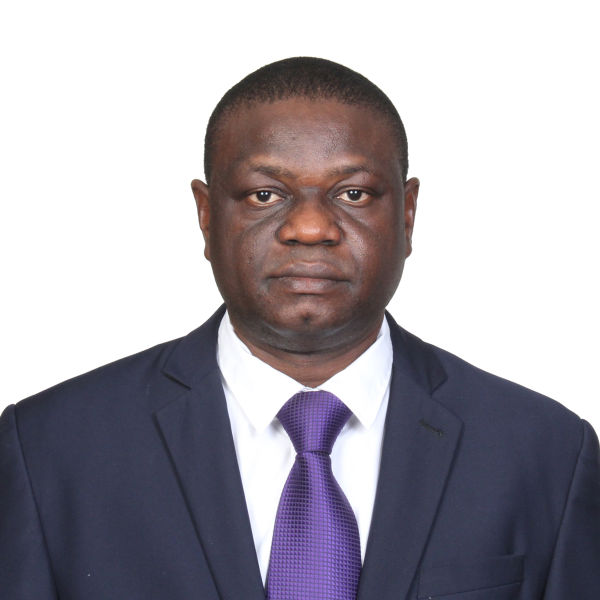
In summary, some key Lessons learned in project management methodologies innovations and best practices from joseph Makinde’s successfully- managed infrastructure projects are:
✔ Early-stage planning prevents execution failures.
✔ Risk management is not optional—uncertainty is a reality in infrastructure projects.
✔ Hybrid project management (PRINCE2 + Agile) allows for flexibility without losing structure.
✔ Quality control is the difference between success and long-term operational reliability.
As a Project Management Professional (PMP) with a master’s degree in project management, my approach has always been to balance structure with adaptability.
For any project manager leading critical infrastructure developments—foresight, planning of action and discipline are key.
Latest Stories
-
Ghana housing finance conference adopts communiqué to improve affordable housing access
3 hours -
Special Initiatives Minister urges Wa Technical Institute to enrol more girls as EU-backed solar training lab opens
4 hours -
In the matter of my first year at the Bar
4 hours -
ActionAid Ghana calls for an end to child marriage, greater investment in girls’ rights
4 hours -
Newsfile to tackle World Cup visa scandal, beach demolitions, education strikes, BRICS bid
4 hours -
UK-Ghana Trade & Investment Summit: Trade Resource Centre to help businesses maximise UK-Ghana trade opportunities
5 hours -
Embassy of Denmark celebrates World Maritime Day
5 hours -
Linking LEAP to productive inclusion could cut extreme poverty by 2030 – UNICEF
6 hours -
Trade Ministry backs use of creative arts to rehabilitate prison inmates
6 hours -
Negotiations with government to continue despite strike suspension – GNAT
6 hours -
‘Ghana cannot afford to waste public resources; every cedi has a job’ – Ato Forson
6 hours -
Ghana expects economic boost as World Assemblies of God Congress brings 10,000 delegates to Accra
6 hours -
Joy in Nayilifong as Farouk Aliu Mahama donates 100kVA transformer to improve power supply
7 hours -
Chief Justice urges employers to tackle mental health stigma in workplaces
7 hours -
Analysis: Ghana’s yellow fever numbers reveal a gap between vaccination and protection
8 hours