

Audio By Carbonatix
The Catholic Relief Services (CRS) has charged young people in the Upper East Region to reject extremist ideologies and lead efforts to restore peace and stability in their communities.
The call comes on the back of the growing insecurity in the region.
The region, one of the least developed in northern Ghana, has for years been plagued by recurring conflicts, largely triggered by land and chieftaincy disputes.
Families have lost loved ones and property, businesses have collapsed, and school calendars are repeatedly disrupted.
Farms and livestock are often destroyed in fire attacks, while sporadic shootings and killings continue to claim lives. These persistent tensions have left parts of the region under frequent curfews and heavy security surveillance, creating a climate of fear and uncertainty.
It is in response to these challenges and the growing risks of cross-border insecurity that CRS introduced its PoVETSA II Project, aimed at promoting peacebuilding, social cohesion, and resilience among communities.
The Prevention of Violent Extremism Through Social Accountability (POVETSA) II is a Netherlands-funded initiative implemented by CRS in partnership with the National Peace Council and the Kofi Annan International Peacekeeping Training Centre (KAIPTC).
The project aims to build trust between civilians and security services, enhance inclusive governance and social accountability mechanisms, and mitigate the risks of violent extremism, especially in Ghana’s vulnerable northern and border regions.
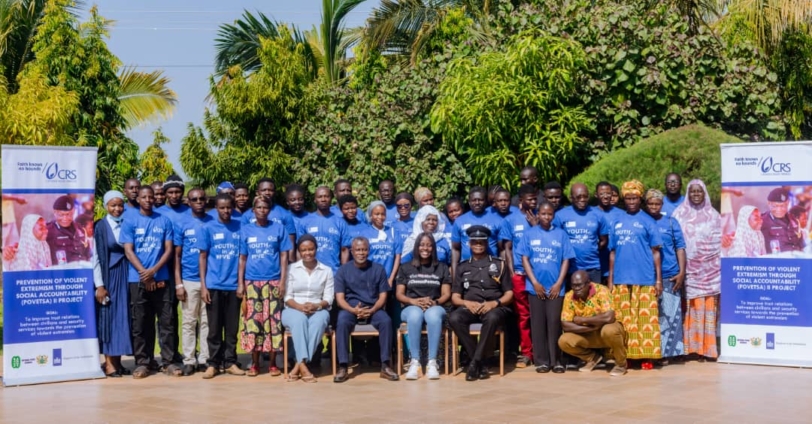
As part of several interventions under the project, CRS held a two-day capacity-building programme for 40 youth leaders from various communities in the Bolgatanga Municipality to make them peace advocates.
Project Manager for PoVETSA II at CRS Ghana, Adelaide Yiriyelleh, said the initiative, which began in October 2022, is being implemented in collaboration with the National Peace Council and the Kofi Annan International Peacekeeping Training Centre across five regions.
These include Upper East, Upper West, North East, Northern, and Greater Accra.
Participants of the two-day training were drawn from active youth groups and networks across Bolgatanga to equip them with practical skills in mediation, dialogue, and early warning response.
Ms Yiriyelleh stated that “We are empowering them to become peacebuilders in their own right, capable of identifying and neutralising early signs of conflict and radicalisation within their communities”.
She was optimistic that the trainees would extend the lessons beyond the classroom and serve as multipliers of peace in their respective areas.
“Our expectation is that these young people will step down the knowledge acquired and become advocates for peaceful coexistence,” adding that CRS has instituted a rigorous monitoring and evaluation mechanism to track outcomes.
“We conduct quarterly visits, collect feedback, and document impact stories to guide future interventions,” she noted.

Peace and conflict resolution consultant, Ali Anankping, who facilitated the sessions, underscored the central role of young people in either promoting or undermining national security.
He warned that when left idle or excluded, the youth could easily become tools for violence, but when empowered and engaged, they turn into formidable defenders of peace.
“If we guide them to understand conflict and learn to manage it, they become positive agents who can defuse tensions before they escalate,” he said.
He called on the government and development actors to design youth-focused interventions that respond to the real aspirations of young people rather than imposing externally conceived programmes that do not reflect their realities.
Upper East Regional Deputy Police Commander, ACP Joseph Darison Wusi, urged participants to see security as a collective duty.
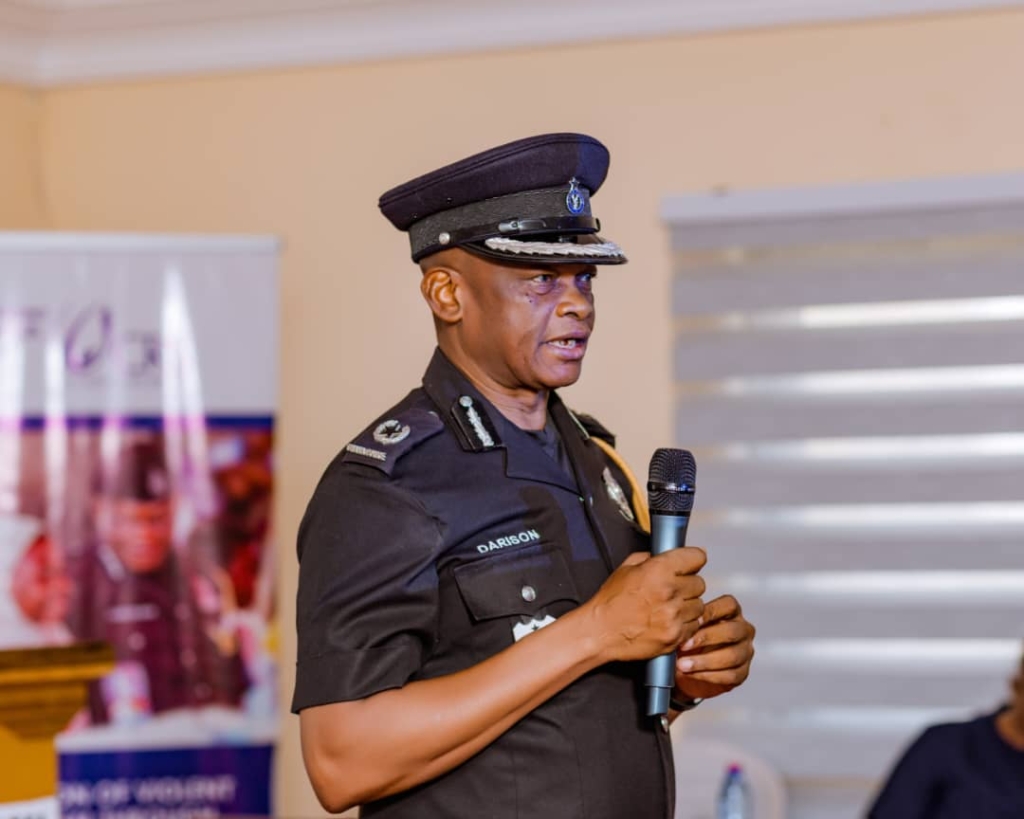
He said the police depend on credible intelligence from the public, especially the youth, to counter crime and violent extremism effectively.
“You are the eyes and ears of the community. Share information promptly so that we can act before situations get out of hand,” he charged.
Some participants described the training as timely and transformative. A participant, Darlington Anadem, said the sessions provided him with new tools to identify emerging threats of extremism.
“Terrorist tactics are evolving, and so must our response. This training has equipped me with practical ways to detect and counter the changing signs,” he said.
Another participant, Batiah Munaya Santi, said the training had strengthened her resolve to champion the rights of women and children, who often bear the brunt of conflicts.
“Women suffer most when violence breaks out. I now have the confidence and knowledge to lead advocacy in my community against violent extremism,” she said.
The CRS and partners through PoVETSA II Project continue to mobilise and build youth leadership across northern Ghana in an effort to fortify communities against radicalisation and maintain peace.
Latest Stories
-
Late Solanke strike salvages 10-man Spurs draw at Man United
6 minutes -
Gender Ministry to monitor welfare of Nana Akua Addo’s children amid domestic violence case
13 minutes -
Benedict Okyere Yeboah: Ghana’s football problem goes beyond sacking a coach
23 minutes -
GPL 2026/27: Darkwah Wiafe’s winner sees All Blacks beat Kotoko
28 minutes -
ITF World Tour : Patel Wins Boys’ Singles Final at J100 Accra
41 minutes -
Ghana must pursue BRICS partnership if it brings economic benefits – Kpebu
44 minutes -
Success and Wright Claims J100 Accra Girls’ Doubles Championship
44 minutes -
ITF J100: America’s Wright wins J100 Accra Girls’ Singles Title
51 minutes -
Expedition hopes to find aviator Amelia Earhart’s plane on remote island
52 minutes -
US seeks changes to rejected $109m health compact with Ghana – Mahama
1 hour -
Nine dead in mass shooting at Pennsylvania home
2 hours -
‘Time for Ukraine to get new president,’ says Trump after Zelensky condemns diesel deal
2 hours -
Hincapie injury adds to Arsenal issues after Guimaraes rescue act
2 hours -
Henderson scores twice as Chelsea thumb Bournemouth
2 hours -
Photos: Mentapulse Africa convenes health and labour summit to address talent retention
2 hours