

Audio By Carbonatix
Ghanaian students pursuing studies abroad on government scholarships have been urged to return home after completing their programmes and use their acquired knowledge and skills to contribute to national development.
Legal practitioner and public interest advocate Eric Adjei says beneficiaries of state-sponsored education must recognise that their studies are funded by taxpayers and should therefore consider giving back to the country as an important responsibility.
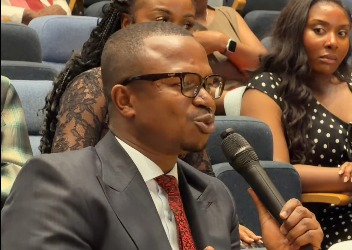
Speaking at the Ghana–UK Policy Summit, organised by the National Union of Ghana Students (NUGS), Mr Adjei challenged scholarship beneficiaries to return to Ghana not only with academic qualifications but also with innovative ideas, expertise and international exposure that can help address the country's development challenges.
He stressed that government scholarships should not be viewed merely as personal opportunities but as national investments financed through the taxes of ordinary Ghanaians.
According to him, beneficiaries should therefore feel a responsibility to ensure that the investment made in their education ultimately benefits the country.
Mr Adjei said academic success should go beyond obtaining qualifications from prestigious institutions abroad and be reflected in how graduates apply their knowledge and expertise to solving problems at home.
He encouraged students to bring back skills and ideas capable of contributing to areas such as economic development, technology and innovation while helping to build stronger institutions.
His call comes amid longstanding concerns about brain drain, particularly the tendency for some highly skilled Ghanaians to remain abroad after completing programmes financed wholly or partly by the state.
Mr Adjei's remarks also highlighted the need for mechanisms to encourage internationally trained graduates to return and create opportunities for their skills and exposure to be effectively integrated into Ghana's development.
The Ghana–UK Policy Summit provides a platform for Ghanaian students and young people in the diaspora to engage policymakers and other stakeholders on their academic welfare and issues relating to national development.
Latest Stories
-
Let The Constitution direct Chieftaincy to deliver “All Development Is Local”
32 minutes -
Ghana explores centre of excellence for hearing, communication and cochlear implant care
2 hours -
Schizophrenia-related disorders lead mental health cases recorded in Ghana
2 hours -
Dutch authorities enlist Ghana in hunt for fugitive drug lord Bolle Jos
3 hours -
Ghana housing finance conference adopts communiqué to improve affordable housing access
7 hours -
Special Initiatives Minister urges Wa Technical Institute to enrol more girls as EU-backed solar training lab opens
8 hours -
In the matter of my first year at the Bar
8 hours -
ActionAid Ghana calls for an end to child marriage, greater investment in girls’ rights
8 hours -
Newsfile to tackle World Cup visa scandal, beach demolitions, education strikes, BRICS bid
8 hours -
UK-Ghana Trade & Investment Summit: Trade Resource Centre to help businesses maximise UK-Ghana trade opportunities
8 hours -
Embassy of Denmark celebrates World Maritime Day
9 hours -
Linking LEAP to productive inclusion could cut extreme poverty by 2030 – UNICEF
10 hours -
Trade Ministry backs use of creative arts to rehabilitate prison inmates
10 hours -
Negotiations with government to continue despite strike suspension – GNAT
10 hours -
‘Ghana cannot afford to waste public resources; every cedi has a job’ – Ato Forson
10 hours