

Audio By Carbonatix
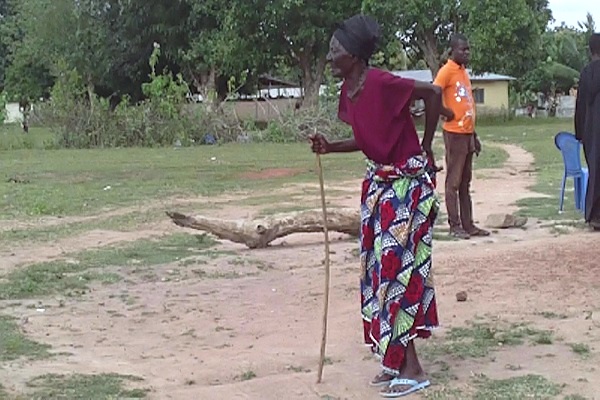
Has respect for the elderly disappeared in Ghana?
"O foolish Galatians, who hath bewitched you, that ye should not obey the truth?" — Galatians 3:1 (KJV)
Permit me to borrow part of the above scripture as a preamble to ask a simple but important question: Who has bewitched us?
The question is not directed at any individual but at society as a whole. Looking around Ghana today, one cannot help but wonder whether one of our cherished cultural values—respect for the elderly—is gradually disappearing?
Growing up in Ghana during the 1990s, I witnessed a society where respect was not merely taught in schools or churches; it was practiced daily in homes, marketplaces, places of worship, and public transport. Greeting elders was automatic. Offering one's seat to an older person was considered normal. Children were expected to listen before speaking, and disagreements with older people were expressed with restraint.
Today, many Ghanaians believe those values are changing. While every generation has complained about the next, there are growing concerns that courtesy, humility, and respect for age are no longer as deeply rooted as they once were.
The question therefore deserves thoughtful reflection: Has respect for the elderly gone on leave?
Respect for older people is deeply embedded in Ghanaian society. Across Akan, Ewe, Ga, Dagomba, Fante, Nzema, and many other ethnic communities, age has traditionally been associated with wisdom, experience, and leadership.
In many Ghanaian homes, children are taught from infancy to greet elders properly, use respectful language, seek permission before speaking in certain situations, and recognize the authority of parents, grandparents, and community leaders.
This cultural expectation is reinforced by national values. Article 41 of Ghana's 1992 Constitution lists the duties of every citizen, including preserving Ghana's rich cultural heritage and promoting national unity. Respect for elders has long been regarded as one of those cultural values.
Traditional institutions also emphasize reverence for age. Chiefs, queen mothers, clan heads, and family elders continue to play important roles in conflict resolution, community leadership, and the preservation of customs.
Every generation experiences social change. Ghana today is significantly different from the Ghana of three or four decades ago.
Urbanization has changed family structures. Many people now live in nuclear families rather than extended households where grandparents and older relatives once played active roles in raising children.
Technology has also transformed communication. Social media platforms have given everyone a voice, regardless of age or social status. While this has strengthened freedom of expression and civic participation, it has also created environments where insults, ridicule, and disrespect can spread rapidly.
Increasingly, videos circulate online showing individuals verbally attacking elderly people, public officials, religious leaders, or traditional authorities. Although criticism is an essential part of democracy, the manner in which disagreements are expressed often raises questions about civility.
Freedom of speech should never be mistaken for freedom from responsibility.
Reflecting on respect does not mean romanticizing the past.
Many harmful traditional practices have rightly been challenged and rejected. For example, the Trokosi system—which involved sending young girls to shrines to atone for alleged family offences—has been widely condemned as a violation of human rights. Similarly, child marriage remains a serious concern in parts of Africa despite sustained efforts by governments, civil society organizations, and international agencies to eliminate it.
These are practices that deserved to be abandoned because they violated the dignity and rights of children.
Respect for elders belongs in a completely different category.
Showing courtesy to older people does not require accepting injustice, abuse, or harmful traditions. It simply recognizes the value of treating fellow human beings with dignity.
Some argue that younger generations are simply more confident and willing to question authority than previous generations. There is truth in that observation.
Healthy societies encourage critical thinking. Leaders should be held accountable. Parents are not infallible. Chiefs, politicians, religious leaders, and professionals can all make mistakes.
Respect should therefore not be confused with blind obedience.
One can disagree firmly while remaining respectful. It is possible to criticize decisions without insulting personalities. Civil disagreement strengthens democracy; personal attacks weaken it.
The challenge facing Ghana is not whether young people should speak up. The challenge is whether they can do so with civility.
Several factors may be contributing to changing attitudes.
Online platforms often reward sensationalism and confrontation. The more controversial a video becomes, the faster it spreads. This can normalize abusive language and disrespectful behaviour.
Parents and guardians remain children's first teachers. Where values such as courtesy, patience, and empathy receive less attention at home, young people may struggle to develop them elsewhere.
In many communities, elders, neighbours, and extended family members once played active roles in guiding children's behaviour. Urban living has reduced some of these communal bonds.
High unemployment, financial hardship, and social frustration can also contribute to increased anger and impatience, sometimes spilling over into disrespectful conduct.
The conversation should not focus only on young people.
Respect flourishes where it is mutual.
Older generations also have responsibilities. Elders who listen, mentor, encourage, and lead by example are more likely to earn lasting respect than those who rely solely on age or authority.
Likewise, younger people deserve to be heard, valued, and treated fairly.
Strong societies are built when wisdom meets innovation rather than when generations compete against one another.
Restoring respect requires collective effort.
Families should intentionally teach courtesy through everyday example rather than words alone.
Schools can reinforce civic education, character formation, and responsible citizenship.
Religious institutions and traditional leaders can continue promoting values of humility, kindness, and peaceful dialogue.
Media organizations also have an important responsibility to encourage respectful public discourse while holding leaders accountable.
Finally, every Ghanaian has a personal responsibility to model the behaviour they expect from others.
Latest Stories
-
Baffour Awuah: EOCO effected an arrest, detained MP after hours of waiting, questioning – Afenyo-Markin
7 minutes -
EOCO court warrant authorised search of Baffour Awuah’s law firm, not residence – Afenyo-Markin
23 minutes -
NPP delegates conference: 3,000 to 4,000 police personnel deployed for security in Kumasi – Anthony Karbo
25 minutes -
KGL Foundation commits $200,000 to support juvenile football for the next two years
40 minutes -
UNDP invites Mahama Ayariga to Northern Peace Conference in Tamale
45 minutes -
Afoko can give NPP ‘new identity’ ahead of 2028 to overcome NDC – Political scientist, Dr Amakye-Boateng
60 minutes -
2 injured amid gunshots during raid at Nawara Mining office at Nsuapemso
1 hour -
St Augustine’s College retains 2026 National Investment Quiz title
1 hour -
KNUST Nursing and Midwifery School staff recognised at 2026 Health Ministry Excellence Awards
1 hour -
JoyNews’ Esther Esi Nkrumah selected for UK Media Excellence for Emerging Technology Fellowship
1 hour -
Five NDC youth organisers in Western Region pay courtesy call on Armah-Kofi Buah
2 hours -
NACOC demands tighter port controls to prevent Tema Harbour drug trafficking
2 hours -
Ghana’s startup ecosystem must build sustainability into innovation – Ghana Hubs Network
2 hours -
Friday’s beachfront demolition was carried out at Labadi Beach Hotel’s request, not for flood mitigation – Stan Dogbe
2 hours -
LA 2028: Mukarama returns to Black Queens squad for Olympic Games qualifiers
2 hours