

Audio By Carbonatix
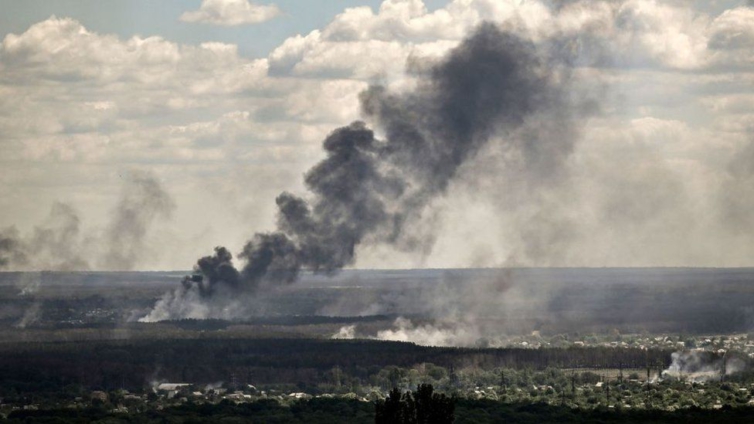
Ukrainian President Volodymyr Zelensky has said that fighting for the city of Severodonetsk may decide the outcome of the war in the east of the country.
"In many respects, the fate of the Donbas is being decided there," he said as combat raged in the industrial belt with Russian and separatist forces.
He said his troops were inflicting major losses on enemy forces.
But Ukrainian forces have been pushed back to the outskirts, according to the region's top Ukrainian official.
Serhiy Haidai, governor of the Luhansk region (which makes up the Donbas along with the neighbouring Donetsk region), said special forces had pulled back after Russia "started levelling the area with shelling and air strikes".
"Our [forces] now again control only the outskirts of the city," he told local media. "But the fighting is still going on, our [forces] are defending Severodonetsk."
"It is impossible to say the Russians completely control the city," he added.
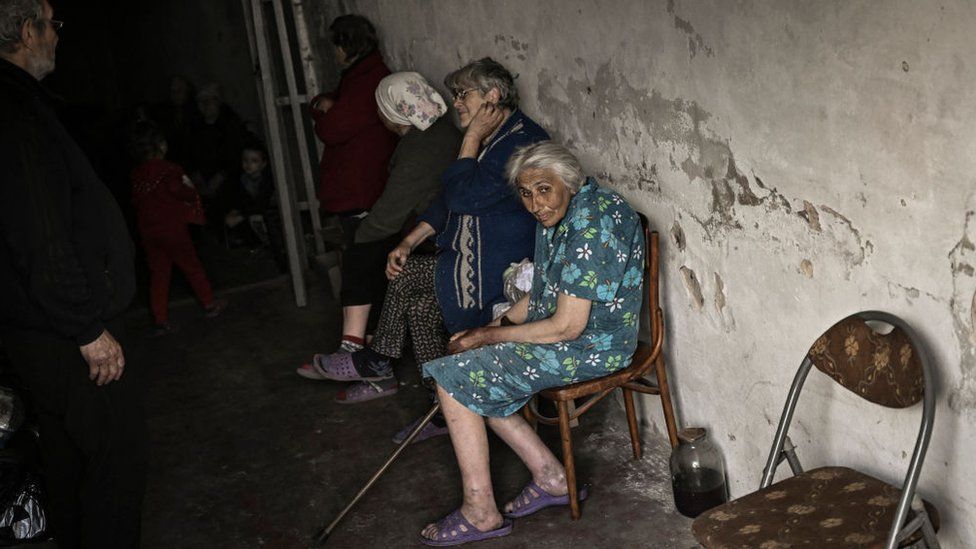
Some 15,000 civilians remained in Severodonetsk and the nearby city of Lysychansk, the governor said.
Russia said on Wednesday that Ukraine was suffering "significant losses in manpower, weapons and military equipment" in the Donbas.
The focus of the war switched to the east at the end of March after Russian forces pulled back from the region around Ukraine's capital, Kyiv. Large parts of the Donbas have been under the control of Russian-backed separatists since earlier fighting in 2014-15.
In another development, UN chief Antonio Guterres warned that the consequences for the world of Russia's invasion were worsening, with 1.6 billion people affected.
"The war's impact on food security, energy and finance is systemic, severe and speeding up," he said.
In an interview for BBC News, World Trade Organization Director-General Ngozi Okonjo-Iweala warned that the food crisis could last for years without intervention.
African countries could be hit especially hard by wheat and fertilizer shortages, she said.
Millions of tonnes of grain are sitting in warehouses and Ukrainian ports, unable to be exported because of the war.
Global banking experts believe Russia's economy will shrink 15% by the end of the year - and a further 3% in 2023 - because of Western sanctions, a mass exodus of companies and a collapse in exports.
The figures could be even worse if Europe fully weans itself off Russian energy, the Institute of International Finance warned.
Russia invaded on 24 February, saying it was seeking to demilitarise and "de-Nazify" Ukraine - a claim that has been widely discredited.
Since the war began, at least 4,253 civilians have been killed and 5,141 injured according to the UN, along with thousands of combatants on both sides, while more than 14 million people have fled their homes.
Latest Stories
-
The Ghanaian prophet and the mysterious death of his scottish wife Charmain Speirs
4 minutes -
Nearly 400 sentenced in Nigeria for links to militant Islamists
26 minutes -
Ghana’s recovery supported by gold strength despite global oil price pressures – Standard Bank Research
33 minutes -
Kwaku Azar writes: A-G vs OSP
1 hour -
Mfantsipim–Adisadel rivalry built excellence, not division – Sam Jonah
2 hours -
Vice President launches Mfantsipim’s 150 years of shaping Ghana’s greatest mind
2 hours -
I assure Otumfuo, Mahama will join him to commission KNUST Teaching Hospital by end of this year – Haruna Iddrisu
2 hours -
Barcelona dominate derby to extend La Liga lead
3 hours -
Gov’t to roll out free special education for persons with disabilities from July 1 – Education Minister
3 hours -
Importers and Exporters Association declares full support for Publican AI port system
3 hours -
“We used it to test our officiating officials’ readiness” – Bawah Fuseini after CAA Athletics event
3 hours -
Volleyball emerges as Ghana’s fastest rising sport
3 hours -
National Sports Fund needs strong leadership from the top – Administrator David Wuaku
4 hours -
JoySports Exclusive: Steve McLaren in talks with GFA after expressing interest in Black Stars job
4 hours -
Fire guts auto parts warehouse at Bubuashie, one fire officer injured
4 hours