

Audio By Carbonatix
Huawei hosted its second annual TrustInTech Summit, which was attended by ICT industry experts, academia, and economists from around the world.
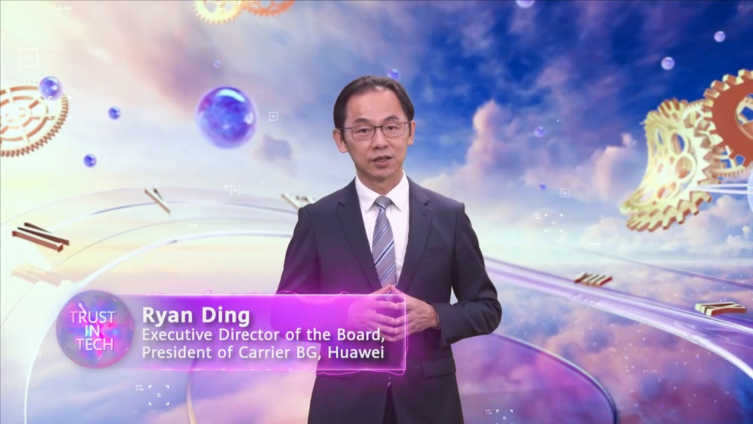
Speakers included Huawei's Executive Director of the Board and President of the Carrier Business Group, Ryan Ding, international investor Jim Rogers, GSMA CMO Stephanie Lynch-Habib, and others.
Focusing on the new challenges the world faced in 2020, the Summit highlighted ICT's critical role as the key digital infrastructure to support societal wellbeing and economic recovery.
Given the rising trend of technology decoupling, the Summit emphasized the need to embrace open collaboration, as well as the call to defeat the unnecessary fear of adopting new technologies.
In 2020, ICT played a vital role in resuming work and production during the pandemic. Meanwhile, 2020 has witnessed the exponential growth of 5G business applications.
Global consultancy firm STL Partners estimated that 5G-enabled scenarios will raise the global GDP by US$1.4 trillion by 2030.
At the Summit, STL Partners co-founder Chris Barraclough stressed the transformative role of 5G in the manufacturing, energy, and healthcare sectors.
Huawei Enterprise’s digital transformation expert Edwin Diender also concurred, explaining the role of how 5G, AI, big data, and cloud computing pushed for faster drug screening and diagnosis, intelligent monitoring, and remote working and education during the pandemic.
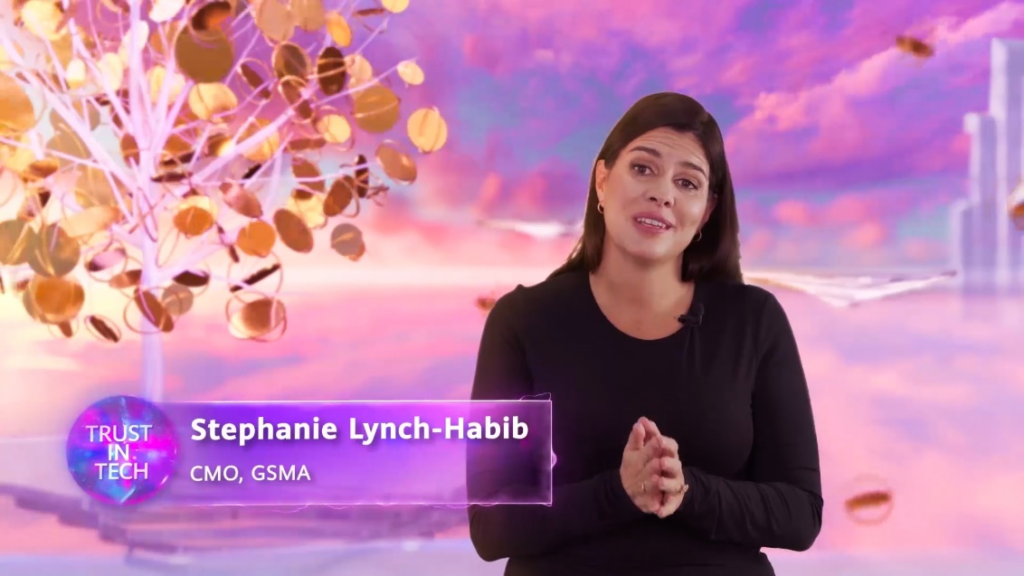
GSMA CMO Stephanie Lynch-Habib shared that 5G's rollout in 2020 brought over 100 5G networks in 47 countries, and some regions are leading in making 5G a mature application.
5G will influence consumer-oriented industries such as e-commerce, as well as boosting innovative services like virtual reality and augmented reality.
Standard network slicing models and edge computing will provide high reliability, low latency, high throughput, and service customization.
"Our working groups are continually supporting and enhancing global standards," stressed Lynch-Habib.
During the virtual, live streamed event, Huawei Carrier Business Group CTO Paul Scanlan called 2020 a ‘Sputnik’ moment.
"Similar to how the first man-made satellite Sputnik was successfully launched in 1957, bringing humanity into the age of space exploration, as 5G matured in 2020, everything changed," said Scanlan.
"The industry began to accelerate 5G adoption, offering spectrum discounts, innovating business models, and driving industry transformation. That's never happened in the last 10 years."
Several guests at the event commented on early adoption and major technological breakthroughs by saying there has always been a mistrust and fear of new things.
For example, during the Industrial Revolution in the 19th century, as there was fear for automated production, factories were destroyed.
As the events in 2020 led to more isolation and nationalism, there’s been a rise against transnational cooperation, and more countries are closing their doors and decoupling from each other over technology.
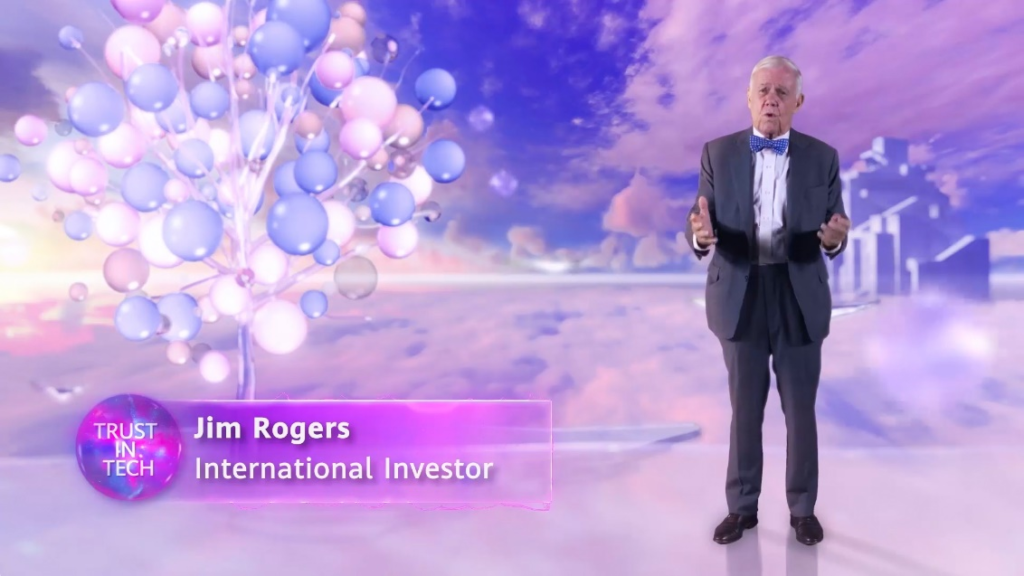
"Anybody taking a unilateral approach to anything, certainly to technology and economics, are going to have problems," said international investor Jim Rogers.
"Foreign policy should be around the opening. We need to avoid protectionism, especially in technology." He also said that protectionism was bad for the world as seen throughout history.
Professor Jin Keyu of the London School of Economics also echoed during the Summit, "[In today's world], it's less about competition, rivalry, and substitution, and more about collaboration, complementarity, and cooperation."
At the end of the summit, Ryan Ding, Huawei's Executive Director of the Board and President of the Carrier Business Group, emphasized that an open and trusted ecosystem is required for everyone to share the prosperity brought by technology.
To do so, the ICT industry needs to continue adopting unified technical and security standards. Given the current complex geopolitical environment, he stressed, “Politics should stay away from technical issues. We need to remain fair and open to drive technological cooperation. Industry cooperation is not a zero-sum game.
"If an isolated approach is adopted now, while new technology is unlocking social and business value at a faster rate, the victim will not be one company.”
Latest Stories
-
Real-Time VAT on cross-border digital services – not a new tax and does not violate double taxation principle
26 minutes -
Digitalisation, AI key to Ghana’s tourism transformation – GHATOF
38 minutes -
Stronger GTA-private sector partnership needed to grow tourism – GHATOF
48 minutes -
Amazon eyes Ghana for broadband expansion after talks with Mahama
2 hours -
National Investment Quiz 2026: Six schools qualify for quarter-finals
2 hours -
‘Do not let Russia pay for its madness with lives of your people’ – Zelensky to Ghana, 46 other countries
2 hours -
6,079 promotion cases fully processed and paid – CAGD says amid nationwide teachers’ strike
2 hours -
Teacher unions to meet government Monday over nationwide strike
3 hours -
Photo story: Republic Bank-JoyNews Habitat Fair clinic wraps up after three days of housing solutions, expert engagement
3 hours -
National Peace Council urges investment in youth to sustain Ghana’s peace
3 hours -
Afenyo-Markin urges youth to speak up against injustice
3 hours -
CAF annuls Edo Queens victory, orders WAFU B final to resume from extra time
4 hours -
Interior Minister urges traditional authorities to enforce anti-bushfire bye-laws
4 hours -
3rd Republic Bank-JoyNews Habitat Fair Clinic ends on a high note after three days of strong patronage
4 hours -
Ten climbers missing after avalanche hits Himalayan base camp
4 hours