

Audio By Carbonatix
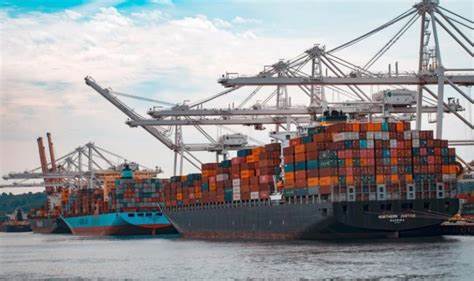
Key players in the logistics and trade sectors will on Tuesday, September 24, embark on a protest against shipping lines operating in Ghana on Tuesday, September 24, 2024.
The Ghana Institute of Freight Forwarders (GIFF), the Association of Customs House Agents of Ghana, the Freight Forwarders Association of Ghana, and the Customs Brokers Association of Ghana, along with other several trade associations will lead peaceful demonstrations to highlight exploitative practices by shipping lines operating within the country.
Key Issues
The various associations claim that the protest is to make known their concerns on a range of issues they believe are negatively impacting the cost of doing business in Ghana.
Chief among the complaints is the imposition of arbitrary charges such as local administrative fees, container cleaning fees, and empty container fees.
According to the organisers, these charges which are pegged to the dollar, violate the Bank of Ghana’s regulations on pricing of locally derived services.
Furthermore, the protestors are calling for the immediate cessation of demurrage charges on weekends and public holidays, which they argue unfairly penalizes businesses during non-working days when clearance processes are halted.
They are demanding a refund of all demurrage fees that have been levied during these periods, insisting that the charges are unjustifiable and harmful to businesses.
Forex Leakages and Economic Impact
The protest organisers also raise concerns over the repatriation of forex earnings by shipping lines, which they claim is contributing to the country’s foreign exchange difficulties.
According to a statement issued by the protesting groups, the excessive and unjust fees collected by shipping lines and then repatriated abroad are depleting Ghana's forex reserves.
This, they argue, weakens the local currency and further burdens the national economy, making it harder for Ghanaian businesses to compete both locally and internationally.
“These practices have stifled the potential growth of Ghana’s shipping sector, severely impacting businesses and crippling the financial well-being of numerous stakeholders within the supply chain,” the group said in a statement.
Wider Implications on Cost of Living
Beyond the direct impact on businesses, the organisers believe these exploitative practices are affecting the average Ghanaian.
The increased cost of doing business, caused by the arbitrary charges imposed by shipping lines, trickles down to consumers, driving up the cost of imported goods. This situation, they say, contributes to the already high cost of living in Ghana.
The protest organisers are making the following specific demands.
1. Abolishing demurrage charges on weekends and public holidays, and refunding businesses for demurrage fees paid during those periods.
2. Compelling shipping lines to negotiate tariffs in accordance with Regulation 5 of the Ghana Shippers' Authority Regulations, 2012 (L.I. 2190).
3. Eliminating arbitrary fees, including local administrative charges, container cleaning fees, and empty container fees.
4. Ensuring that shipping lines provide 24-hour services throughout the week, including weekends and public holidays, to avoid unnecessary delays.
5. Stopping shipping lines from engaging in customs house brokerage, which they claim disadvantages freight forwarders and stifles competition.
6. Prohibiting the pegging of shipping line fees to the US dollar, in line with Bank of Ghana regulations.
A Call for National Support
The protest organisers urged the general public and government authorities to lend their support to the cause.
They said that holding shipping lines accountable will not only improve the efficiency of Ghana’s logistics and supply chain but also help stabilise the cedi and lower the cost of goods for consumers.
“This is not just an industry issue — it’s a national issue,” the organisers stated, adding that “The outcome of this protest has the potential to reshape the operational landscape of commerce in Ghana, potentially stabilise the exchange rate, significantly increase the standard of living of every Ghanaian, and mitigate the national security ramifications of the cost of living crisis,” the statement noted.
Latest Stories
-
GRA submits preliminary report on drug shipment case to Mahama – Commissioner-General
18 minutes -
Sammy Gyamfi using ‘procedural roadblocks’ to dodge defamation case? – Afenyo-Markin’s lawyers
19 minutes -
The illusion of a good deal: Why some everyday money-saving habits may be costing you more
34 minutes -
Family seeks autopsy, police investigation into death of student 12 days after Abomosu SHS enrolment
43 minutes -
Trade Minister urges employers to leverage industrial opportunities to create jobs
50 minutes -
Asantehene plants trees to commence Jimi Watercourse Rehabilitation destroyed by galamsey
1 hour -
15 arrested, 6 trucks impounded over sandwinning activities on Kumasi-Accra Expressway
1 hour -
OFFICIAL: Vinicius will miss El Clásico, suspended four games
1 hour -
Prayer vigil held after four arson attack murders
1 hour -
GRA fully recovers $154k legacy debt owed by foreign entities between 2022 and 2024
1 hour -
Kwesi Pratt Jr warns bus preachers are adding to passengers’ stress with accident prophecies
1 hour -
MTN Ghana to spend $1.1bn in 3 years, build 500 new sites as MoMo hits 44% Growth
1 hour -
I have no regrets joining Assemblies of God – Mahama
1 hour -
Starlink restrictions in Ukraine war linked to political situation, Zelensky aide says
2 hours -
Furniture boost for Techiman North schools as MP donates to 20 institutions
2 hours