

Audio By Carbonatix
Smart Energy Solutions for Africa (SESA) has begun deploying smokeless fuel energy innovation in some senior high schools in the Ashanti region.
In partnership with the Akenten Appiah-Menka University, the project seeks to reduce the use of firewood to mitigate the increasing health risks of inhaling smoke from fuel wood.
The long term goal is to encourage the Ghana Education Service to adopt clean and climate-smart energy solutions for cooking in senior high schools.

The continuous use of firewood and other solid fuel constitutes dirty air and leads to air pollution which defects the Sustainable Development Goals, especially SDG 3.
According to a WHO report, 4.2 million people die from exposure to outdoor air pollution, in addition to the 3.8 million whose deaths are linked to household smoke produced by dirty stoves and fuel.

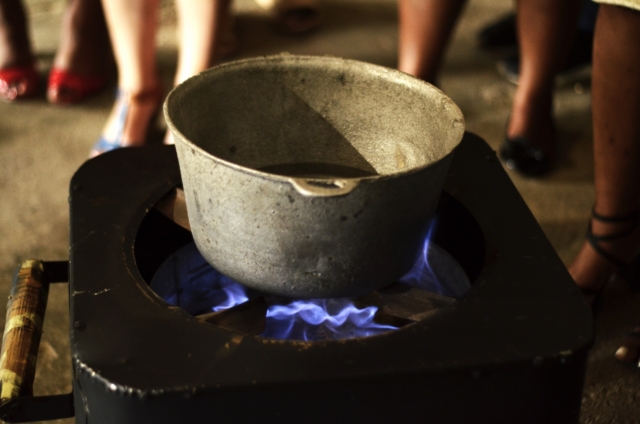
Due to the adverse impact of wood smoke, the Smart Energy Solutions for Africa (SESA) has launched the Biofuel Stove, made from agro-waste, in some selected schools.
The ethanol fuel gel solution made from pineapple waste will be used in an enamel-coated aluminum stove for cooking.

SESA project coordinator, Magdalena Sikorowska, revealed "the EU-sponsored project is implemented in 9 African countries.
Waste to energy has been identified as one of the technologies we're focusing on especially in Ghana. We're also looking out for innovative companies who come up with interesting solutions, "she said.

In contributing to combating climate change and protecting the environment, the Akenten Appiah -Menka University (AAMUSTED) partnered with SESA to implement its carbon footprint reduction invention.
The university hopes the Ghana Education Service will switch to using the clean stove for cooking for students.

Prof. Isaac Boateng, speaks for the university.
"The innovation is green and it helps reduce the carbon footprint and emission . We believe this is also in line with government's mission to cut emissions by 2030".
Two solar micro-grid were also handed over to the Berdaabuo and Kwamedwaa communities in the Ashanti region as part of the project.
Latest Stories
-
The Ghanaian prophet and the mysterious death of his scottish wife Charmain Speirs
43 minutes -
Nearly 400 sentenced in Nigeria for links to militant Islamists
1 hour -
Ghana’s recovery supported by gold strength despite global oil price pressures – Standard Bank Research
1 hour -
‘Excellence is our inheritance’ – Nana Sam Brew-Butler hails Mfantsipim’s 150-year reign in leadership
2 hours -
Kwaku Azar writes: A-G vs OSP
2 hours -
Mfantsipim–Adisadel rivalry built excellence, not division – Sam Jonah
2 hours -
Vice President launches Mfantsipim’s 150 years of shaping Ghana’s greatest mind
2 hours -
I assure Otumfuo, Mahama will join him to commission KNUST Teaching Hospital by end of this year – Haruna Iddrisu
3 hours -
Barcelona dominate derby to extend La Liga lead
3 hours -
Gov’t to roll out free special education for persons with disabilities from July 1 – Education Minister
3 hours -
Importers and Exporters Association declares full support for Publican AI port system
4 hours -
“We used it to test our officiating officials’ readiness” – Bawah Fuseini after CAA Athletics event
4 hours -
Volleyball emerges as Ghana’s fastest rising sport
4 hours -
National Sports Fund needs strong leadership from the top – Administrator David Wuaku
4 hours -
JoySports Exclusive: Steve McLaren in talks with GFA after expressing interest in Black Stars job
4 hours