

Audio By Carbonatix
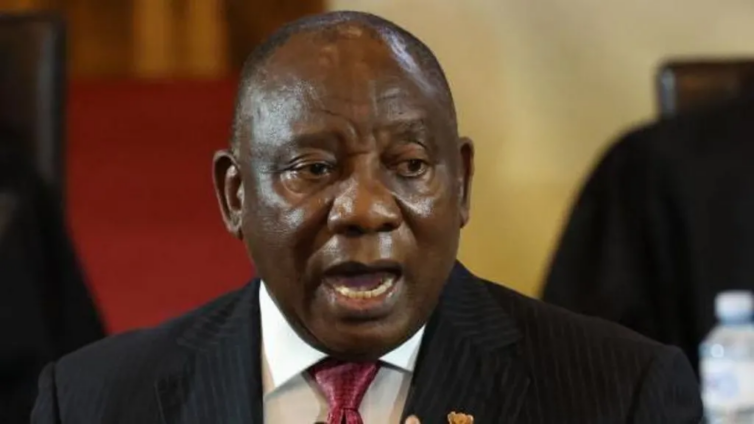
South Africa's main coalition partners are at loggerheads just weeks after agreeing to share power, as President Cyril Ramaphosa accuses Democratic Alliance (DA) leader John Steenhuisen of trying to create a "parallel government" in breach of the constitution.
He is said to have made the explosive allegation in a letter to Mr Steenhuisen on 25 June, which has been seen by local media.
Markets have slumped with the news of the deepening rift, at a time when Mr Ramaphosa's African National Congress (ANC) and the DA are supposed to be divvying up cabinet posts and settling into office.
When the ANC failed to win an outright majority in last month's election, the main opposition DA agreed to form a government of national unity that would keep President Ramaphosa in power - in exchange for DA politicians getting cabinet positions.
The ANC subsequently also signed a coalition deal with eight smaller parties, with Mr Ramaphosa under pressure to accommodate at least some of them in his cabinet as well.
Mr Ramaphosa penned his furious letter after giving the DA a final offer of six cabinet posts, according to local media reports.
The DA then demanded two further posts, reports the News24 website, which angered the ANC's top brass.
Mr Ramaphosa's letter accused the DA leader of "moving the goalposts" during the negotiation process.
He also rebuked the DA's powerful federal chairperson, Helen Zille, for demands that he described as "offensive, condescending and inconsistent with the constitution".
Local media also report that Mr Ramaphosa had reneged on his promise to give the DA the Trade and Industry Ministry, a key post to boost South Africa's struggling economy.
In response to this snub, says News 24, the DA's leaders told Mr Ramaphosa the "deal is off" unless he sticks to the earlier agreement that the two parties made.
The current row is causing consternation as South Africa enters alien political territory.
The ANC has lost its parliamentary majority for the first time since it took power at the end of the racist system of apartheid in 1994.
It got 40% of the vote, while the DA got 22%.
Initially, analysts told the BBC that the two sides might be posturing as they try to get the best deal for themselves, but the latest leaked correspondence suggests deeper rifts that some fear could sink the coalition agreement they signed on 14 June.
News of the possible collapse of the agreement led to South Africa's currency, the rand, plunging against the dollar.
The business sector has strongly advocated for a deal between the two parties, believing it would help achieve economic stability.
Latest Stories
-
From ShattaFest to MoMo Fest: Entertainment takes centre stage in youth engagement
4 minutes -
Nigerian military aircraft crashes, killing 32
9 minutes -
MTN encourages Ghanaians to use MoMo for saving, investing and financial planning
9 minutes -
Absa Bank Ghana names Stephen Ato Frimpong as Board Chair
17 minutes -
Pickford ‘almost caused crash’ with careless driving
18 minutes -
Author and former politician Jeffrey Archer dies aged 86
29 minutes -
No education reform can succeed without teachers – Education Ministry
38 minutes -
Gauff condemns racist abuse after China Open win
54 minutes -
Medvedev disqualified for hitting spectator with ball
1 hour -
Oliseh scores twice in late comeback win for France
1 hour -
Pentagon stops using Anthropic AI tools after blacklisting company, BBC told
1 hour -
From despair to dance: Family of nurse Salomey Baffoe rejoices after GH¢100k bail granted
2 hours -
Kejetia Phase III pricing talks loom as government moves to restart stalled works
2 hours -
Nchiraa Yam festival: Two killed, 14 injured as police restore calm
3 hours -
I draw inspiration for my songs from Reggae music – Lyrical Joe
3 hours