

Audio By Carbonatix
Stakeholders in selected districts of the Upper East Region have resolved to end teenage pregnancies and child marriages in their jurisdictions.
They said socio-cultural practices, ineffective communication among parents and children, lack of family planning, and parental irresponsibility were major causes of teenage pregnancies and child marriages in their areas.
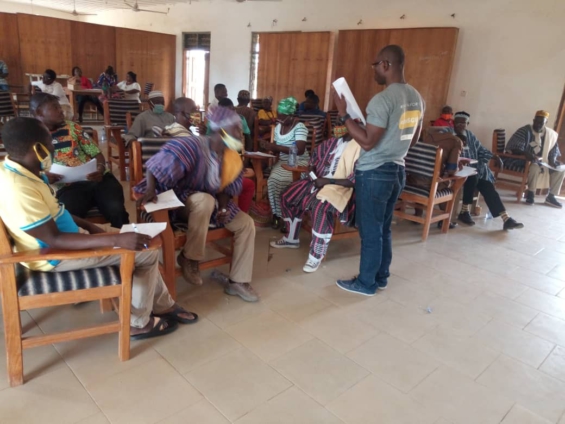
The stakeholders comprised traditional and religious leaders, Assembly Members from three districts, Bongo, Talensi, and Nabdam.
They made the call at a forum organized by the Regional Coordinating Council with funding support from the United Nations Population Fund (UNFPA) and the Global Affairs of Canada.
The UNFPA, in collaboration with the Government and support from the Global Affairs of Canada, is implementing a three-year adolescent reproductive health project in six districts in the region, Bongo, Nabdam, Talensi, Builsa South, Kassena-Nankana, and Bawku West.
The stakeholders identified some taboos and superstitions, including one that prevented pregnant girls from giving birth in their fathers’ houses. Naba Atinga Atindaana, the Chief of Gowrie in the Bongo District, said the girls were prevented from giving birth in their fathers’ houses because the children would be considered bastards and denied any inheritance.
The Chief also indicated that some religious bodies did not condone the use of contraceptives such as condoms, which was a contributory factor to teenage pregnancies and child marriages in most communities.
Pognaba Veronica Anaam, Queen-mother of Namoo Community in the Bongo District, said the irresponsibility of some parents was another factor as some of them demand money from their daughters who are then compelled to give themselves to men in exchange for money.
The stakeholders have, therefore, resolved to work collectively with members and opinion leaders of the various communities to modify or eliminate some of the socio-cultural practices and beliefs that give rise to teenage pregnancies and child marriages in their communities.
They came up with a road map to organize durbars to educate members of their respective communities, to demystify some misconceptions surrounding the use of contraceptives, and encourage parents to be more responsible, ensure effective communication between them and their wards to help contribute to curbing teenage pregnancies and child marriage.
Madam Esther Mbilla, a Public Health Nurse, Bongo Health Directorate, indicated that although current statistics indicated that teenage pregnancies had reduced in the district more still needed to be done.
She said in 2019, the district recorded 3,377 pregnancies of which 726 were teenage pregnancies, representing 20.3 percent.
However, in 2020, the figure fell to 3,138 of which 530 were teenage pregnancies, representing 18 per cent.
She said the figure was higher than the national acceptance rate of 11 per cent and urged all stakeholders to work together to end it.
Mr James Twene, the Upper East Acting Regional Director of the Department of Gender, said the main objective of the project was to help end teenage pregnancies, child marriage, prevent the transmission of Sexually Transmitted Infections (STIs) and accelerate the achievement of the Sustainable Development Goals (SDGs).
Latest Stories
-
What Is Wrong With Us: We queue for the Colosseum while our own Castles crumble
10 minutes -
Pius Hadzide challenges scandal label on 2018 Australia visa affair
4 hours -
Trump says he is considering firing US ambassador to Greece
5 hours -
Man City bananas ‘brought fun back’, says Varadi
5 hours -
Meta releases Muse Wonder AI models to challenge Anthropic and OpenAI
5 hours -
Daily Insight for CEOs: The CEO as Chief Decision Maker
5 hours -
Burnham had formal meeting with Man City chair while mayor
5 hours -
Is Ghana producing too many lawyers? What is the best lawyer-to-citizen ratio?
5 hours -
NDC sinking Ghana’s democracy with Emelia Agbenyo’s appointment – Miracles Aboagye
5 hours -
Seedorf back in football as Corinthians head coach
6 hours -
Hincapié and Zubimendi injured in post-match training session
6 hours -
Fridges in French supermarkets hit by cyberattack
6 hours -
Qantas flight grounded after bedbug outbreak
6 hours -
Reality Zone with Vicky Wireko: International Day of the Girl, shaping today’s girl for tomorrow’s future – ZONTA Clubs lead the way
6 hours -
Global health must be led by countries, not designed for them – Mintah Akandoh
7 hours