

Audio By Carbonatix
Mental health treatment in Ghana is being impeded by a lack of personnel, inadequate supply of medication and discontinued medication.
Despite increasing numbers of new cases of depression, anxiety, and other psychological disorders, some major public hospitals in the Ashanti region operate without patient wards, making treatment nearly impossible.
Stakeholders are calling for renewed commitments to progress in the treatment and management of psychological conditions.

Mental health is a growing concern in Ghana, with 13% of the population estimated to have a mental disorder, including 3% with severe disorders.
The Kumasi South Hospital, since the establishment of its mental health unit in 2015, has seen increasing cases of depression, anxiety and psychological disorders, recording over 30 new cases every month.
In the wake of this surge, medical personnel fear abandonment of treatment and management of patients due to a shortage of dedicated free medications.
Nurse-in-charge at the psychiatry unit, Naomi Blankson, explains that patients are compelled to discontinue treatment due to the cost of medications in private pharmacies.
“We do have able mental health personnel, the problem is medication supply. We sometimes run short of them and patients cease their treatment because they are compelled to go out and buy them. Mental conditions treatment is on program drugs, so we do get free supplies. And that's what these people count on for their treatment.
“When we are short in supply, and they also don't want to buy, then they stop coming. They come for review and we have to write the drugs for them to buy. We don't want it like that. Stakeholders and government and facilitate constant supply,” she said.

At the Tafo Government Hospital, the situation is metamorphosed into outpatient treatment as the hospital lacks a dedicated mental health ward.
Hospital Manager, Odette Anaba, says the facility banks its hope on an overcrowded room which hinders quality care.
“We don't have a ward and infrastructure for mental health care and treatment. We have uncompleted buildings that we believe can be taken advantage of if the government comes to our aid. We have made a room available, but the room is so small that it doesn't even count as it prolongs the waiting time.
“Nurses take care of the patients but on an outpatient basis unless it’s critically important that we keep a patient to some wards but also conflicted on keeping mental health patients at medical wards, it puts other patients at risk,” she said.
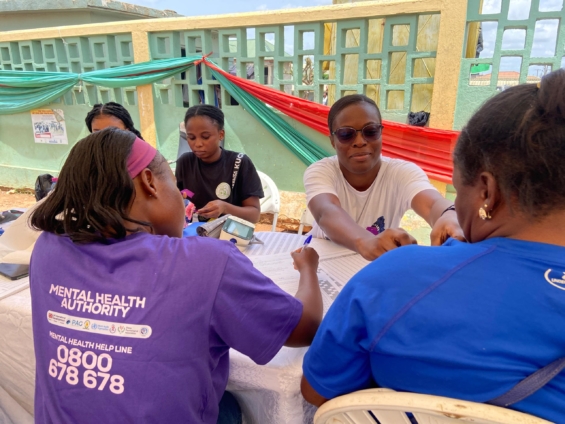
The Mental Health Authority and the Ghana Health Service are leveraging the Mental Health Month in the Ashanti region to solicit support to mitigate the impact of the unaffordable treatments.
Medical Superintendent at the Manhyia Government Hospital, Dr. K. K. Hussein, says with enough education and support for facilities diagnostic rate should increase more than it is presently.
“We have about 200 cases at this facility every month. We have cases of depression, schizophrenia, bi-polar and addictions. We believe that we should be seeing more patients. Because mental health conditions disguise themselves. We have the capacity to manage. But people are not coming because they are assigning other factors like spiritual and the rest to their conditions and that’s not making them seek help. But there are real situations that need help,” he said.
The Mental Health Month is themed: “Mental well-being: my voice”, encouraging the public to regularly check up on their mental state.
As part of the celebration, the three hospitals, Kumasi South Hospital, Tafo Government Hospital, and Manhyia Government Hospital are offering a two-day screening to raise public awareness.
Ashanti Regional Health Psychiatrist, Dr Francis Oppong, explains that mental health patients need help and support, not stigmatization.
“Mental health issues are on the rise. However, personnel are reducing because many are traveling. And these are the same people who go into communities to administer treatment.
“We encourage people to assist people who have disorders to seek treatment and support. Mental health patients need help and support not stigma. We are using this opportunity to encourage everybody to cease tackling mental health conditions with faith-based activities. At least patients should be encouraged to seek further medical treatment,” he said.
Latest Stories
-
Over 38,000 commercial, 150,000 residential customers unbilled – Ghana Water MD
8 minutes -
Several injured as Sprinter bus collides with ‘trotro’ at Odorkor
8 minutes -
Ghana records progress on reparatory justice agenda – Ablakwa
25 minutes -
Mahama commissions Christian Tetteh Yohuno Ward Complex at Police Hospital
41 minutes -
Vice President calls for wider access to Ghana’s political party histories
41 minutes -
Republic Bank JoyNews Habitat Fair to connect prospective homeowners with exhibitors in Ho from October 16 to 18
51 minutes -
Obaasima Summit: ‘AI is not a spiritual attack’ — Rev. Dr. Ofori-Boateng urges young women to embrace technology
1 hour -
GHS to distribute 80,000 pairs of locally-made protective footwear to health workers
1 hour -
GoldBod boosts local jobs as 90% of gold undergoes refining in Ghana – Sammy Gyamfi
1 hour -
The search for the politically unblemished: Are we asking the impossible of public appointees?
1 hour -
Ghana seeks climate finance access for debt-restructuring countries
1 hour -
Afenyo-Markin urges stronger media scrutiny of public institutions
1 hour -
GoldBod recovers GH¢38.7m in legacy PMMC debts, targets remaining arrears
1 hour -
62 out of every 100 commercial meters inspected missing from Ghana Water database – MD
1 hour -
GoldBod gets BoG authorisation to sell forex, Sammy Gyamfi tells PAC
1 hour