

Audio By Carbonatix
The Executive Director of the Institute for Democratic Governance (IDEG), Dr Emmanuel Akwetey, has called on policymakers and the wider Ghanaian society to make social inequality the foremost challenge to tackle in the country’s development agenda.
With just five years remaining to achieve the Sustainable Development Goals (SDGs) by 2030, Dr Akwetey warned that Ghana faces a critical crossroads in its development path.
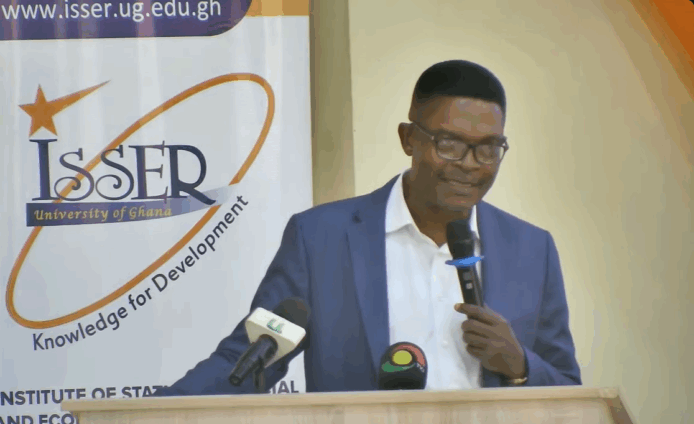
He made this call during his review of the 7th edition of the Ghana Social Development Outlook (GSDO) 2024, published by the Institute of Statistical, Social and Economic Research (ISSER), at its official launch in Accra on Thursday.
He praised the ISSER report for offering timely data and evidence to assess progress, but cautioned that growing inequality is undermining the country’s social fabric and democratic stability.
“Social inequality is the single most important problem that our social development efforts must address,” Dr Akwetey said, adding that it is a national emergency.
Dr Akwetey noted that despite years of economic growth, the benefits have not been equitably distributed. He cited a recent Oxfam report revealing that:
- The richest 10% of Ghanaians account for 32% of national consumption,
- While the poorest 10% consume only 2%,
- And the bottom 60% consume less than the wealthiest 10% combined.
“This disparity undermines not only economic justice, but also the very foundation of national cohesion and stability,” he warned.
The IDEG boss also pointed to persistent regional and gender disparities in access to education, healthcare, housing, potable water, and economic opportunities.
He noted that some regions continue to lag significantly behind others, locking communities in cycles of poverty and underdevelopment.
“Women, particularly in rural areas, face multiple layers of exclusion – lower access to tertiary education, productive resources, healthcare, and leadership opportunities,” he said.
Consequences of Deepening Inequality
Dr Akwetey outlined the serious consequences of these inequality trends, including:
- Weakened poverty reduction efforts and barriers to inclusive growth,
- Increased political discontent and disillusionment, particularly among youth,
- Erosion of trust in state institutions and the legitimacy of democratic governance.
He cited youth frustrations over economic hardship and the perception of elite capture as driving forces behind growing calls, even among some young people, for military rule, which he said is a worrying sign of disaffection.
“They may be too young to fully understand the consequences of military regimes, but their frustrations are real and must be taken seriously,” he cautioned.
In his review, Dr Akwetey urged the political class to demonstrate bold leadership by prioritising fairness, equity, and transparency in national development.
“The task ahead is not merely technocratic; it is deeply political and moral. We must rethink how public resources are distributed to ensure that all Ghanaians, regardless of region, gender, or class, benefit fairly,” he stated.
He called for:
- Equity in public spending, with greater focus on disadvantaged communities, youth, and women;
- Empowerment of local governments, including the timely and sufficient release of the District Assemblies Common Fund;
- Sustainable domestic financing for social programmes, as donor support declines;
- Increased budget transparency to enable citizens to track the use of public funds.
“Institutions like ISSER play a vital role through budget analysis and research. Their work enhances accountability and ensures that social spending delivers real outcomes,” Dr Akwetey noted.
GSDO: A Map and a Mirror
Describing the 2024 Ghana Social Development Outlook as both a “map and a mirror,” Dr Akwetey said the report charts where Ghana is heading while reflecting on who the country has become.
He praised the report for its rigorous analysis of progress in areas like education, healthcare, sanitation, gender, and youth development.
Dr. Akwetey also acknowledged notable gains such as:
- The implementation of Free Senior High School, which has expanded access to education;
- Increased female participation in education;
- Government initiatives like Agenda 111 aimed at expanding healthcare infrastructure;
- Progress in reducing open defecation, improving public health outcomes.
However, he cautioned that these gains risk being undermined if inequality is not addressed with urgency.
Dr Akwetey called for urgent action, saying “If we are to achieve the SDGs and build a just, inclusive, and resilient Ghana, tackling inequality must be at the heart of our national strategy. It’s not just about policies; it’s about the political will to do what is right.”
The 2024 edition of the Ghana Social Development Outlook examines trends in education, health, water and sanitation, employment, energy, housing, gender, population, and social equity.
It is published biennially by ISSER and serves as a critical resource for academics, policymakers, civil society, and development partners.
Latest Stories
-
Stakeholders demand action against foreign-led illegal mining in Ahafo Region
1 hour -
Ghana handed tricky draw at 2026 Amputee World Cup
1 hour -
2024 Nyankpala election violence: Youth group petitions authorities over slow probe
1 hour -
Ghana, UNICEF strengthen partnership to advance child protection
2 hours -
Day Two of 3rd Republic Bank-JoyNews Habitat Fair ends with great homeownership offers and financing solutions
2 hours -
Guinness Ghana DJ Awards 2026 Pub Fest celebrates Ghana’s DJ culture as Accra turns up the energy
2 hours -
10th woman found dead in South Africa’s string of killings
2 hours -
French Embassy trains Ghana Police CTU in counter-terrorism operations
3 hours -
UPSA uncovers mass results manipulation involving 178 students, over 500 results compromised
3 hours -
ECG announces planned power outages in parts of Tema from Sept. 29 to October 1
4 hours -
Sylvester Mensah urges Latenu FM to promote trade, export opportunities in Ga
4 hours -
Ga language under threat of decline as children shy away from speaking it – Sylvester Mensah
4 hours -
‘Let every Ga child you raise know the Ga language and story’ – Sylvester Mensah
4 hours -
‘We are not deterred’ – Ablakwa responds to backlash over South Africa evacuation
4 hours -
Day Two: Republic Bank-JoyNews Habitat Fair gains momentum at Junction Mall
5 hours