

Audio By Carbonatix
Indoor air pollution kills 4 million people yearly, according to recent findings.
Fortunately, the Technology Consultancy Centre (TCC) of the KNUST is making efforts to curb this trend in Ghana by collaborating with the Energy Commission Ghana and the UNDP to produce fuel efficient institutional stoves.
Project coordinator, Donald Amrago says the project is to save lives and ensure fuel is used efficiently.
“Any enclosed area where the ventilation is poor women specifically those who prepare food inhale the air and this has killed about 4 million people.
“This project is to ensure that biomass is used efficiently, at the same time saving lives,’’ he noted.
UNDP and Energy Commission have been implementing a project dubbed ‘China-Ghana South-South Cooperation on Renewable Energy Technology Transfer (RETT).
This is meant to accelerate the transfer and diffusion of RET from China to Ghana.
The project is expected to help strengthen the enabling environment for the transfer and use of priority renewable energy technologies in Ghana.
The project is also anticipated to remove market barriers to the adoption of renewable energy technologies as well as invigorate the Chinese capacity for South–South Cooperation on renewable energy.
A key component of the programme is to train artisans in the institutional cook stove sector.
Project manager at the Energy Commission, Ebenezer Ashey, says the initiative will reduce the high cost of cooking and reduce the use of firewood in especially second cycle institutions, hospitals, prisons among others.
“Over the years, the private sector has done well with the production of cook stove for the household but not the institutions. We are tapping into the Chinese expertise to improve cook stove sector.
“With this particular cook stoves being deployed within the second cycle institutions there will be less firewood in terms of cooking and the high cost of cooking will be reduced significantly,” he is optimistic.
The Chinese have therefore donated an institutional improved cook stove to the TCC.
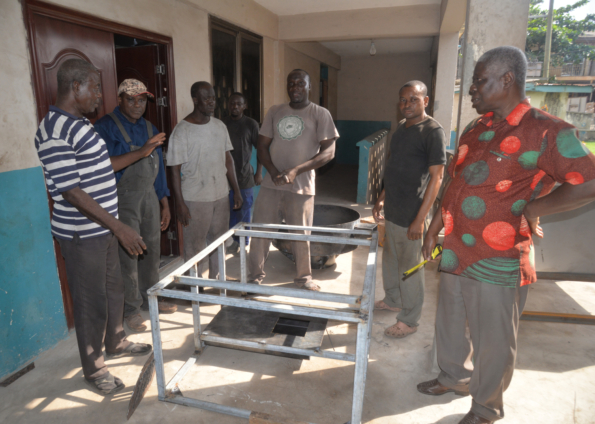
The TCC is currently training 15 artisans in the manufacture of the Chinese made stoves.
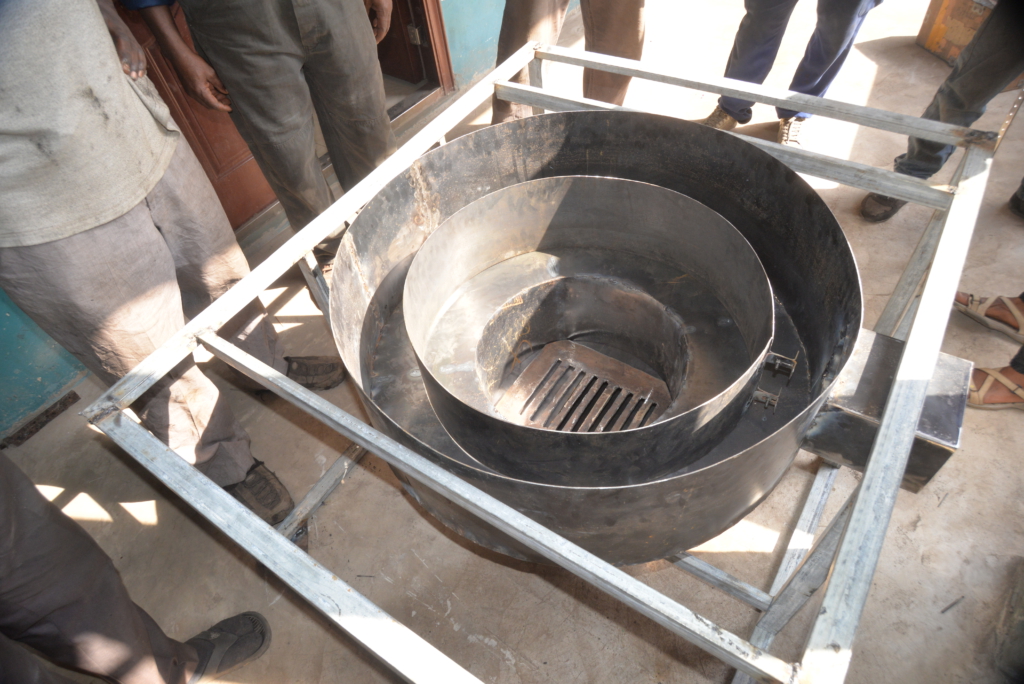
The Director of TCC, Prof. Samuel Mensah Sackey says the centre is transferring manufacturing technology to artisans in the Suame magazine industrial enclave in the Ashanti Region.
“We are envisaging that there will be subsequent training programs to give others the opportunity to benefit,” he said.
Prototype stoves will be tested after completion.
“The next thing that will happen after the completion process is we’re going to test particulate matter emissions, carbon monoxide emissions and the energy efficiency of the stove.
“We’re working to world standards,” Prof. Sackey emphasized.
Latest Stories
-
Ghana eyes stronger trade ties as Australia hosts multicultural trade and investment forum
2 minutes -
Margaret-Marie Krakue
4 minutes -
Ayariga announces plans for live broadcast of MMDAs’ meetings on local radio stations
7 minutes -
Mrs Anna Tackie
9 minutes -
Ghana links Afghan heroin and Brazilian cocaine to global drug markets – Global Organised Crime Index
17 minutes -
NHIA launches nationwide inter-school quiz to deepen students’ knowledge of NHIS
23 minutes -
Political protection could be masking Ghana’s cocaine trade – Global Organised Crime Index
28 minutes -
AFCON 2027Q: ‘We have to dissolve the GFA’ – Effia MP after Black Stars lose to Gambia
30 minutes -
NPP announces voting schedule and ID requirements for October 3 national elections
32 minutes -
Lupus can mimic HIV symptoms and damage kidneys if untreated – KNUST expert
35 minutes -
Focus on Sickle Cell Foundation seeks to introduce sickle cell education through comics in Ghanaian schools
41 minutes -
NPP rewrites the campaign playbok as opposition reality shapes National Executive contest
42 minutes -
Road safety education will fail without enforcement – NRSA boss
43 minutes -
Daily Insight for CEOs: Finishing Q3 strong and entering Q4 with purpose
44 minutes -
National Ambulance Service begins ‘Operation Restore Fleet’ to restore grounded ambulances
45 minutes