

Audio By Carbonatix
The Public Records and Archives Administration Department (PRAAD) has cautioned institutions against investing in Electronic Records Management Systems (ERMS) without first establishing sound records governance structures.
It warns that technology alone cannot resolve poor records management practices.
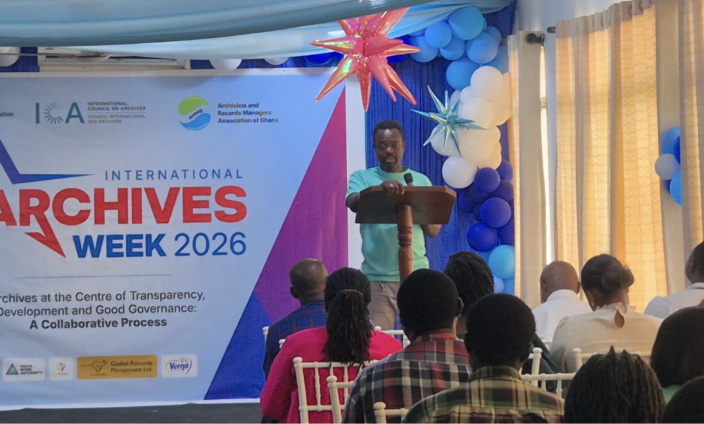
Mr. Josiah Okyere Gyimah, Head of the Records Management Division of PRAAD, said many organisations in Ghana were pursuing digital transformation by acquiring electronic systems without addressing weaknesses in their records management programmes, resulting in the transfer of paper-based inefficiencies into digital platforms.
He said the success of any electronic records management system depended not on the software itself, but on the governance framework supporting it.
“Technology cannot compensate for weak records management practices. You cannot automate chaos and expect order,” he stated.
Mr. Gyimah was speaking on the topic: “Addressing Upstream Field Challenges: Records Management Governance and the Implementation of Electronic Records Management Systems.”
He identified three critical governance instruments required for effective records management and successful ERMS implementation as a Records Management Policy, a Records Classification Scheme, and a Records Retention and Disposal Schedule.
According to him, a records management policy provided strategic direction by defining roles and responsibilities, establishing accountability, and setting standards for records creation, maintenance, access, security, and preservation.
He explained that without a clear policy framework, staff could become uncertain about their responsibilities, leading to inconsistent practices and poor compliance.
Mr. Gyimah said records classification schemes enabled institutions to organise records systematically according to their functions and activities, making information easier to store, retrieve, and protect throughout its lifecycle.
He noted that classification structures formed the basis for folder structures, metadata, security permissions, and search functions within electronic environments.
“A common misconception is that technology will automatically organise records. In reality, a poorly organised paper system will simply become a poorly organised electronic system,” he said.
On records retention and disposal schedules, Mr. Gyimah said they determined how long records should be kept, identified records with enduring value, and authorised the lawful destruction of obsolete records.
He said retention schedules helped institutions avoid unnecessary accumulation of records, reduce storage costs, and comply with legal and administrative requirements.
He warned that organisations without retention schedules risked retaining records indefinitely, thereby increasing operational costs and legal exposure, while the premature destruction of important records could undermine institutional memory and evidence.
Mr Gyimah said the three governance instruments worked together to create a strong records management framework, with policy establishing accountability, classification schemes organising records, and retention schedules controlling their lifecycle.
He observed that many organisations assumed they had information technology problems when, in reality, they were confronted with records management challenges.
“An ERMS should support good records management practices, not replace them,” he stressed.
Mr Gyimah urged institutions seeking digital transformation to first undertake records management assessments, develop or update records management policies, establish classification schemes, and prepare retention and disposal schedules before deploying electronic systems.
He also called for staff training, clear assignment of responsibilities, and the organisation of legacy records to ensure electronic records management investments delivered improved accountability, transparency, efficiency, and service delivery.
Mr Gyimah said strengthening records governance structures was essential if Ghanaian institutions were to achieve meaningful digital transformation, preserve institutional memory, and enhance public sector performance.
Latest Stories
-
Godfred Dame questions 2-night EOCO detention of Baffour Awuah over GH¢2.2m legal fees
6 minutes -
GH¢1.64bn NHIS claims paid in 2026 as Private Health Facilities welcome improved reimbursements
13 minutes -
Blue Medics champions healthy ageing at Akuapem North older persons commemoration
18 minutes -
NPP elects national executives today in Kumasi ahead of election 2028
24 minutes -
Godfred Dame accuses EOCO, CID, AG of using state power to punish political opponents
35 minutes -
Walter Mosley visits W.E.B. Du Bois Centre in Accra: A New York Secretary’s homecoming story on where Du Bois spent his final years.
2 hours -
MTN set to deploy 5G services after winning spectrum licenses worth US$202m
5 hours -
NPP national elections: 3,000–4,000 police to handle security, traffic in Kumasi – Karbo
7 hours -
Atta Akyea fumes as Manhyia MP is to spend another night in EOCO custody
7 hours -
SSNIT says La Beach clearance was to protect hotel investments, beaches to remain public
8 hours -
APSU congratulates St Augustine’s College after back-to-back National Investment Quiz wins
8 hours -
Renewed flood intervention at Mallam Junction raises hopes among residents, businesses
9 hours -
St Augustine’s College retain National Investment Quiz title after nail-biting grand finale
9 hours -
Education infrastructure investment will drive Banda’s development – Ahmed Ibrahim
9 hours -
Teacher unions strike: Gov’t presents fresh proposals as talks end inconclusively
10 hours