

Audio By Carbonatix
Ghana’s Thirst: The True Cost on Our Water Resources; Water Security Looming?
Water is life, but in Ghana, life is becoming more expensive. Day by day, the water flowing from our taps costs more to treat, harder to find, and less safe to drink. Illegal artisanal mining, galamsey, is not just a fight over gold; it is a fight for the soul of our rivers.
When Rivers Turn Brown
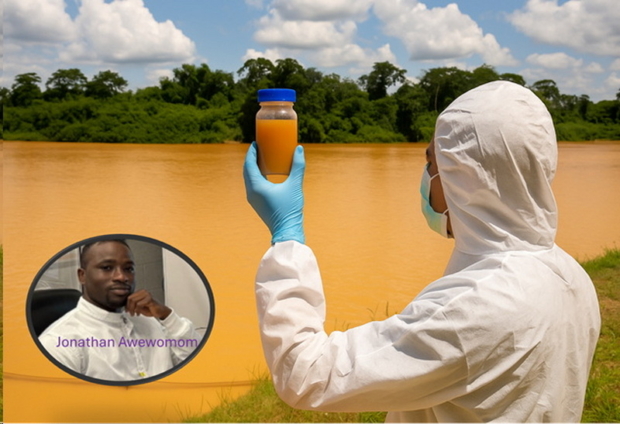
Across the Pra, Ankobra, Offin, and Birim, what once flowed clear now runs muddy. Galamsey operations dig up riverbeds and churn loose soil into the water, raising turbidity to levels so high that Ghana Water Company treatment plants are frequently forced to shut down. Some of these rivers now carry a toxic mix of mercury from gold amalgamation, cyanide from ore processing, and arsenic and lead released from disturbed soils. These are not distant events. In 2021, Ghana Water Company warned that its Daboase plant could shut down completely because the Pra River had become almost untreatable. Each time this happens, entire towns face water rationing, tanker queues grow longer, and citizens pay more for clean water. This is how galamsey is choking life out of communities, turning rivers into sludge, forcing rationing, and making Ghanaians pay more just to drink clean water.
The Rising Cost of Clean Water
Water treatment is expensive even at the best of times. When turbidity rises and heavy metals increase, the cost skyrockets:
- More chemicals must be used to coagulate and filter contaminants.
- Filters clog faster, requiring constant maintenance or replacement.
- Energy use goes up, pushing treatment plants closer to their limits.
Ghana Water Company has repeatedly stated that these increased treatment costs are passed on to consumers. The result? Water tariff increases that hurt households already struggling with inflation. Are we, the citizens, paying for the privilege of having our rivers destroyed?
The Hidden Price of Reclamation
Reclaiming a water body or land ravaged by galamsey is not just an environmental necessity, it is an extraordinarily expensive affair. As of 2025, the Environmental Protection Authority (EPA) in Ghana estimates that restoring polluted water bodies to safe condition will cost no less than US$300 million. Meanwhile, for degraded mining-out land, the Forestry Commission reports that rehabilitation for just one hectare of severely deteriorated terrain already costs US$44,000 or more, depending on the extent of damage.
In places like the Upper Denkyira East District, more than 2,000 acres of land lie degraded and in urgent need of reclamation, while rivers such as the Offin are blocked or dried in sections due to sedimentation and run-off. These figures show not only that the financial burden is immense, but also that delay in action or weak regulatory enforcement dramatically increases costs that ultimately filter down to citizens in water tariffs, health burdens, or poorer food yields.
A Future of Rationing?
If we continue this path, we must ask hard questions: Are we heading toward a future where clean water becomes a privilege only a few can afford? Where urban centers rely on tankers and sachet water while rural communities drink straight from polluted streams? The thought is not far-fetched. Some plants have already warned of total shutdown if river conditions do not improve.
A Governance Question
This is not only an environmental or technical challenge; it is a governance test.
- Who pays for the damage? Should the astronomical cost of reclaiming rivers and lands be borne by taxpayers or by those who profited from galamsey operations?
- Where is the enforcement? If laws already exist to protect water bodies, why are excavators still on the riverbanks and chemicals still flowing into our streams?
- What is the long-term plan? Are we building a national water security strategy that prioritizes prevention over crisis response, or are we waiting for the next shutdown to act?
- Are we enforcing buffer zones around our water bodies?
- Are there meaningful penalties for polluting rivers, or do fines become just another cost of doing business?
- Are we monitoring mercury, cyanide and other contaminant levels regularly and making data public?
The answers to these questions will determine whether Ghana will have enough clean water for its growing population or whether water insecurity will become our next national crisis.
A Reflection
We cannot continue to treat this as a seasonal complaint. Galamsey is eating away at our water security the way termites eat a wooden beam, quietly, steadily, until the structure collapses. This is about the sustainability of life itself. Protecting our rivers must become non-negotiable.
Ghana must wake up. Every polluted river is a threat to our children’s future, every increase in water tariffs is a price we are paying for negligence, and every shut-down plant is a warning. We are not just losing rivers; we are losing trust in our ability to protect what sustains us.
The writer is a GH Research Scientist based in Miami, FLorida-USA and a National Discourse Contributor.
Latest Stories
-
NPP conference to reinforce support for Bawumia ahead of 2028 – Evans Nimako
6 minutes -
France and Ghana’s Gender Ministry explore cooperation on women’s economic empowerment
14 minutes -
Ghana’s growing drug trafficking links are deeply troubling – Victoria Bright
16 minutes -
‘The MP’s tears are crocodile tears’ – Kofi Bentil on La Pleasure Beach demolition
18 minutes -
Freddie Blay alleges Mahama ordered demolition of son’s Polo Beach Club at La Beach
30 minutes -
‘We’ve complied with all the rules’ – NPP assures transparency in national elections
40 minutes -
‘Who is financing all this?’ – Victoria Bright questions networks behind Ghana-linked drug trade
46 minutes -
If we don’t know Baffour Awuah’s charge, there’s a fishing expedition going on – Kofi Bentil
53 minutes -
Parliament questions continued detention of Baffour Awuah by EOCO, demands due process
2 hours -
Baffour Awuah did not report to EOCO voluntarily; an arrest warrant forced him – Theophilius Dzimega
2 hours -
Baffour Awuah case risks looking like a display of state power – Sulemana Braimah
2 hours -
Campaign posters, billboards take over Kumasi as NPP goes to polls
2 hours -
‘I’ve been told I’m also involved’ – John Darko says he’ll cooperate with EOCO if invited over Baffour Awuah case
2 hours -
Follow the evidence, not assumptions, in Baffour Awuah case – Victoria Bright
2 hours -
48-hour detention rule is not an automatic entitlement for EOCO – Victoria Bright
3 hours