

Audio By Carbonatix
Two leading Civil Society Organisations (CSOs) in the Natural resource sector have found inconsistencies in the Ghana Revenue Authority’s (GRA) claims that the work of SML Ghana since 2019 led to a significant increase in the volume of petroleum products.
Africa Centre for Energy Policy (ACEP) and IMANI Africa said GRA’s refusal to acknowledge that growth rates prior to the engagement of SML were higher is “disingenuous.”
“We also consider as disingenuous the refusal to acknowledge that growth rates in consumption in the periods before SML’s intervention outstripped the growth rate being attributed to SML,” they said in a joint statement on Thursday, January,4,2024.
The GRA had stated that its revenue assurance contract with SML would rake in over $100 million annually, citing a 33% improvement in the downstream petroleum sector over the past two years.
“The work of SML over the period has led to a significant increase in the figures reported in the downstream petroleum sector, from an average of 350 million litres per month in 2018 and 2019, to 450 million litres per month from 2020/2021. This represents over a 33% increase in volume reporting and an average of an extra 100 million litres per month at a levy rate of GHS1.44p.
"The extra revenue variance gained for the two years will exceed GHS3 billion. This performance is attributable mainly to the introduction of ICUMS and SML systems,” the GRA said on December 20,2023, in reaction to The Fourth Estate’s investigation.
The CSOs said this however is contrary to data available on the Ministry of Finance’s website for Statutory reporting under the Energy Sector Recovery Act (ESLA) and data on the NPA’s website.
“In the year SML commenced operations (2019/2020), GRA’s data indicates a 5% growth in refined petroleum product consumption relative to the previous year (19.38 million litres). In the same period, the NPA reports a 7% growth (24.71 million litres) in product consumption. In the subsequent year (2020/2021), both GRA and NPA data align, indicating an 11% and 10% growth in product consumption, respectively,” the statement by the CSOs indicated.
| Year | Volumes (NPA) (Million litres) | Volumes (GRA ) (Million litres) | |||||
| Annual | Monthly | monthly differential | Annual | Monthly | monthly differential | ||
| 2018/19 | 4,507.03 | 375.59 | 4,366.80 | 363.9 | |||
| 2019/20 | 4,803.65 | 400.3 | 24.71 (7%) | 4,599.38 | 383.28 | 19.38 (5%) | |
| 2020/21 | 5,262.43 | 438.54 | 38.24 (10%) | 5,088.55 | 424.05 | 40.77 (11%) | |
| 2021/22 | 4,975.12 | 414.59 | -23.95 (-5%) | 4,740.32 | 395.03 | -29.02 (-7%) | |
They also added, “The actual growth between 2018/2019 and 2020/2021 was about 62.95 million from NPA data and 60.15 million from the GRA Data. In the 2021/2022 year, the total consumption of refined products in the country declined by 5% and 7% according to NPA and GRA respectively.”
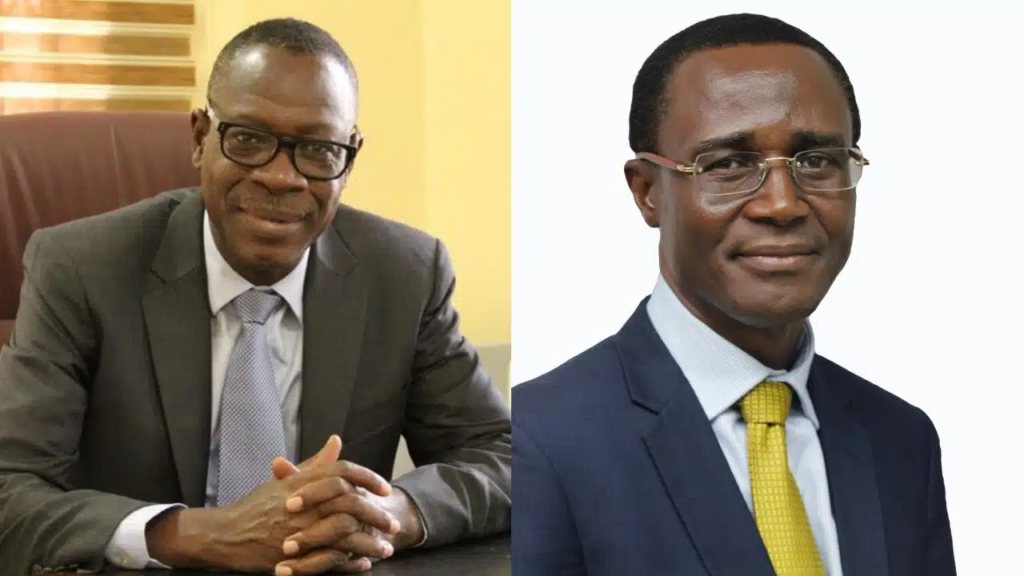
Fig. 1: Historical petroleum product consumption growth rates
Source: NPA
The duo also said that SML inflated its data to validate its contract with the GRA which “bore no correlation with the data employed for revenue accounting.”
“In 2021, SML issued a press release claiming significant savings in the revenue outlay of the state. A meticulous examination of the data purportedly relied upon by SML, however, reveals notable inaccuracies. We conducted a comprehensive comparison of the month-on-month volumes published by SML for three key products (AGO, Petrol, and LPG) with the data presented by GRA to the Ministry of Finance during the same period.”
These inaccuracies, according to them, render the SML dataset unsuitable for tax purposes, a statement affirmed by Customs officers of the GRA who were interviewed during The Fourth Estate’s investigation.
“This discrepancy raises pertinent questions about the substantial payments made to SML, especially considering that their data does not contribute to the informed decision-making process in revenue collection. Despite this, SML has received gross payments between GH₵700 million and GH₵750 million thus far.”
The GRA’s Samuel Arthur admits that SML’s metres are not used for revenue calculation when he was asked during the investigation which metres the GRA uses for revenue purposes.
“It has been the Waybill figures which is the volume that is being dispensed from the metres. That is the gantry metres,” he said.
The CSOs have described SMLs’ share of royalty of $0.75 per barrel of petroleum as an “encumbrance of petroleum revenue, a practice abhorred by the Petroleum Revenue Management Act (PRMA).”
“The entire operation of SML is irrelevant, the action constitutes a calculated attempt to dissipate the State’s resources,” the ACEP and IMANI statement said.
They are, therefore, calling on the government to examine all revenue assurance contracts to ensure value for money.
“The SML situation presents an opportunity to: Holistically examine the many revenue assurance gigs that are siphoning revenue from the state across many sectors, particularly the telecoms sector, the ports, at GRA head office etc., to free up revenue for development.”
Background
President Akufo-Addo has directed the suspension of the shady SML contract with the Ministry of Finance and the GRA following an investigation by The Fourth Estate which showed how the GRA and the Ministry of Finance signed a shady GH₵24 million a month. deal with SML, an offshoot of a timber company in Ghana.
The investigation also revealed that SML has been awarded an expanded consolidated contract worth nearly US$100 million a year for revenue assurance that will now include the upstream petroleum and gold mining sectors.
The Fourth Estate investigations also showed that SML had made false claims that it was checking under-reporting, diversion and dilution in the country’s downstream petroleum sector. When The Fourth Estate team pointed the false claims to the company, the Managing Director, Christian Tetteh Sottie, admitted the company was not into those services.
“Oh no, we are not involved in diversion. We are only at the depots. If the thing [petroleum product] is lifted, we don’t know if [it is diverted],” Mr. Sottie said.
The president also directed tax audit firm, KPMG, to conduct a two-week investigation into the matter.
Latest Stories
-
A source of excellence across generations – Vice President Opoku-Agyemang lauds Mfantsipim
6 minutes -
(Photos) Mfantsipim School launches historic 150th anniversary
30 minutes -
Knights and Ladies of Marshall group backs Catholic Bishops’ stance on anti-LGBTQ+
1 hour -
Bright Simons writes: All the Filla in the Ibrahim Mahama/E&P – Gold Fields Saga
2 hours -
Monetise Idiocy In Ghana
2 hours -
The Ghanaian prophet and the mysterious death of his scottish wife Charmain Speirs
3 hours -
Nearly 400 sentenced in Nigeria for links to militant Islamists
3 hours -
Ghana’s recovery supported by gold strength despite global oil price pressures – Standard Bank Research
3 hours -
Methodist Church hails Mfantsipim@150; calls for “fresh consecration” to excellence
4 hours -
‘Excellence is our inheritance’ – Nana Sam Brew-Butler hails Mfantsipim’s 150-year reign in leadership
4 hours -
Kwaku Azar writes: A-G vs OSP
4 hours -
Mfantsipim–Adisadel rivalry built excellence, not division – Sam Jonah
4 hours -
Vice President launches Mfantsipim’s 150 years of shaping Ghana’s greatest mind
4 hours -
I assure Otumfuo, Mahama will join him to commission KNUST Teaching Hospital by end of this year – Haruna Iddrisu
5 hours -
Barcelona dominate derby to extend La Liga lead
5 hours