

Audio By Carbonatix
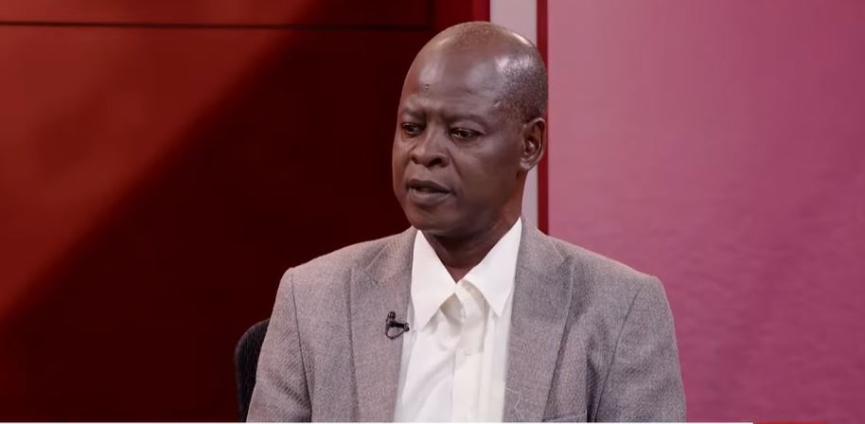
Co-Chair of the Ghana Extractive Industries Transparency Initiative (GHEITI), Dr Emmanuel Steve Asare Manteaw, has defended the financial losses incurred by the Ghana Gold Board (GoldBod), describing them as necessary costs in its bid to take control of the country’s gold market.
The policy analyst argued that Ghana has incurred losses from gold purchase programmes in previous years, but those losses did not attract the same level of concern.
“We make it look like this is the first time Ghana is making losses in its gold purchase program. I’ve looked at the data. 2022, we made a loss. In 2023, 2024, and 2025, we’ve made losses all those years. Why didn’t that become a problem?” he asked.
Dr Manteaw said the current debate must consider the amount of foreign exchange generated by GoldBod rather than focusing only on the losses.
He cited 2024 as an example, saying Ghana recorded total losses of ¢5.7 billion from the Gold for Oil programme and domestic gold purchases for reserves.
“So let’s say, for instance, in 2024, we made a total loss of ¢5.7 billion. $1.8 billion from Gold for Oil and then $3.8 billion from our domestic gold for reserves, total of $5.7 billion,” he said.
According to him, Ghana’s gold export revenue that year was only $4 billion.
He argued that incurring a loss to bring significantly more foreign exchange into the country should not automatically be viewed as a failure.
“And so if you had to incur a loss of $1.7 billion to bring in $10 billion, that for me shouldn’t be a problem,” he said.
Dr Manteaw said such losses should instead be understood as transaction costs.
“It means that we should accept that incurring losses, what we call losses, for me, they are transaction costs, and all the governments over the years have been incurring transaction costs, and that has not become a problem,” he said.
He said the assessment of GoldBod must also take into account the wider economic impact of the foreign exchange it has brought into the country.
“We don’t even consider the quantum of forex that GoldBoard has brought in, and so you need to look at the relativity, relativity. How much did you spend to bring in what, and what has been the impact?” he said.
For Dr Manteaw, the wider economic benefits outweigh the programme's cost.
“The impact, the economy-wide impact for me, exceeds the cost,” he said.
He pointed to foreign exchange stability, lower import costs, inflation and interest rates as some of the wider benefits.
“Oh yes. You have forex stability, so a business can plan properly. Your imports have gone down. I mean, in terms of cost of your imports, have gone down,” he said.
He said the stability could also create opportunities for businesses to invest in machinery and support the government’s 24-hour economy.
“Now, that gives you the opportunity if you use incentives to get people to import machinery, so that your 24-hour economy can benefit from the stability,” he said.
He also cited lower inflation and interest rates as key drivers of economic growth.
“Now, again, you have low inflation, you have low interest rates, and all these get to establish the foundation for economic growth,” he said.
Dr Manteaw acknowledged concerns about the sustainability of losing $1.7 billion from gold transactions but said the circumstances under which GoldBod entered the market must be considered.
“The context at the time when GoldBoard was given the mandate to do what it’s doing now, GoldBoard needed to penetrate the market,” he said.
He explained that GoldBod was entering a market where foreign buyers already had established relationships with Ghanaian miners.
“There were already established relationships. The Indians were providing money, the Chinese were providing equipment, and the Turkish, they were all providing resources for Ghanaian miners in exchange for the gold,” he said.
He said GoldBod had to offer better prices to convince miners to sell their gold through the new system.
“The only way they can do that is to ensure that they offer a better price. But as you offer a better price, that’s a cost that you cannot recover through your transactions,” he said.
Dr Manteaw said foreign buyers were purchasing gold at a discount, while GoldBod was buying at market prices.
“Gold Board was buying at market price, in fact, using the forex rate, I mean the forex bureau rate, which was far higher than the Bank of Ghana rate,” he said.
He said this created an uncovered cost but maintained that it was necessary to win over miners.
“And so you find that there is a certain uncovered cost in the transactions, but it was necessary for them to win the Ghanaian miners and to get them to sell to Gold Board,” he said.
He therefore urged stakeholders to assess GoldBod’s losses in the context of the circumstances under which it entered the gold market.
“So, we need to actually just situate the conversation within the context in which Gold Board found itself when it was given the mandate to regulate gold trade,” he said.
Latest Stories
-
Manhyia South MP Baffour Awuah reports himself to EOCO after arrest warrant
52 seconds -
Ghana records 11 cocaine cases in 28 drug busts since March 2025; biggest hauls seized abroad
3 minutes -
The numbers behind Carlos Queiroz’s tenure as Black Stars boss
11 minutes -
The man who saw tomorrow: How Dr Bawumia built for Ghana what America and Nigeria are building today
37 minutes -
Kumasi drivers demand price controls for goods, brand some traders as real ‘Kalabule’
41 minutes -
Consumer Protection Agency commends FDA for destroying illegal bales of diapers
45 minutes -
GNFS rescues stranded persons after flooding in Hohoe
1 hour -
Baffour Awuah deliberately refused to honour EOCO invitation – Deputy AG, Srem-Sai
1 hour -
‘Believe in these players’ – Carlos Queiroz tells Ghanaians after leaving Black Stars job
1 hour -
Gideon Boako: GoldBod books must be stretched to establish true nature of reserves support
1 hour -
ECG announces planned maintenance outage in parts of Accra on Friday
2 hours -
Carlos Queiroz sacked as Black Stars head coach
2 hours -
Parliamentary Sports Committee to ‘interrogate’ Black Stars struggles with Ministry, GFA invitations
2 hours -
Asutifi North Police arrest 7 in crackdown on suspected drug activities
2 hours -
Attijariwafa Bank: What to know about the Moroccan Group taking over SG Ghana
2 hours