

Audio By Carbonatix
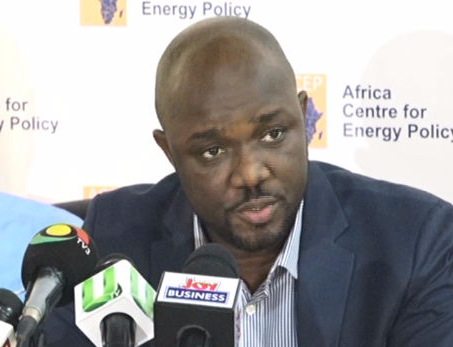
The timing of the introduction of petroleum levies is poor and may make post-Covid-19 recovery more difficult for individuals and businesses, the African Centre for Energy Policy (ACEP) has said.
According to the energy think tank’s comments on the recent fuel price increases, though it acknowledges the economic context that government finds itself and the need to raise more money to support the national budget, it prefers efforts to raise more revenue had focused on innovative ways to harness untapped potential rather than burden those already in the tax bracket and facing significant economic challenges, partly imposed by COVID-19.
It therefore wants all the increments on the margins recently imposed by NPA to be scrapped, saying, the justifications provided are weak and present unnecessary burden on the consumer.
It also wants the NPA and BOST to immediately publish the utilisation of the existing margins to show cause for adjustment.
“Certainly, government needs to find additional streams of income to address emerging development challenges. However, ACEP preferred that efforts to raise more revenue had focused on innovative ways to harness untapped potential rather than burden those already in the tax bracket and facing significant economic challenges partly imposed by COVID-19”, the statement emphasised.
“The downstream petroleum sector is characterised by unending evasion and smuggling, which account for revenue losses to the state. In 2019, NPA’s records indicate that about 850 million litres of petroleum products were unaccounted for, yielding total revenue losses of about GH¢1.458 billion. These are exclusive of pervasive illegal products on the market”, it pointed out.
Though some efforts have been made to track the losses in the sector by government, the energy think tank said there is still a gap in the reconciliation of revenues and consumption data on petroleum products as the disparities in revenues and consumption of petroleum products for 2020 is estimated to be about GH¢1.1 billion.
Despite this shortfall, ACEP said, an independent contractor, Strategic Mobilisation Ghana Ltd (SML), procured by the Ministry of Finance for revenue assurance and tracking of petroleum product volumes, has mounted a spirited media campaign claiming it has saved government about GH¢1 billion in revenue.
But the claim is neither supported by fiscal data from the Ministry of Finance nor the company's data circulated to the media.
It therefore urged government to go in for a robust system that accounts for tax evasion in official data and illegal petroleum products on the market, which is much pervasive. The composite loss across the downstream is estimated to be in excess of GH¢3 billion, compared to an expected revenue increase of about GH¢1.5 billion from the levies and margins, which may prove counterproductive given the current microeconomic condition of citizens dictated by escalating inflationary pressures since the beginning of the year.
It also said that the inflation rates for January, February, and March 2021 which were 9.1%, 10.3%, and 10.3% respectively, and showed upward trend that could be worsened with the pass-through effect of the upward adjustment in fuel prices.
Impact of increment on ESLA proceeds
The additional 20 pesewas on the Energy Sector Recovery Levy is estimated to yield about GH¢795 million (US$137 million) per year based on projected petrol and diesel consumption.
The budget also forecasts energy debt recovery levies to grow from GHS1.6 billion (US$281 million) in 2020 to GHS3.1 billion (US$ 464 million) in 2024.
ACEP said this projected revenue significantly falls short of the average rate of debt accumulation of about US$1.5 billion, making it impossible for ESLA to address the energy sector financial challenges. Therefore, the sustainable approach is to fix the debt accumulation in the energy sector, and not an imposition of additional levies.
Impact of increases in petroleum margin
ACEP said the upward adjustment of some margins on petroleum products was the surprise package, unlike the increment by 30 pesewas imposed by law and first announced in the budget.
It further said NPA introduced an adjustment to the margins without any prior notice to consumers. This it noted does not only distort the plans and expectations of consumers at the pumps but significantly questions the propriety of the adjustment.
Conclusion
In conclusion, ACEP said Ghana is not the only country that mobilises tax revenue from petroleum products, adding, many countries tax petroleum products far more than Ghana.
In some countries, taxes constitute about 80% of the pump price. However, most of these countries tax products to engineer behavioural change and specific tangible development agenda.
It further said the converse for Ghana is that a significant component of the taxes on petroleum are used to sustain inefficiencies of the energy sector agencies.
“If government could take practical steps to fix the inefficiencies in the energy sector, petroleum taxes could free up significant revenue for critical development programmes such as efficiently effective mass transportation system, advanced road networks and climate action. Government needs to commit to critical review of the object of all the agencies and companies in the energy sector to ascertain the relevance of each of them under the portfolio of government business to cut waste and translate tax and margins to development outcomes”.
It stressed that ACEP is committed to reviewing the historical track record of these agencies to promote discussion on the appropriate tax burden on consumers.
Latest Stories
-
US, Iran fail to reach peace agreement after marathon talks in Pakistan
1 hour -
Port crises loom as 11,000 drivers threaten four-day strike
2 hours -
A source of excellence across generations – Vice President Opoku-Agyemang lauds Mfantsipim
2 hours -
(Photos) Mfantsipim School launches historic 150th anniversary
3 hours -
Knights and Ladies of Marshall group backs Catholic Bishops’ stance on anti-LGBTQ+
4 hours -
Bright Simons writes: All the Filla in the Ibrahim Mahama/E&P – Gold Fields Saga
4 hours -
Monetise Idiocy In Ghana
4 hours -
ECG kicks off Phase Two of transformer upgrades at Lashibi; brief outages expected
5 hours -
The Ghanaian prophet and the mysterious death of his scottish wife Charmain Speirs
5 hours -
Nearly 400 sentenced in Nigeria for links to militant Islamists
5 hours -
Ghana’s recovery supported by gold strength despite global oil price pressures – Standard Bank Research
5 hours -
Methodist Church hails Mfantsipim@150; calls for “fresh consecration” to excellence
6 hours -
‘Excellence is our inheritance’ – Nana Sam Brew-Butler hails Mfantsipim’s 150-year reign in leadership
6 hours -
Kwaku Azar writes: A-G vs OSP
6 hours -
Mfantsipim–Adisadel rivalry built excellence, not division – Sam Jonah
6 hours