

Audio By Carbonatix
Faced with recurrent online calls for demonstrations by dissenting voices to demand better living conditions and the resignation of Faure Gnassingbé, Togolese authorities want to take a hard line in their efforts to control the use of social media.
Togo has been experiencing socio-political tension maintained by an on-line citizens' movement called M66 (June 6 Movement), which has been calling for demonstrations against the Togolese regime.
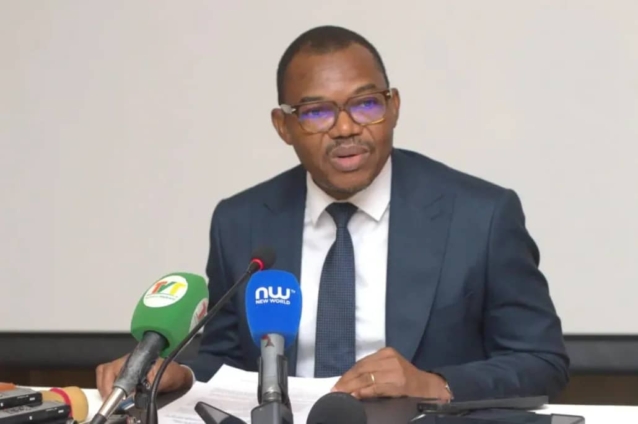
Speaking at a the press briefing held on Friday, October 3 in the Togolese capital, the State Prosecutor, Talaka Mawama, reminds users of the legal framework governing the use of social media in Togo.
He outlined some offenses and the penalties incurred by social media users. "Anyone who produces, reproduces, disseminates, or shares content that falls outside the legal framework will be subject to uncompromising criminal prosecution," the state prosecutor insisted.
He emphasized the role plays by his office as "the guardian of social and political order in monitoring the actions of social media users in Togo" . The list of targeted on-line offences includes insults, defamation, incitement to hatred, invasion of privacy, dissemination of false news, and threats to state security.
According to him, the country has adopted several laws in recent years that should normally regulate the use of new information and communication technologies. However, the social discontent that has rocked the country since the constitutional amendment in April 2024 has been transfered to social media.
"The legal framework exists in Togo to provide an appropriate solution or response. This framework is primarily composed of texts or laws that most people are familiar with. There is the new penal code and the children's code. There is also the law on cybersecurity and cybercrime and the law on the protection of personal data. These various texts or laws provide for actions or deeds that can be classified as offenses. Thus, it is undeniable that when using social media, people can commit different types of offenses. There are offenses against persons and property, and offenses against the state," he told newsmen.
He also warned in a threatening tone that Togolese judicial authorities will no longer tolerate all offenses in the use of new information and communication technologies in Togo.
He promises legal actions against perpetrators of offenses on social media in accordance with existing legal provisions in force in Togo. "We are all now warned. Yes, we are warned. From now on, anyone who produces, reproduces, publishes, or shares content that falls outside the current legal framework will be subject to uncompromising and uncompromising prosecution," he warned.
In Togo, comments on published online contents will also be subject to legal actions. "Legal sanctions will also be applied to comments validating an illegal publication," he added.
Civil society organizations fear a regression of freedom of expression in Togo.
"These warnings, which are tantamount threats, aimed at weakening dissident online citizen movements. Today, the authorities want to cut the momentum of protests by putting fear among social media users, particularly dissenting voices," remarked a Togolese activist on condition of anonymity.
It should be recalled that after three months of suspension, some platforms such as TikTok, the most used platform by dissident voices, were reinstated by the Togolese authorities at the end of September.
The authorities have issued several arrest warrants targeting prominent members of the online M66 movement, including artists, bloggers, and activists based abroad.
The country is shaken by intense socio-political tension following Faure Gnassingbé's apparent desire to remain in power after two decades. The Togolese leader succeeded in shifting the country to a parliamentary regime after a much-contested constitutional change in April last year.
He was appointed Chairman of the Council of Ministers in May this year. Despite arrests, threats and heightened security, the on-line citizens movement remains undeterred as it continues to call for mass mobilisation, denouncing what it describes a “repressive and entrenched regime” and demanding democratic reforms, including presidential term limits and the holding of free and fair elections.
Latest Stories
-
Nearly 400 sentenced in Nigeria for links to militant Islamists
19 minutes -
Ghana’s recovery supported by gold strength despite global oil price pressures – Standard Bank Research
26 minutes -
Kwaku Azar writes: A-G vs OSP
59 minutes -
Mfantsipim–Adisadel rivalry built excellence, not division – Sam Jonah
1 hour -
Vice President launches Mfantsipim’s 150 years of shaping Ghana’s greatest mind
2 hours -
I assure Otumfuo, Mahama will join him to commission KNUST Teaching Hospital by end of this year – Haruna Iddrisu
2 hours -
Barcelona dominate derby to extend La Liga lead
3 hours -
Gov’t to roll out free special education for persons with disabilities from July 1 – Education Minister
3 hours -
Importers and Exporters Association declares full support for Publican AI port system
3 hours -
“We used it to test our officiating officials’ readiness” – Bawah Fuseini after CAA Athletics event
3 hours -
Volleyball emerges as Ghana’s fastest rising sport
3 hours -
National Sports Fund needs strong leadership from the top – Administrator David Wuaku
4 hours -
JoySports Exclusive: Steve McLaren in talks with GFA after expressing interest in Black Stars job
4 hours -
Fire guts auto parts warehouse at Bubuashie, one fire officer injured
4 hours -
I owe my victory to coach Ofori Asare – Allotey after winning WBA Africa Gold Super Flyweight belt
4 hours