

Audio By Carbonatix
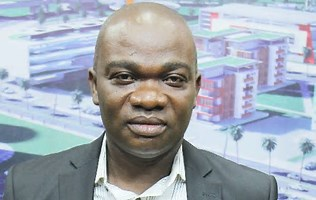
A lecturer in political marketing at the University of Education, Winneba, Dr Bernard Tutu-Boahene, has welcomed the government’s newly announced free primary healthcare initiative, describing it as a positive step towards improving access to basic health services in Ghana.
Speaking on JoyNews AM Show on Tuesday, April 14, Dr Tutu-Boahene discussed the policy introduced by the Health Minister a day earlier, highlighting both its potential benefits and its limitations within the broader healthcare system.
“United Nations basically has categories for healthcare facilities, so it starts with the primary healthcare facilities,” he explained, situating the initiative within global healthcare frameworks.
Dr Tutu-Boahene noted that Ghana’s healthcare financing has evolved, moving from a “cash-and-carry” system where patients paid upfront for services to the introduction of the National Health Insurance Scheme (NHIS), which was designed to support vulnerable populations.
“And the key thing here is that because of the… we used to have a system where you needed to pay before you went, and then it came to the National Health Insurance Scheme, which was a policy targeted at the vulnerable in society,” he said.
However, he acknowledged that the NHIS has faced persistent challenges over the years. “I think that over the years we’ve struggled with National Health Insurance,” he added.
According to him, the newly introduced free primary healthcare initiative should be seen as a complementary measure rather than a replacement for the NHIS. “To this point, I think that the free primary healthcare initiative is something that is supposed to complement the National Health Insurance Scheme,” he stated.
He pointed out that many Ghanaians remain unable to enrol in the NHIS due to financial constraints. “The basic question is that a lot more people seem not to have the financial muscle to register under the National Health Insurance Scheme, because of the poverty gap,” he said.
Dr Tutu-Boahene explained that the new policy could help address reluctance among citizens to seek medical care early. “In most cases, people feel reluctant to go to hospitals. Why? Because they don’t even have the money for a diagnosis and all that. Yes, that is true,” he emphasised.
He added that this situation is particularly evident in rural communities, where even visiting primary healthcare facilities such as Community-based Health Planning and Services (CHPS) compounds can be difficult. “When you go to our rural areas… we see that people may be sick, but going to the hospital or visiting some of these primary healthcare centres like the CHPS compound and all that remains a problem,” he noted.
Despite these challenges, he described the policy as “welcoming news," while urging the public to clearly understand how it differs from the NHIS.
Dr Tutu-Boahene outlined the core functions of primary healthcare, stressing that the initiative is primarily focused on prevention and early intervention. “The primary healthcare initiative basically focuses on the prevention of all diseases and again, to promote good healthcare,” he explained.
He added that early detection is another key component. “It helps in early detection so that an individual will know that this constant headache that I’m having is a result of this and that,” he said.
Furthermore, he highlighted the referral role of primary healthcare facilities. “They don’t really deal with complicated healthcare issues… so whenever a situation like hypertension is detected, it goes beyond them,” he explained.
Due to limited technology and specialised expertise at that level, patients are typically referred to higher-tier facilities such as district hospitals. “So they refer you to the secondary level, which may be the district hospital and others,” he said.
It is at this stage, he noted, that the NHIS becomes critical. “When you get in there, that is where the National Health Insurance will kick in,” he explained, adding that the scheme was designed to provide financial cover for more advanced treatments.
However, he cautioned that financial barriers remain a major concern. “Even that is a problem, because again, when you look at the numbers… [many] cannot afford it," he said.
Dr Tutu-Boahene emphasised that the free primary healthcare initiative should not be misunderstood as comprehensive treatment coverage. “It is not assumed that the primary healthcare is going to give you a treatment cover. It’s just a free provision that will help you to diagnose your problem,” he clarified.
Using examples such as diarrhea and malaria, he noted that more severe cases would still require referral to higher-level facilities.
He described the initiative as an important first-tier intervention but warned that it does not resolve deeper financial challenges within the healthcare system. “It is providing a first-level tier of care, but it is not actually dealing with the financial complications that we are having,” he concluded.
Latest Stories
-
Power restoration fault suspected in Kumasi Central Market fire
2 hours -
The 7-foot giant of Ngleshie Amanfro: Seven-foot Ghanaian Ephraim Saawa dreams of joining the national basketball team
3 hours -
Government promises support for Kumasi Central Market fire victims
3 hours -
Vibes The Movie: Big Ghun’s Ghanaian film earns five nominations at 2026 REFFA
4 hours -
MamaCare CEO warns unresolved conflicts among health workers could undermine maternal and neonatal care
4 hours -
Health professionals urged to translate medical knowledge into practice to save mothers
4 hours -
Conflicts among care providers linked to maternal, neonatal deaths – Expert
6 hours -
GIS marks 10th TIME conference, champions improved teaching practices
6 hours -
BRICS Or Balance? What Ghana’s bid really means
6 hours -
GPRTU wants full TRAFFITECH-GH implementation to start in 2027
6 hours -
Mahama announces plans to import electric wheelchairs for PWDs
7 hours -
KGL U17 Colts 2026: Western beat Prempeh Elite Academy to set up final final with Greater Accra Region
7 hours -
Late Solanke strike salvages 10-man Spurs draw at Man United
7 hours -
Gender Ministry to monitor welfare of Nana Akua Addo’s children amid domestic violence case
7 hours -
Benedict Okyere Yeboah: Ghana’s football problem goes beyond sacking a coach
7 hours