

Audio By Carbonatix
In the serene ambiance of the WorldFaze Art Practice in Ogbojo, Accra, I met up with artists — Nana Adwoa Fremah Amoabeng and Kingsley Sedem Dzade — preparing for their upcoming exhibition.
With the exhibition date set for November 17, the duo was meticulously adding final touches to their works, curating a thought-provoking reflection on Ghana's evolving architectural and food culture.
The atmosphere was charged with anticipation, as both artists sought to reshape the space to suit their individual thematic explorations.
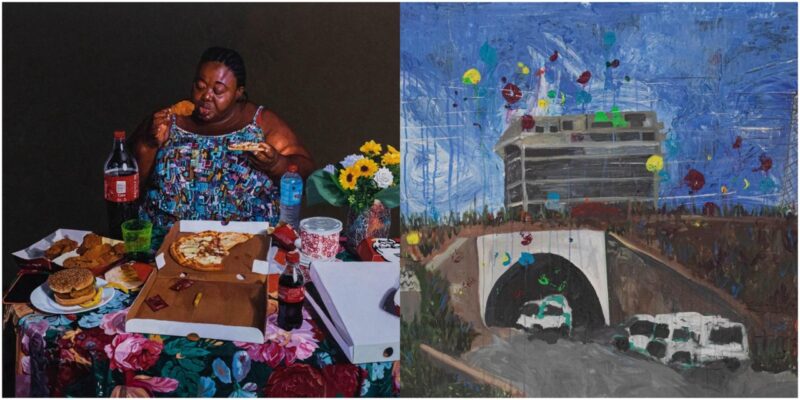
"Mess of Beautiful Chaos" by Fremah invites viewers to confront the dynamic shifts in Accra’s architectural landscape. Her works draw inspiration from her extensive research and fieldwork, combining drone shots of prominent areas like the Tema Under-bridge and Ashaiman with an introspective exploration of architectural transformation.

"Accra’s urban growth is happening at such a rapid pace," Fremah explained as she guided me through her canvases.
“The main process of this work is about architectural and interior design, and I realised that architectural plan or architectural journey in life always changes. We have the modern, and then we have the traditional architecture. But I've realised that in the next five or 10 years, or when I was born or when I grew up in North Kaneshie, there's been so many changes that are happening and I always don't recall how this place used to look or how this place used to look."
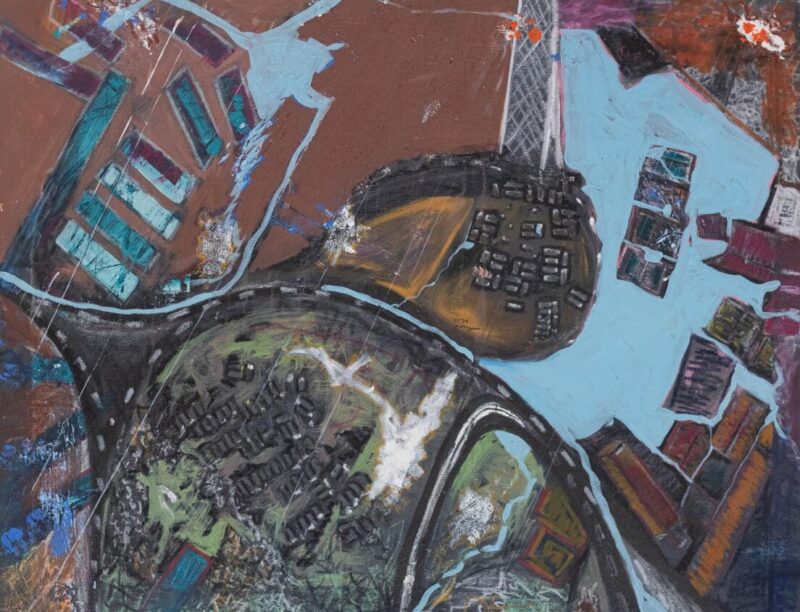
"One moment, a structure is there, and the next, it’s gone or replaced by something else. Through this work, I wanted to question how these architectural changes impact us, especially future generations who will live in a vastly different Accra."
Fremah’s vibrant colors and abstract shapes communicate a sense of beauty intertwined with chaos — an apt reflection of Accra’s growing and sometimes overwhelming landscape.
"These pieces are intended to evoke both nostalgia and excitement for what is yet to come. I want people to remember that our history is wrapped up in these spaces, and as they change, so too does our collective memory," she shared, referring to her painting Easy Route.
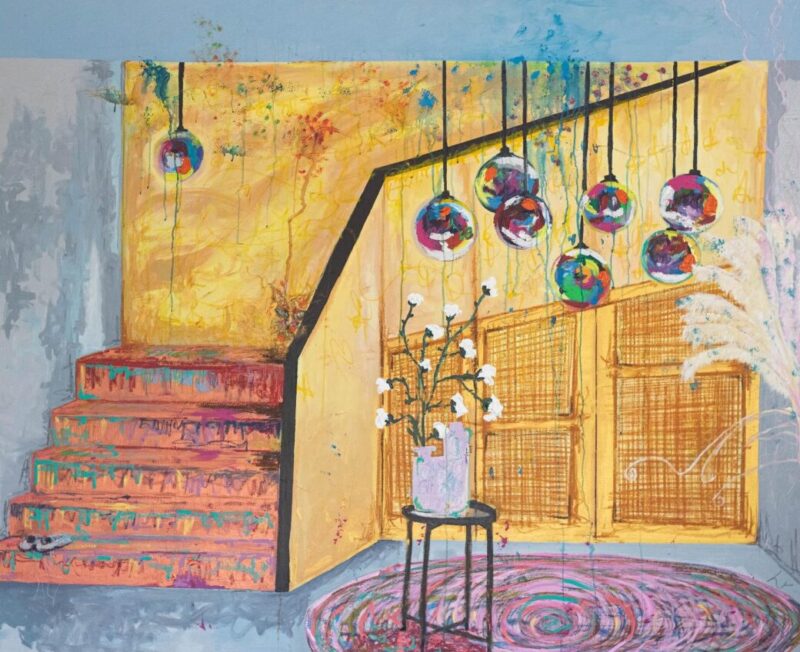
Easy Route examines the transformation of spaces, originally designated for animals, that humans now frequent.
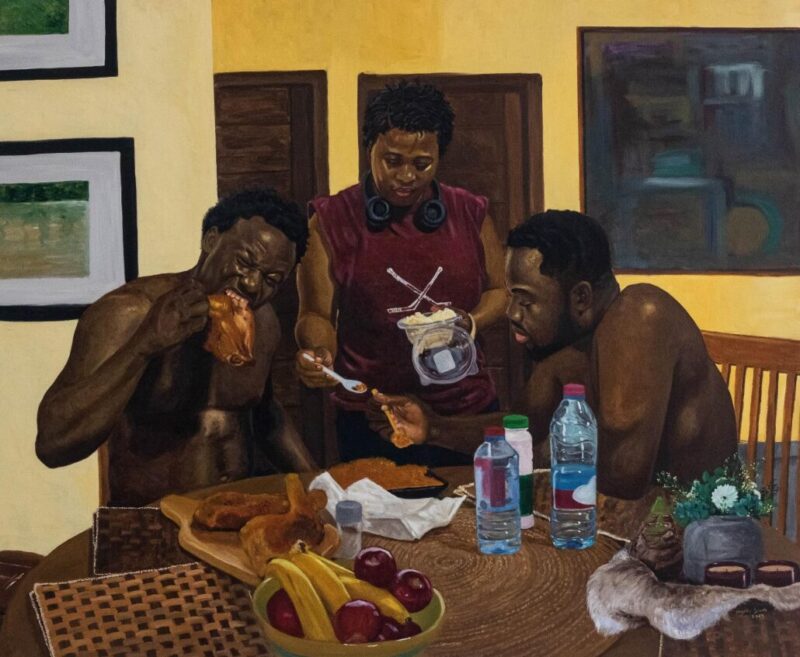
Kingsley Sedem Dzade’s exhibition, Mi na miadu nu ("Let’s gather and eat"), meanwhile, is an introspective social commentary on the significance of food in Ghanaian society. Through commensality — the act of eating together — Dzade reflects on the traditional values that have historically underpinned Ghanaian culinary culture.
“You know, back in the day when you grind pepper, you can’t share it small small for everyone so you have to wait for everyone to come so that we eat together. That kind of creates a sense of togetherness or community building. So I believe, food is something that unites us or brings us together,” he explained as we observed his painting Self Treat — a bold critique of fast-food culture in Ghana.
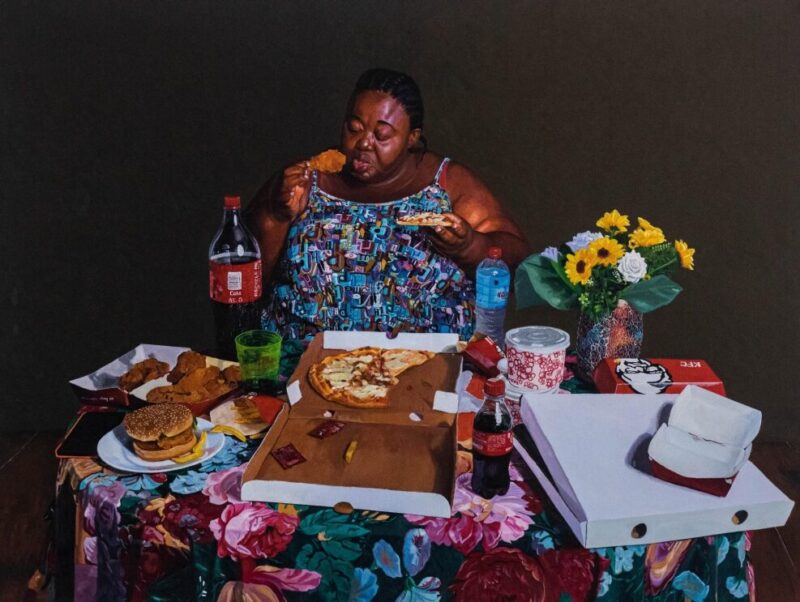
"Now, everything is so fast-paced. People eat alone, and many rely on fast food, which comes with health issues. Through my work, I’m calling for a return to traditional eating practices, which not only connect us but are often healthier."
In Ghana Jollof, Dzade playfully engages with the age-old "Jollof Wars" between Ghana and Nigeria, inviting viewers to celebrate Ghanaian culinary heritage.
His emphasis on communal meals, like Fufu and Tilapia, reminds viewers of the joy and identity embedded in traditional foods. Dzade also doesn’t shy away from environmental issues, as seen in his work Take Away, which critiques the environmental consequences of single-use plastics in food packaging.
Both artists, in their own unique styles, create a vivid commentary on Ghana’s cultural evolution. While Fremah navigates the landscape of modern architecture as a symbolic space of chaotic beauty, Dzade’s pieces examine how modernization impacts food habits and health.
Their works challenge viewers to reconnect with both physical spaces and traditional values that ground Ghana’s cultural identity.
Through these exhibitions, WorldFaze Art Practice becomes a space for dialogue and introspection, inviting Ghanaians to consider how both food and architectural spaces shape their identities in an ever-changing world.
The exhibition date is set for November 17, 2024, and will run through to January 17, 2025.
Latest Stories
-
A source of excellence across generations – Vice President Opoku-Agyemang lauds Mfantsipim
51 minutes -
(Photos) Mfantsipim School launches historic 150th anniversary
1 hour -
Knights and Ladies of Marshall group backs Catholic Bishops’ stance on anti-LGBTQ+
2 hours -
Bright Simons writes: All the Filla in the Ibrahim Mahama/E&P – Gold Fields Saga
3 hours -
Monetise Idiocy In Ghana
3 hours -
The Ghanaian prophet and the mysterious death of his scottish wife Charmain Speirs
3 hours -
Nearly 400 sentenced in Nigeria for links to militant Islamists
4 hours -
Ghana’s recovery supported by gold strength despite global oil price pressures – Standard Bank Research
4 hours -
Methodist Church hails Mfantsipim@150; calls for “fresh consecration” to excellence
4 hours -
‘Excellence is our inheritance’ – Nana Sam Brew-Butler hails Mfantsipim’s 150-year reign in leadership
4 hours -
Kwaku Azar writes: A-G vs OSP
4 hours -
Mfantsipim–Adisadel rivalry built excellence, not division – Sam Jonah
5 hours -
Vice President launches Mfantsipim’s 150 years of shaping Ghana’s greatest mind
5 hours -
I assure Otumfuo, Mahama will join him to commission KNUST Teaching Hospital by end of this year – Haruna Iddrisu
6 hours -
Barcelona dominate derby to extend La Liga lead
6 hours