

Audio By Carbonatix
The immediate reversal of the United States’ visa restrictions on Ghanaian nationals marks a substantial diplomatic shift and offers a compelling narrative of resilience and success for Ghana’s foreign policy. The policy change restores maximum validity for B1/B2 tourist and business visas to five years (multiple entry) and for F1 student visas to four years (multiple entry). This reverses the restrictive three-month, single-entry limits imposed in June 2025.
The swift turnaround underscores the efficacy of high-level diplomatic engagement. Ghana’s Foreign Affairs Minister, Samuel Okudzeto Ablakwa, confirmed the breakthrough, attributing it to persistent effort and presenting the development as a national victory. He declared:
“The U.S. visa restrictions imposed on Ghana have been officially reversed. This good news was delivered by U.S. officials on the sidelines of the UN General Assembly and is the result of months of high-level diplomatic negotiations. Ghanaians can now be eligible for five-year multiple-entry visas and other enhanced consular privileges.”
The U.S. Embassy in Accra later issued a formal statement, confirming the restoration of visa validity periods and providing immediate relief to travelers.
A stark shift in U.S. administration policy
The original restrictions—also applied to Cameroon, Ethiopia, and Nigeria—stemmed from the Trump administration’s aggressive global visa reciprocity programme. Framed around security and reducing visa overstays, the policy was part of a broader anti-immigration stance that used restrictive visas as leverage.
In 2019, then-Homeland Security Secretary Kirstjen Nielsen accused Ghana of failing to accept deported nationals, saying:
“Ghana has failed to live up to its obligations under international law to accept the return of its nationals ordered removed from the United States. We hope the Ghanaian government will work with us to reconcile these deficiencies quickly.”
The reversal signals a pivot away from punitive diplomacy toward a transactional, pragmatic approach. Reports suggest that Ghana addressed U.S. concerns about high student visa overstay rates and agreed to streamlined processes for deportee repatriation—an arrangement described as a high-stakes diplomatic bargain.
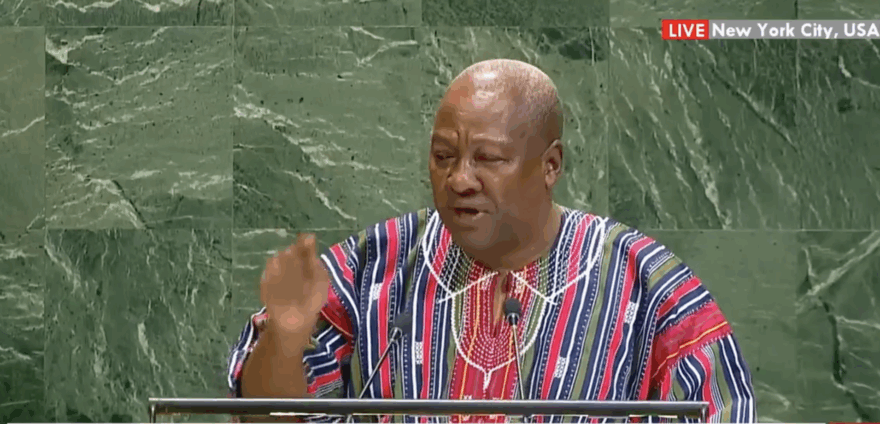
President John Dramani Mahama, speaking at the UN General Assembly, contextualised the negotiations:
“We want to build a Ghana which looks to the use of its own resources and their proper management as the way to engineer social and economic growth in our country. We are not disclaiming aid, but we do want to discard a mindset of dependency and living on handouts; we want to build a Ghana beyond aid.”
Ghana stands out in Africa
Although the restrictions applied to four African countries, Ghana is the only one to secure a confirmed reversal. Analysts attribute this to Accra’s willingness to accept certain West African deportees as a third-country repatriation hub—a politically costly decision other nations, including Nigeria, rejected.
Nigeria’s Foreign Minister Yusuf Maitama Tuggar had earlier dismissed a similar U.S. request, saying Nigeria would not be turned into “a dumping ground.” Ghana’s choice highlights the political gamble made in exchange for restoring visa privileges.
Opposition backlash and constitutional debate
The diplomatic win for the ruling National Democratic Congress (NDC) has been sharply contested by the opposition New Patriotic Party (NPP). Rev. John Ntim Fordjour, Ranking Member on Parliament’s Defence and Interior Committee, accused Minister Ablakwa of breaching the Constitution by committing Ghana to accept deportees without parliamentary approval.
He criticised the government’s approach as “transactional,” accusing it of using Ghana as a “dumping ground” and rushing to claim a political victory at the UN General Assembly.
Policy experts also weighed in. Franklin Cudjoe, head of a policy think tank, argued that Ghana should have negotiated broader concessions, such as tariff reductions on exports, rather than settling for what he termed “visa pittance.”
Economic and social relief for Ghanaians
For many citizens, the reversal brings immediate relief. The three-month visa validity had created significant financial and logistical burdens for students, business people, and families.
- Students: “As a student, having to renew your visa every year is terrifying,” said Kwame Nketia, a university applicant. “This four-year validity removes a huge source of stress and lets us focus on our education.”
- Businesses: Travel expert Dr. Esi Mensah noted that the restrictions disrupted business planning and trade missions, creating “an unpredictable, stressful travel environment.”
Restoring multi-year visas reduces costs, facilitates trade, and supports Ghana’s large diaspora community, while encouraging U.S. businesses to expand ties with Ghana.
Broader U.S.-Ghana relations
The resolution prevents long-term damage to a historically strong relationship. Ghana remains a key U.S. partner in West Africa, valued for its stability and democratic governance. Security collaborations, such as the State Partnership Programme with the North Dakota National Guard, underscore Ghana’s strategic importance.
Political analyst Professor Kwesi Anokye observed: “Restricting movement for professionals and students impacts the very people-to-people ties Washington aims to strengthen. The swift reversal, potentially tied to Ghana’s cooperation on migration, shows the transactional but durable nature of the relationship.”
Toward a pragmatic partnership
The visa reversal is more than an administrative correction; it symbolises the triumph of persistence in diplomacy and Ghana’s ability to defend its interests through negotiation. The true test lies in how Ghana leverages this restored trust to secure long-term gains beyond mobility—particularly in trade and investment.
The opposition frames it as a costly compromise, while the government hails it as a diplomatic breakthrough. Either way, the episode signals a new era of pragmatic partnership, where Ghana balances sovereignty, economic needs, and global obligations in navigating its relationship with the United States.
Latest Stories
-
Assemblies of God requires pastors to resign before entering partisan politics – Rev. Wengam
6 minutes -
Ghana targets 20% annual reduction in maternal deaths – Health Minister
11 minutes -
Cyber attacks in Africa grow faster than global rate, report finds
13 minutes -
Ghana signs UAE deal to create 5,000 overseas jobs
20 minutes -
One Million Coders Programme targets 100,000 digital jobs in two years – Sam George
23 minutes -
John Jinapor, Italian Ambassador explore opportunities for energy sector investment
25 minutes -
NHIA seeks legal reforms to support Free Primary Healthcare
29 minutes -
Beatrice Annan defends Afi Agbenyo’s EC appointment, cites record of gender advocacy
32 minutes -
Ghana seeks investment deals in Bangkok amid global economic crises
36 minutes -
IMF raises Ghana’s 2026 growth forecast to 5.7%, sees inflation falling to 4.8%
37 minutes -
Ablakwa urges Africans not to view immigrants as threat to national progress
42 minutes -
Mahama Cares must fund treatment, not looting – Asogli chiefs
43 minutes -
Ghana’s economic salvation lies not in shifting geo-political allegiances – Dr Atuahene
46 minutes -
BoG proposes tougher rules on loan repayment assessment
51 minutes -
Government plans mandatory drug tests for public service jobs — Muntaka
56 minutes