

Audio By Carbonatix
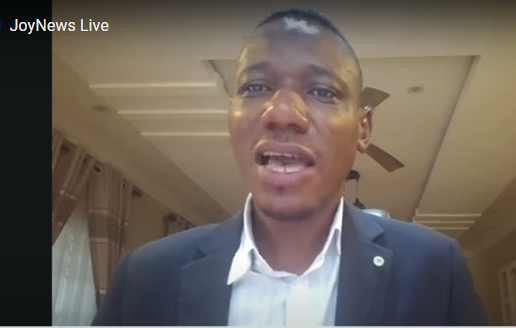
A senior lecturer at the University of Ghana Business School (UGBS), Dr Jabir Ibrahim Mohammed, has expressed strong support for the government’s labour export programme, describing it as a strategic measure to reduce unemployment and bolster Ghana’s economic growth.
The initiative, which will see the first deployment of 2,000 skilled Ghanaian workers abroad, forms part of a wider government plan to create sustainable employment opportunities both domestically and internationally, according to the Minister for Labour, Employment and Jobs, Rashid Pelpuo.
Speaking on Joy News’ AM Show, Dr Jabir emphasised the importance of a structured and well-regulated labour migration framework to safeguard migrants and maximise economic benefits.
“Migration has long been a pursuit for many Africans, driven by the hope of finding greener pastures. However, when unregulated, this journey often leads to deportation or, tragically, even loss of life,” he explained.
He highlighted that, when properly managed, labour migration offers significant advantages not only to the migrants themselves but also to their families and the wider economy.
“Remittances sent home by migrants provide crucial support for housing, education, healthcare, and business development, all of which contribute substantially to economic growth.”
Dr Jabir praised the recent collaboration between the Ministry of Employment and the Youth Employment Agency (YEA), which has formalised agreements to export skilled Ghanaian labour to countries facing labour shortages.
“This partnership introduces much-needed stability and ensures a reliable infrastructure is in place to manage labour export effectively.”
Expanding on the economic impact, he noted: “By increasing net factor income from abroad, the export of skilled labour directly contributes to the country’s GDP. Additionally, this inflow strengthens the current account balance and increases national savings.”
He highlighted the wider fiscal benefits of the initiative.
“Greater savings enable the government to better finance budget deficits, making well-managed labour export a critical element of Ghana’s long-term economic development. It is about building a sustainable system that benefits the entire nation, not merely sending workers overseas.”
Dr Jabir emphasised that the labour export initiative not only reduces unemployment but also drives economic growth by increasing remittances and strengthening government finances, making it crucial for Ghana’s future prosperity.
Latest Stories
-
English football’s independent regulator would quit over Man City interference
16 minutes -
Anthropic seeks rehearing of case over Pentagon’s security risk branding
27 minutes -
NDC Deputy National Organizer Aspirant Hamza Umar targets grassroots mobilisation
1 hour -
Partisan appointment cycle will persist without meaningful reforms – Osae-Kwapong
2 hours -
‘This cycle is not going to be broken any soon’ – Osae-Kwapong on partisan appointments
3 hours -
Partisan appointments won’t help restore trust in EC – Osae-Kwapong
3 hours -
Villarreal fight back to beat Napoli and end losing run
3 hours -
Tresoldi nets hat-trick as Club Brugge win Inter thriller
3 hours -
PSG’s Luis Enrique hopes Man City avoid sanctions
4 hours -
Lisandro Martinez issues scathing attack on Man Utd board – has he made things worse?
4 hours -
Saka responds to Arteta’s challenge with ‘huge impact’
4 hours -
Viking hold Bayern in thriller as Kane breaks Messi record
4 hours -
Gordon scores as Barcelona beats Galatasaray
4 hours -
Bumble bought for $1.3bn in ‘bet on the future of humanity’
4 hours -
Imagination Africa, Mentors Chess Academy to host second African Genius Chess Championship at Ghud Park
4 hours