

Audio By Carbonatix
ICT coordinators from districts across the Greater Accra Region have undergone a two-day Advanced Digital Skills Training programme aimed at strengthening digital literacy and enhancing the delivery of Information and Communication Technology (ICT) education in schools.
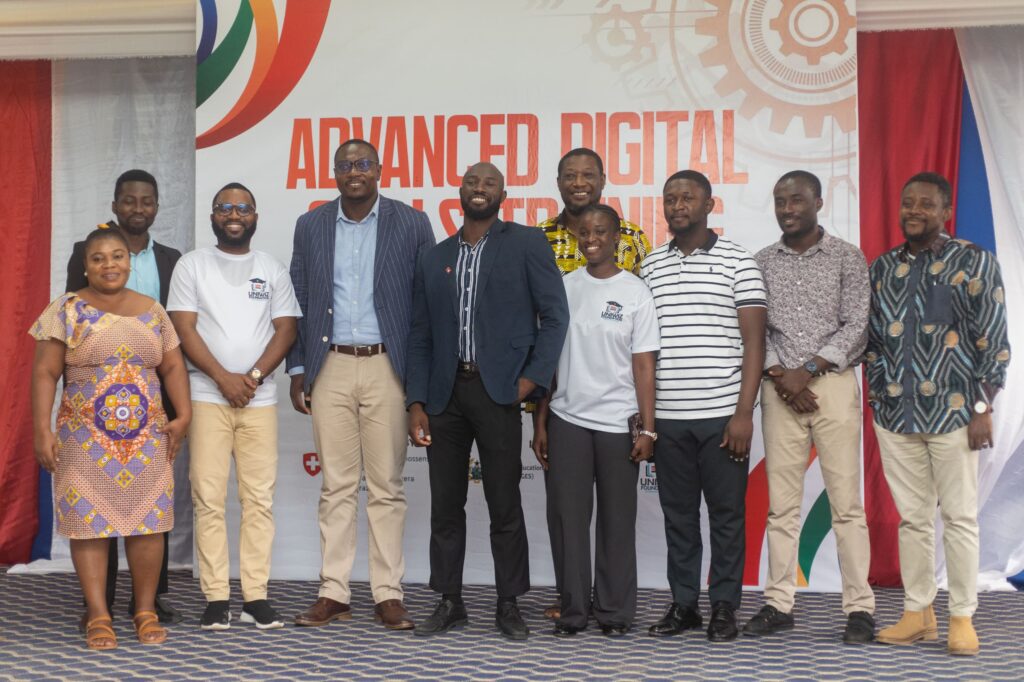
The training, which opened on Thursday, August 6, and ended on Friday August 7, at Methodist University, Dansoman, brought together ICT coordinators from across the region and selected ICT teachers from senior high schools to build their technical capacity through practical digital tools and strategies for teaching and learning.
Organised by the UNIWIZ Foundation in partnership with the Ghana Education Service (GES), ModePlus Innovation Hub and Intellite IT Solutions, with support from the Embassy of Switzerland in Ghana, the training was held on the theme, "Advancing Ghana's Education Technology Workforce."
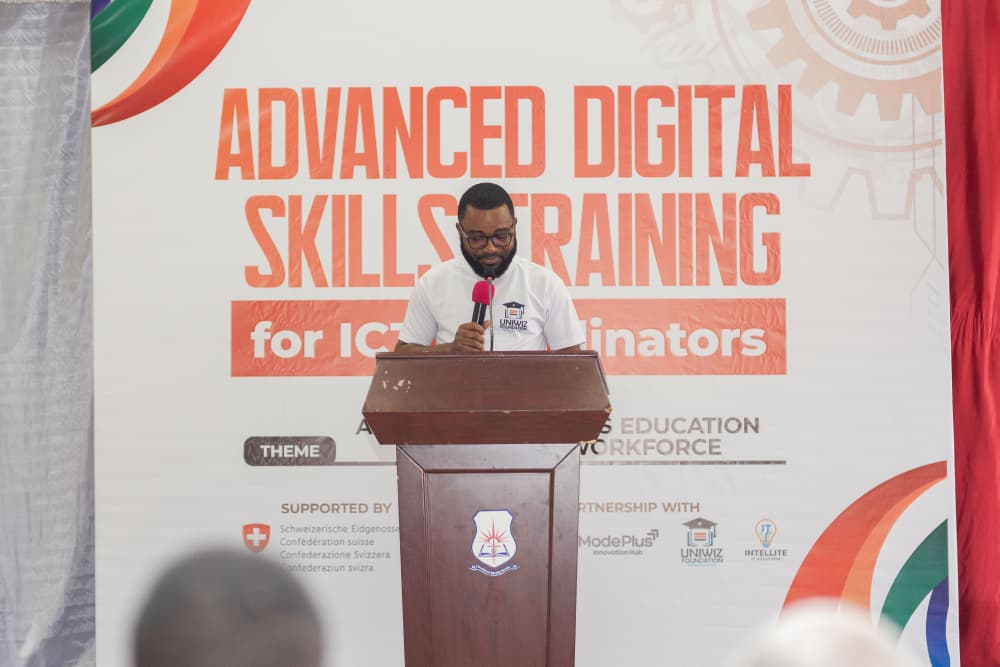
Speaking at the opening ceremony, Founder and Chief Executive Officer of the UNIWIZ Foundation, Wisdom Larry Quarme-Doe, said although digital infrastructure is essential, it is educators who ultimately drive digital transformation in schools.
"Digital infrastructure and computers alone do not transform our children. People do. The true drivers of digital literacy in our schools are our ICT coordinators. You are the digital champions guiding the next generation into the global economy."
He said the two-day programme was designed to equip participants with practical knowledge and advanced digital tools that would improve the integration of technology into teaching and learning.
"This two-day intensive training is designed to equip you with advanced tools, practical skills and practical strategies to elevate educational technology across Ghana."
Mr Quarme-Doe urged participants to maximise the opportunity by learning from one another and embracing emerging technologies.
"Over the next two days, immerse yourselves, exchange ideas, challenge your limits and embrace new technologies. The knowledge you take back to your respective institutions will cascade directly to thousands of young Ghanaians."
Representing the Greater Accra Regional Director of Education, Regional Planning Officer Ahmed Alhassan described the programme as timely, noting that ICT continues to play an increasingly significant role in Ghana's education system.
"ICT has now become a core subject at the basic level and it is now an elective at the WASSCE level. That is why I think this training is so important because those who are providing education for these kids need to have advanced skills in ICT so that they can also impact the children."
He said continuous capacity-building for ICT coordinators and teachers is necessary to ensure they remain equipped to teach evolving digital skills.
"We need to always organise workshops for them to upgrade their knowledge and skills in ICT so that, at the end of it, it is the Ghanaian child who is in school that will be the biggest beneficiary of the programme."
Mr Alhassan observed that ICT education has improved over the years with the establishment of computer laboratories in many schools, although more infrastructure is still needed.
"Previously, when ICT was introduced as an examinable subject at the basic level, because of lack of equipment and ICT materials, teaching it was very difficult. You cannot teach ICT in an abstract."
He therefore called on organisations and development partners to support efforts to expand ICT facilities across schools.
"The issue is still about establishing more ICT labs in the schools. Government cannot do it all. Stakeholders who are willing to support the Ghanaian education system can come to our offices, and we can direct them to where we need these ICT labs, especially where we have clusters of schools."
According to the Embassy of Switzerland in Ghana they supported the training because it addresses the need to equip children with the digital skills required to thrive in today's world.

"The embassy is pleased to support this programme because it addresses some of the most important questions in our education sector today, information technology and how we ensure that children are equipped and ready for the world that they are in today."
They reminded participants that the knowledge gained should ultimately benefit learners.
"All of us gathered here are not the final recipients of this programme. I want to urge you to at all times keep in mind the children who are indeed the ultimate beneficiaries of such a training."
Highlighting the pace of technological advancement globally, the representative from the Embassy said Ghanaian children must be supported to remain competitive.
"We see them as athletes on the field, whereas ours are just about preparing in the dressing room to get on that track. That is how unfortunate the current situation is."
The two-day training combined presentations with practical sessions designed to strengthen participants' digital competencies and enhance the teaching of ICT across schools in the Greater Accra Region.
Latest Stories
-
Let The Constitution direct Chieftaincy to deliver “All Development Is Local”
55 minutes -
John Jinapor outlines renewable energy, nuclear power priorities for 2027
1 hour -
Ghana explores centre of excellence for hearing, communication and cochlear implant care
2 hours -
Schizophrenia-related disorders lead mental health cases recorded in Ghana
3 hours -
Dutch authorities enlist Ghana in hunt for fugitive drug lord Bolle Jos
3 hours -
Ghana housing finance conference adopts communiqué to improve affordable housing access
7 hours -
Special Initiatives Minister urges Wa Technical Institute to enrol more girls as EU-backed solar training lab opens
8 hours -
In the matter of my first year at the Bar
8 hours -
ActionAid Ghana calls for an end to child marriage, greater investment in girls’ rights
8 hours -
Newsfile to tackle World Cup visa scandal, beach demolitions, education strikes, BRICS bid
9 hours -
UK-Ghana Trade & Investment Summit: Trade Resource Centre to help businesses maximise UK-Ghana trade opportunities
9 hours -
Embassy of Denmark celebrates World Maritime Day
9 hours -
Linking LEAP to productive inclusion could cut extreme poverty by 2030 – UNICEF
10 hours -
Trade Ministry backs use of creative arts to rehabilitate prison inmates
10 hours -
Negotiations with government to continue despite strike suspension – GNAT
10 hours