

Audio By Carbonatix
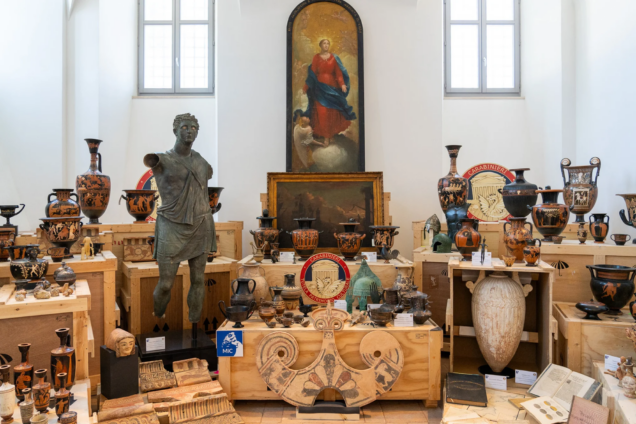
It looked more like a museum exhibition of Italian art than a crime scene, but in the Central Institute for Restoration’s offices, located inside a former women’s prison in central Rome, some 600 works of art were put on display Tuesday morning.
Ranging from life-sized bronze statues to tiny Roman coins, from oil paintings to mosaic flooring, the pieces span the 9th century BC to the 2nd century AD and amount to just one year’s stolen and trafficked art confiscated by Manhattan prosecutor Col. Matthew Bogdanos’ team and returned to Italy.
The trafficked works pillaged from the Italian regions of Lazio, Campania, Puglia, Calabria and Sicily, were sequestered in New York and New Jersey last year.
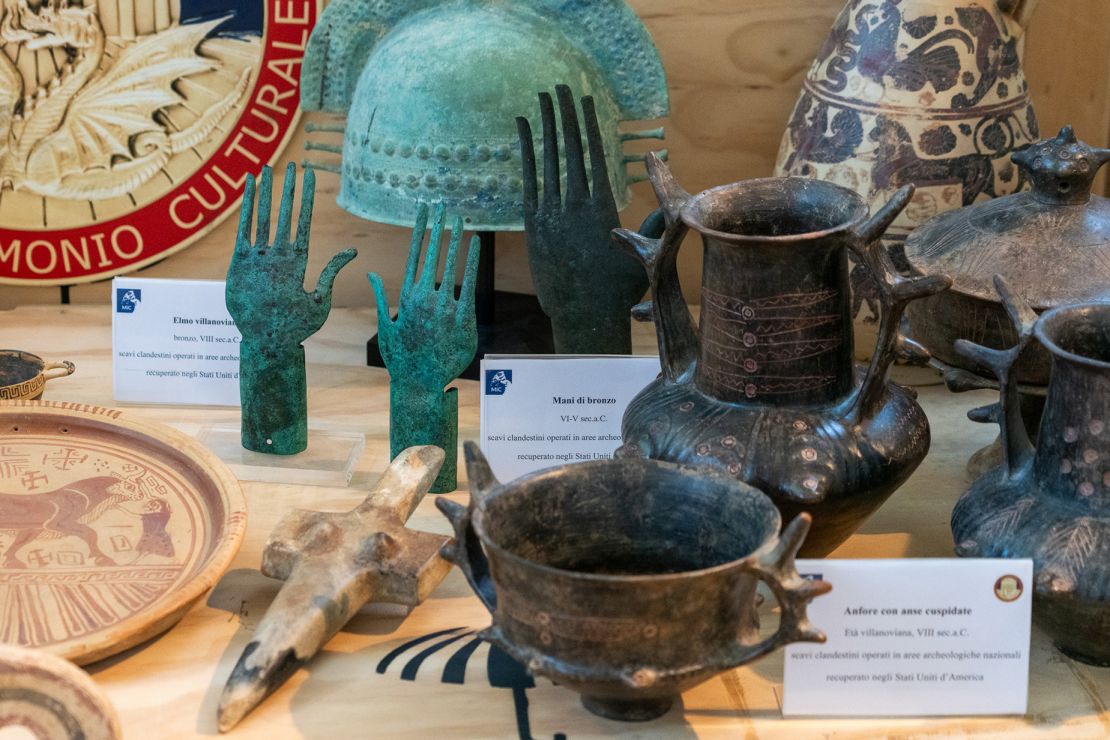
The returned works, together with 60 items repatriated last year, are worth more than $80 million (or roughly €73.6 million) — but are just a drop in the bucket when it comes to artwork still hidden away in private warehouses and on display in museums in the United States, Bogdanos told CNN on the sidelines of a presentation to the media on Tuesday.
Bogdanos said the $80 million of items does not include a further 100 items his team has just seized in the US.
What makes the seizure and return of stolen artefacts so difficult is that authorities often have no idea what they are looking for, according to Gen. D. Francesco Gargaro, commander of the Carabinieri for the Protection of Cultural Heritage.
“When artefacts are taken from clandestine graves, they have never been catalogued,” he said. That means that, in addition to the items themselves, their historical context was stolen, robbing archaeologists of valuable information. (Instead, investigators work backwards, assessing paperwork and provenance claims for artefacts provided by their owners, as well as undertaking technical tests to best confirm a piece’s true origins.)
Most of the recent items returned to Italy were dug out of clandestine excavations or stolen from churches, museums and private individuals, Gargaro said.
Among the items on display on Tuesday was a cuirass and two bronze heads dating back to the 4th-3rd century BC that were confiscated from a gallery owner in New York.
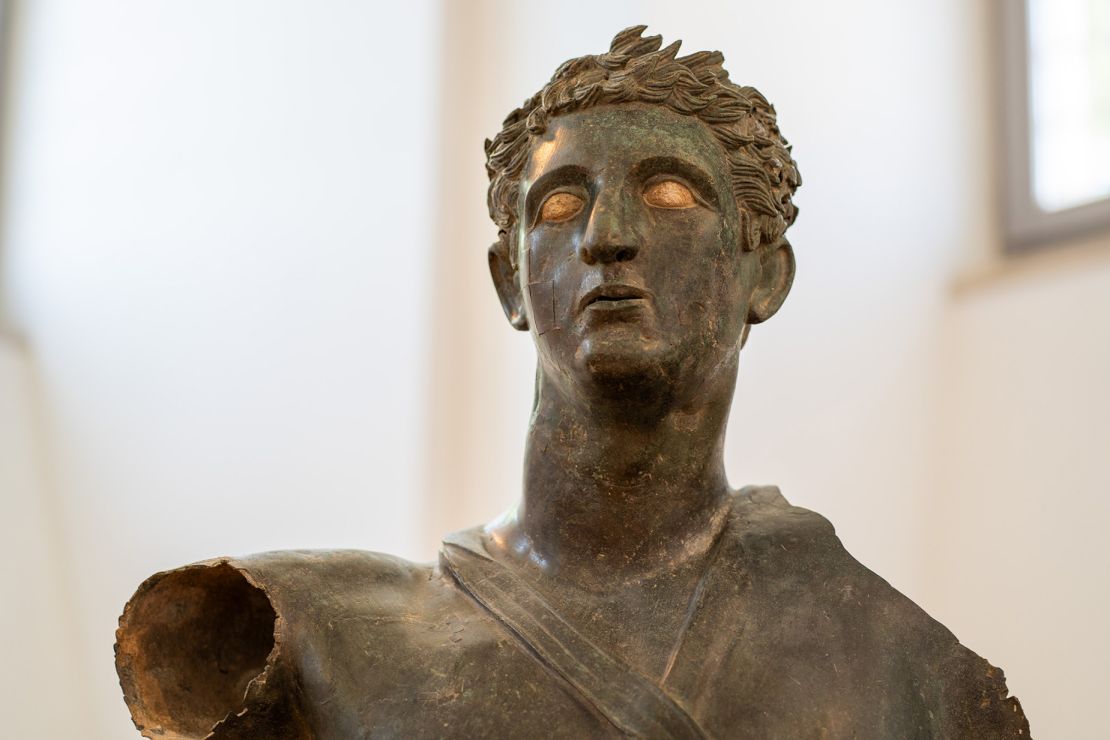
There was also an Umbrian bronze statue depicting a warrior stolen from an Italian museum in 1962 that was found in a well-known American museum.
And a mosaic floor depicting the myth of Orpheus enchanting wild animals with the sound of the lyre from the mid-3rd to mid-4th century AD was recovered after being stolen from a clandestine excavation in Sicily in the early 1990s. It was confiscated from the private collection of a well-known New York collector.
Italy’s Carabinieri Cultural Heritage Protection unit uses artificial intelligence to search for stolen cultural assets under a new program called “Stolen Works Of Art Detection System” (SWOADS), which searches for taken items by scanning the web and social media for images.
“The return to Italy of cultural assets of such importance, both for their numerical consistency and for their historical-artistic value, is another significant achievement, Italy’s culture ministry undersecretary Gianmarco Mazzi said Tuesday.
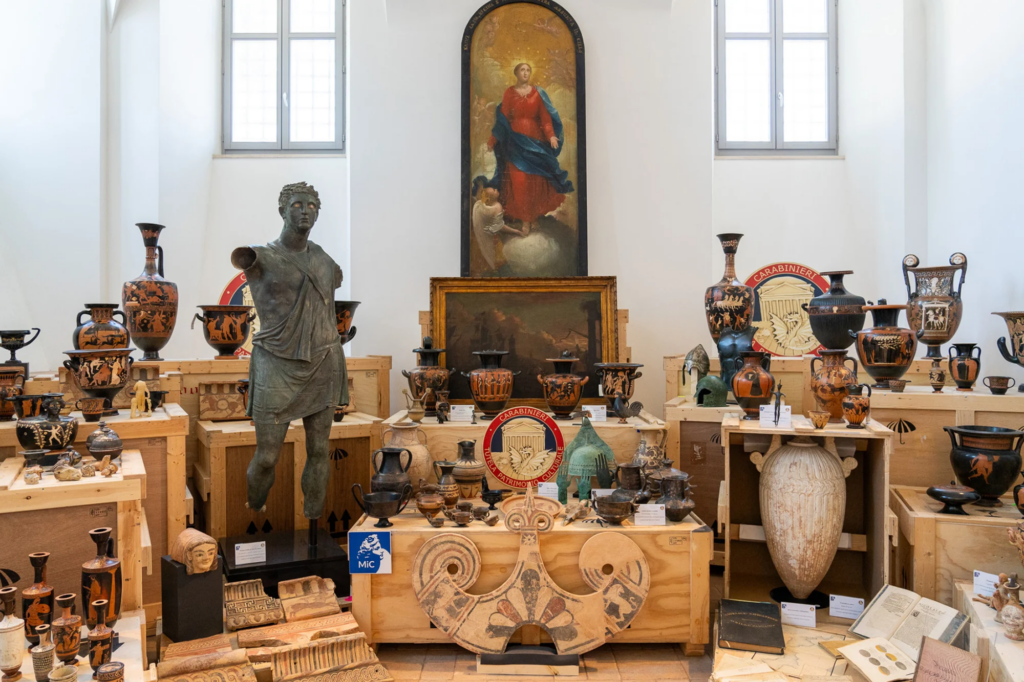
Emanuele Antonio Minerva/Ministero della Cultura
“In addition to being works of art of inestimable value, they represent the high expression of our history, our culture and our national identity.”
In 2023 alone, 105,474 pieces of art worth more than €264 million (or $287 million) were found and confiscated worldwide thanks to the artificial intelligence project, according to Gargaro.
Latest Stories
-
SSNIT says La Beach clearance was to protect hotel investments, beaches to remain public
32 minutes -
APSU congratulates St Augustine’s College after back-to-back National Investment Quiz wins
36 minutes -
Renewed flood intervention at Mallam Junction raises hopes among residents, businesses
1 hour -
St Augustine’s College retain National Investment Quiz title after nail-biting grand finale
1 hour -
Education infrastructure investment will drive Banda’s development – Ahmed Ibrahim
2 hours -
Teacher unions strike: Gov’t presents fresh proposals as talks end inconclusively
2 hours -
51,000 teachers’ promotion arrears to be validated for October payment – Education Minister
3 hours -
Kwabena Boamah appointed Board Chair for Impact Investing Ghana
3 hours -
Striking teacher unions to meet Fair Wages and Salaries Commission on October 6
3 hours -
EOCO working with AG to arraign Nana Baffour Awuah before weekend court
3 hours -
Duraplast reassures customers after fire, announces October 5 reopening
3 hours -
Call off strike, gov’t will not renege on promotion arrears pledge – Haruna Iddrisu to teacher unions
3 hours -
Committee set up to validate teachers eligible for 20% deprived-area allowance – Education Minister
3 hours -
Five-member committee to search for new Black Stars coach after Sports Ministry-GFA meeting
4 hours -
Pinktober: Breast cancer survival exceeds 90% when detected early – Breast Society of Ghana
4 hours