


Audio By Carbonatix
Volunteers are to be recruited from today for a world-first study that will mix and match Covid-19 vaccines.
The trial on more than 800 people over the age of 50 will compare the effect of giving a dose of the AstraZeneca/Oxford vaccine followed a few weeks later by the Pfizer/BioNTech jab or vice versa.
The interval between the doses will be either four or 12 weeks to test whether giving the immune response a longer time to mature can improve the result.
Initial results should be available by the summer.
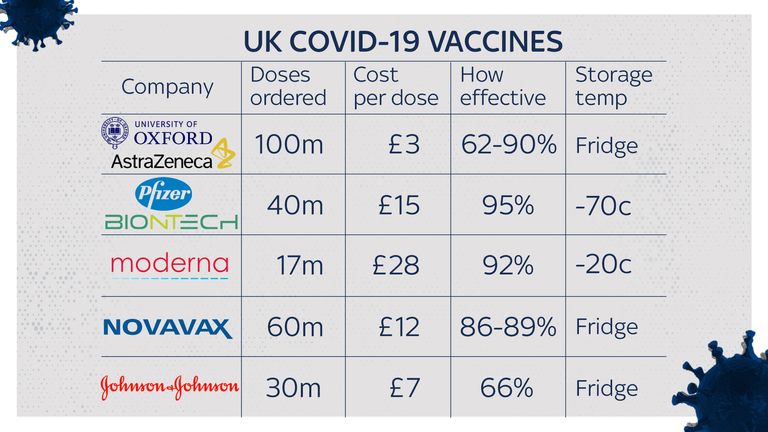
Professor Matthew Snape, a vaccinologist at Oxford University and part of the Oxford vaccine team, said the ability to use different jabs would guard against any supply problems.
He said: "If we do show that these vaccines can be used interchangeably in the same schedule this will greatly increase the flexibility of vaccine delivery, and could provide clues as to how to increase the breadth of protection against new virus strains."
The study, run by the National Immunisation Schedule Evaluation Consortium (NISEC), will be run at eight hospital centres around England. Volunteers will be recruited over the next two to three weeks through the Covid-19 Vaccine Research Registry.
They will have regular blood tests to assess their levels of antibodies and T-cells, which help to clear infections and act as an immune memory.
Further vaccines could also be added to the mix once they are approved by the medical regulator.
Minister for Covid-19 Vaccine Deployment Nadhim Zahawi said: "This is a hugely important clinical trial that will provide us with more vital evidence on the safety of these vaccines when used in different ways."
There are no current plans to alter the current vaccine schedule, which has a gap of up to 12 weeks between two doses of the same jab.
Dr Peter English, a consultant in communicable disease control at Public Health England, said: "Many vaccines work better if a different vaccine is used for boosting - an approach described as heterologous boosting.
"Examples include hepatitis B, where some people respond poorly to vaccination but better if a heterologous booster is given."
Latest Stories
-
MTN Ghana trains civil society organisations on artificial intelligence
15 minutes -
GoldBod FX framework aims to make dollar supply predictable – Acheampong
50 minutes -
How does a Ghanaian team make it to the BAL?
56 minutes -
Ghana’s investment climate presents opportunities for industrial growth and job creation.
57 minutes -
‘I paid thousands to a company for jobs that never came’
1 hour -
SSNIT intensifies informal sector enrolment drive with Techiman float
2 hours -
Ghana seeks long-term mining investments that benefit local communities – Armah-Kofi Buah
2 hours -
GHATOF demands compensation for 85 businesses affected by La Pleasure Beach demolition
2 hours -
Bono Regional Minister calls for investor education to drive economic growth
2 hours -
Ghana’s Ambassador to China, Kojo Bonsu, presents credentials to Nepalese President
2 hours -
Fairtrade Africa’s Cocoa Hubs Project strengthens rural service centres in cocoa-growing communities
2 hours -
MPs are not development officers – Edem Kpotosu
2 hours -
SEC cautions investors against fraudulent investment schemes
2 hours -
Land Ministry urges rCOMSDEP operators to reserve earnings for land reclamation
2 hours -
Commercial drivers give authorities one week to clear traders from lorry terminals, bus stops
2 hours