

Audio By Carbonatix
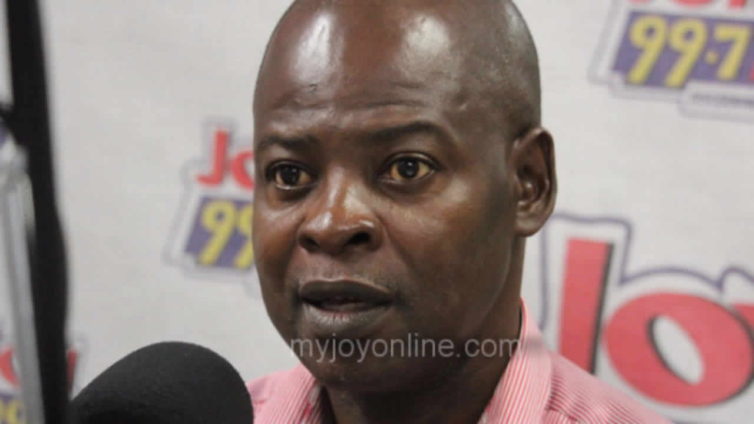
Policy analyst, Dr. Steve Manteaw, says successive governments have failed to offer the same charity they offer foreign companies to their Ghanaian counterparts.
According to him, this is significantly responsible for the tough situations utility companies find themselves working under in the country.
“I tend to look at our utility companies sympathetically, the reason being that they indeed work under severe stress. And the conditions under which they work are not the type that keenly foreign multinational company will want to work under,” he said.
Speaking on JoyNews’ PM Express, the Policy Analyst noted that several foreign owned utility companies that had at one point in time worked in the country had been offered more favourable conditions of service than Ghanaian entities.
“I recall we brought in [a foreign company] to improve water distribution in this country, and by the time we abrogated, we actually refused to renew that contract, we had a phenomenon known as the Kufuor gallons. Remember those yellow gallons?
“When the facility reverted to the Ghanaian manager, the gallons disappeared. Of course the package that was given to the [foreign company] was far more and better conditions than we gave to the Ghanaian manager,” he said.
He also recounted the privatization of the Electricity Company of Ghana; “We were prepared to do for PDS what we were not prepared to do for our own Ghanaian managers. For instance, when PDS took over they asked that all the debt that ECG had at the time were ring-fenced, so it was not part of their account because those were legacy debts and they couldn’t hold them responsible but we were not prepared to ring-fence those for the old ECG.
“Again, a year before PDS took over we had denied ECG upward tariff adjustments, but when PDS took over we gladly approved upward adjustment for PDS.”
He noted that the failure of government to extend the same charities to the utility companies have contributed to their tough conditions of service and their underdevelopment.
He, however, noted that this was not to say that the tariffs proposed by the utility companies should be approved straight away without it being interrogated.
According to Dr. Manteaw, “There is a strong basis for an upward adjustment if you look at inflation rate, if you look at the cedi depreciation and all that. But what the companies haven’t told us is what component of this cost they’re asking for is made up of transmission losses and commercial losses. These I categorise as inefficiency cost. And PURC has a mandate to ensure that these inefficiency costs are not passed down to consumers.”
Latest Stories
-
Tarkwa court jails labourer for three years over GH¢123,000 theft
27 minutes -
GAEC must retain nuclear scientists for Ghana’s nuclear ambitions – Minister
59 minutes -
Man reportedly mistaken for game and shot by hunter dead in forest
1 hour -
19-year-old mason jailed 15 years for defiling seven-year-old pupil
1 hour -
Ghana’s banking sector assets rise 20.47% to GH¢500.2bn – BoG Governor
1 hour -
22 injured as Sprinter bus overturns at Sege after tyre burst
1 hour -
UN housing expert urges Ghana to strengthen Rent Control Department amid housing affordability concerns
1 hour -
Delta-BCI partnership reaches 166,000 people with breast cancer education
1 hour -
Power restoration fault suspected in Kumasi Central Market fire
7 hours -
The 7-foot giant of Ngleshie Amanfro: Seven-foot Ghanaian Ephraim Saawa dreams of joining the national basketball team
7 hours -
Government promises support for Kumasi Central Market fire victims
7 hours -
Vibes The Movie: Big Ghun’s Ghanaian film earns five nominations at 2026 REFFA
8 hours -
‘I’m a fulfilled man’—Justice Korbieh on missing out on Supreme Court despite two nominations
8 hours -
MamaCare CEO warns unresolved conflicts among health workers could undermine maternal and neonatal care
8 hours -
Health professionals urged to translate medical knowledge into practice to save mothers
8 hours