

Audio By Carbonatix
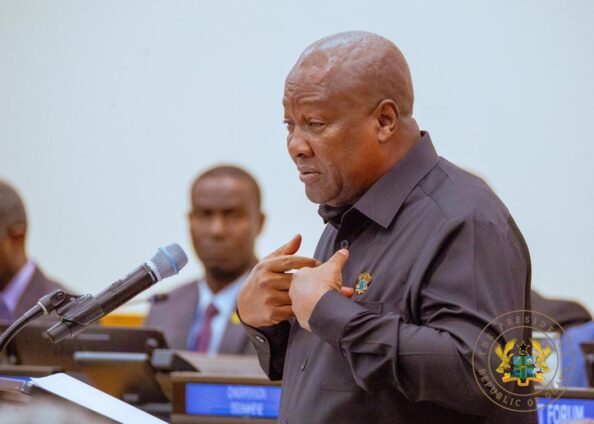
President John Dramani Mahama is calling for a fundamental shift in how the history of slavery is understood, urging the global community to recognise it as a crime against humanity while restoring the dignity of those affected.
Delivering remarks at a United Nations event on slavery at the United Nations Headquarters on March 24, Mahama emphasised the power of language in shaping perspectives and influencing action.
“With the power that words hold to shape consciousness and perspectives, and to propel action or inaction, I offer this truth as a starting point, there is no such thing as a slave. There were human beings who were trafficked and enslaved by others who believed they could own them as property,” he stated.
He explained that this distinction is not merely semantic, but essential in acknowledging the humanity of those who suffered under the transatlantic slave trade.
“Some may think this is the same thing, but it is not, especially if we are to recognise the humanity and dignity of every individual,” he added.
The President further noted that the system of slavery was deliberately constructed to deny Africans their humanity, rooted in a false racial hierarchy.
“The entire transatlantic slave trade was designed to strip African people of their humanity, premised on a racial hierarchy that falsely elevated one race while dehumanising another without any basis in fact or science,” he stressed.
He pointed out that the atrocities committed during slavery and the injustices that followed were made possible because enslaved Africans were treated as objects rather than human beings.
“These injustices occurred because human beings were reduced to objects. That is why, in discussing slavery and its legacy, we must begin by reclaiming racial equality and restoring the dignity of Africans and their descendants,” he said.
Touching on the importance of an international resolution to formally recognise slavery as a crime against humanity, President described it as a necessary step toward global acknowledgment and justice.
“Such a resolution allows the world to collectively bear witness to the suffering of more than 12.5 million men, women, and children whose homes, identities, families, dreams, and futures were taken from them over 400 years,” he noted.
He added that confronting this history honestly is essential to achieving justice, healing, and meaningful progress in addressing the enduring legacy of slavery.
Latest Stories
-
Bahass Foundation launches vocational skills training to support mental health recovery in Wa
28 minutes -
NPP orders parliamentary aspirants and their supporters to suspend campaign activities
1 hour -
Techiman unites against child marriage: Joy Impact Makers Awardee leads charge on International Day of the Girl Child
1 hour -
Ghana Psychological Association calls for greater involvement of people with lived experience in mental health care
2 hours -
Ablakwa says Ghana could evacuate more citizens from South Africa if the situation worsens
3 hours -
Violence against girls must be tackled through individual responsibility – Gender advocate
3 hours -
Ghana’s BRICS bid must be guided by national interest – International Affairs Analyst
3 hours -
Journalists look back on a decade of breast cancer reporting in Ghana
4 hours -
President Mahama ends Resetting Ghana tour of Ahafo Region
6 hours -
African negotiators seek delivery of climate commitments at COP31
6 hours -
BoG develops AI rules for financial sector
6 hours -
‘Big Push’: Government assures contractors of prompt payments
6 hours -
Court fines miner for breaking into gold buying shop
6 hours -
Tarkwa court jails labourer for three years over GH¢123,000 theft
7 hours -
GAEC must retain nuclear scientists for Ghana’s nuclear ambitions – Minister
7 hours