

Audio By Carbonatix
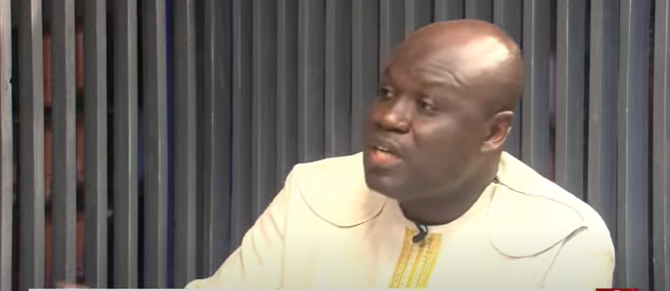
The Chief Executive Officer of the Ghana National Chamber of Commerce and Industry, Mark Badu Aboagye, has called for the strengthening of the productive sector as a means to stabilizing the cedi.
According to him, in order to boost exports and thus stabilize the cedi, the productive sector will have to be supported to become competitive and produce competitive products for the international market.
“I think it’s true that we need to strengthen the productive sector. We cannot continue to import the way we’re doing, when we do that we’re killing the economy. We have to be competitive. We should have competitive industries, competitive products and be able to compete on the international market,” he said on JoyNews’ PM Express Business Edition.
He added that imports must be reduced drastically in order to shore up the country’s dollar reserves as the current import regime is draining the economy of much needed dollars.
He explained that while Ghana does experience a trade surplus due to the country exporting more than it imports, dollars accrued from the export industry are not enough to match the dollars lost from importing.
“Now in terms of export I think we’ve been doing well. If you look at the numbers. So if you look at the trade balance, it’s been positive, surplus from 2017 up to this level. But the challenge is that do we receive all the dollars into our economy? That is one question that we have to ask.
We don’t because of some of the agreements that we have signed with some companies, most especially the mining companies. So you see a huge revenue coming from export, but the actual dollar that comes in is less.
“But the import is real. We spend the dollar to import. So all the things that we’re importing we have to pay for it. So we pay more in terms of the goods that we’re importing.”
His comments follow former President John Dramani Mahama's speech on Thursday evening at the UPSA auditorium on Ghana's current economic situation under the theme: Building the Ghana we want.
The former President had suggested as part of solutions to stabilise the cedi that government engaged in an aggressive domestication policy.
"It is estimated that forex outlay for food products for which we have a comparative advantage to produce locally amounts to some $3 billion every year. It is said that out of adversity comes opportunity. Restriction of importation of some of these products, side-by-side with increased local production, is a realistic proposition that we need to begin to consider.
"There must be prioritization and strategic investment in private commercial large-scale production of these commodities. We cannot sustain progress in agricultural production based on only support for small scale producers.
"Government must support large scale commercial agricultural production to achieve food self-sufficiency. We must look at the entire value from production to processing and marketing," he said.
Latest Stories
-
Landfilling waste management creates no value, it’s an economic waste
10 minutes -
Photos: Speaker Bagbin Commissions MPs constituency office under parliamentary decentralisation programme
25 minutes -
Black Stars technical advisor Winfried Schäfer sacked as GFA shakes up backroom staff
30 minutes -
Wenchi water project almost complete, critical to gov’t agenda – GWL MD
46 minutes -
Anti-LGBTQ+ bill not part of government’s legislative agenda – Inusah Fuseini
48 minutes -
Anti-LGBTQ Bill: Forget the rumour mongers, I’m a man of action, and will pass the bill – Speaker
2 hours -
Women and children among those killed in Sudanese army shelling of wedding celebration
2 hours -
President Mahama is not sincere with Ghanaians on LGBTQ bill matter – Hassan Tampuli
2 hours -
Gov’t to establish Prison Industrial Hub to equip inmates with income-generating skills – Prison Service boss
2 hours -
Alhassan Tampuli donates cement, roofing sheets to support storm victims in Gushegu
2 hours -
Alhassan Tampuli appeals for urgent support for storm victims in Gushegu
2 hours -
The hypocrisy must stop; pass Anti-LGBTQ+ Bill now – Alhassan Tampuli to Mahama
2 hours -
Imprisonment should be rehabilitative, not punitive – Ghana Prisons boss at UNGA
3 hours -
Ga Adangbe traditional priests petition Mahama over McDan aviation licence revocation
3 hours -
Anti-LGBTQ Bill: NDC’s arrogance is worrying – Hassan Tampuli
3 hours