

Audio By Carbonatix
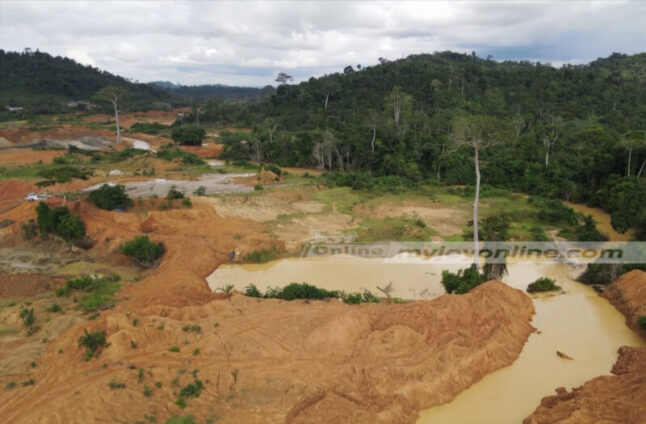
The National President of the University Teachers Association of Ghana (UTAG), Prof Mamudu Akudugu, has voiced his dissatisfaction with the government’s decision to deploy river guards and the military to protect river bodies as a strategy to combat illegal mining (galamsey).
According to him, this measure is insufficient to address the escalating problem, given the extensive environmental destruction that is ongoing.
Speaking on Top Story on Tuesday, October 8, Prof Akudugu questioned the effectiveness of the government’s approach and asked what the actual purpose of deploying the military and river guards is.
“The question that I would want to ask is all this is in attempt to do what? To stop the destruction of the environment, is that the case?
- Read also: Deployment of river guards; navy to patrol river bodies ‘childs play’ – Dr Ishmael Norman
“Deploying the security and all that and these security people - the soldiers, the police and water guards, when they go, they are supposed to look for who is doing illegal mining and who doing illegal small-scale mining and they will drive them away, is that what they are supposed to go and do,” he asked.
He suggested that instead of deploying forces immediately, the government should first impose a temporary ban on all forms of mining to allow river guards and the military to effectively protect the environment.
“The point we are making is that put a moratorium on it Just say in the meantime, no mining and everybody is out of that place and the security people can go and ensure that nobody is doing anything anywhere to destroy the water bodies then we’re back on our drawing table to come out with strategies to encourage and promote responsible and sustainable small-scale mining. That’s all that we’re asking for,” he stressed.
Prof Akudugu also pointed out that UTAG had previously called for a halt to mining in forest reserves and water bodies, urging the government to take decisive action.
He added that once this ban is in place, the military and river guards can be deployed to enforce it and ensure that no illegal activities are taking place.
“But if you say it should keep going on, then the security people their first thing to do is to find out whether this person is doing legal or illegal.
“How are they even going to verify that these papers the person is showing are genuine? Assuming they are able to verify that, they have to dedicate time to do the verification and the next step is to stop those…. It’s just going to be ineffective and be of no significant results,” he added.
Latest Stories
-
The 7-foot giant of Ngleshie Amanfro: Seven-foot Ghanaian Ephraim Saawa dreams of joining the national basketball team
30 minutes -
Government promises support for Kumasi Central Market fire victims
37 minutes -
Vibes The Movie: Big Ghun’s Ghanaian film earns five nominations at 2026 REFFA
1 hour -
MamaCare CEO warns unresolved conflicts among health workers could undermine maternal and neonatal care
2 hours -
Health professionals urged to translate medical knowledge into practice to save mothers
2 hours -
Conflicts among care providers linked to maternal, neonatal deaths – Expert
3 hours -
GIS marks 10th TIME conference, champions improved teaching practices
3 hours -
BRICS Or Balance? What Ghana’s bid really means
4 hours -
GPRTU wants full TRAFFITECH-GH implementation to start in 2027
4 hours -
Mahama announces plans to import electric wheelchairs for PWDs
4 hours -
KGL U17 Colts 2026: Western beat Prempeh Elite Academy to set up final final with Greater Accra Region
4 hours -
Late Solanke strike salvages 10-man Spurs draw at Man United
5 hours -
Gender Ministry to monitor welfare of Nana Akua Addo’s children amid domestic violence case
5 hours -
Benedict Okyere Yeboah: Ghana’s football problem goes beyond sacking a coach
5 hours -
GPL 2026/27: Darkwah Wiafe’s winner sees All Blacks beat Kotoko
5 hours