

Audio By Carbonatix
Falling prices, fluctuating availability and a lack of clarity. With one week to go until the 2026 World Cup kicks off, many questions remain unanswered about match tickets.
Fifa promised the event would be sold out, but there are thousands of tickets available for sale across several platforms.
BBC Sport has found tickets for matches involving the smaller nations are now available well below face value - across Fifa's own resale site and secondary marketplaces.
World football's governing body has itself been accused of dumping inventory it can no longer sell on SeatGeek.
So just how 'sold out' are the matches? Will we see a repeat of last summer's Club World Cup when tickets were sold off at knock-down prices to fill stadiums?
Could the biggest World Cup ever see swathes of empty seats?
World Cup tickets - what do we know?
When it comes to FIFA and World Cup tickets, it might be easier to frame this as what we don't know.
There has been so much secrecy that it seems impossible to be certain what a fair and reasonable price for a World Cup ticket truly is.
Only last week, the attorneys general of New York and New Jersey officially launched an investigation into FIFA's ticket practices.
Football's governing body was subpoenaed to answer allegations of "artificially inflating prices" and "misleading fans".
The ticket-buying process has been like a game of pin the tail on the donkey, one where you do not know how much it costs to play.
According to the subpoena, some fans who were successful and paid for tickets in one price category were ultimately issued tickets of a lower value and further from the pitch.
Even those who won in the ballot did so with a blindfold on - at no stage was a pricing structure published. The astronomical price of tickets only became clear when fans were asked to pay.
Fifa deployed variable pricing rather than dynamic pricing, which adjusts prices at each sales point based on previous demand.
FIFA's final, open sales window began in April. At the time, it said more tickets could be released right up to kickoff.
But for which matches? When? And at what prices?
Stadium maps were altered, and more expensive categories were added, of which supporters were unaware.
These were usually in the first few rows and priced about 50% higher than the seats behind them.
They were not made available to fans in the ballot period.
The attorneys general claimed it was all part of a deliberate attempt to withhold information and leave fans guessing about how they could buy tickets.
How sold out is the World Cup?
"Every match is already sold out," FIFA president Gianni Infantino said in February. "We keep some tickets back for some last-minute sales, of course, but every match is sold out."
Like most things about this World Cup, the reality appears to be different.
FIFA should not have a problem selling out the games featuring the marquee teams - Argentina, Brazil, England, Germany and Spain, to name a few.
We should be able to say the same about the host nations, but FIFA has priced these games so highly that only two of the nine matches featuring Canada, Mexico or the United States are officially sold out.
Even the opening match between Mexico and South Africa still has over 500 seats left on Fifa's face value site - though they will cost you $2,273 (£1,725) each.
FIFA's issue is the games featuring countries which do not have wider appeal - matches like Bosnia-Herzegovina v Qatar, Cape Verde v Saudi Arabia and Congo DR v Uzbekistan.
So how many games are truly sold out?
TicketData, an independent site which tracks major sporting events in the United States, has painted an intriguing picture.
It suggests that on Saturday, there were close to 74,000 tickets available across 86 of the 104 matches.
This will be only part of the story. There are thousands more on FIFA's own resale site, with genuine availability, but at an even higher price - many likely bought to make a profit with no intention of attending the game.
Then something strange seemed to happen.
Within a few hours, TicketData reported that the number of tickets on FIFA's face-value site had dropped by more than half, to about 32,000. By Tuesday, this had fallen to 22,000 with 66 games on sale.
Had there really been a late flurry of demand for these games?
Is FIFA trying to offload tickets on secondary ticket sites?
FIFA has been eager to push fans to its own resale site. And you can imagine why, considering they take 15% from both the buyer and the seller.
On its FAQ page, world football's governing body says it "strongly encourages you to purchase all types of tickets" through its official platforms.
FIFA also warns that tickets bought via other routes "may be invalid and may be subject to cancellation without notice".
But on Tuesday, shortly after the inventory on FIFA's own site fell, the availability on SeatGeek appeared to increase markedly.
Not just random, single seats, but batches of seats in rows of specific blocks.
This was highlighted on social media, and within 24 hours, the availability on SeatGeek seemed to decrease again.
TicketData says that on Wednesday, the number of tickets on FIFA's own site jumped back up to 37,000.
It is impossible to verify who listed the tickets and why. Or why the numbers changed on the FIFA site.
In addition to SeatGeek, there are thousands of listings on sites such as StubHub and VividSeats.
Anyone can make listings on these external sites, and the tickets themselves might not even exist.
SeatGeek has denied any direct role, but this does not mean Fifa, or one of its partners, could not be operating and listing independently.
A statement read: "SeatGeek is a trusted marketplace that gives fans secure access to tickets across tens of thousands of live events, including the World Cup. We do not have a partnership or distribution agreement with FIFA."
FIFA has been approached for comment, but as has been the case throughout the ticket sales process, no response has been received.
There are other indicators on SeatGeek, too.
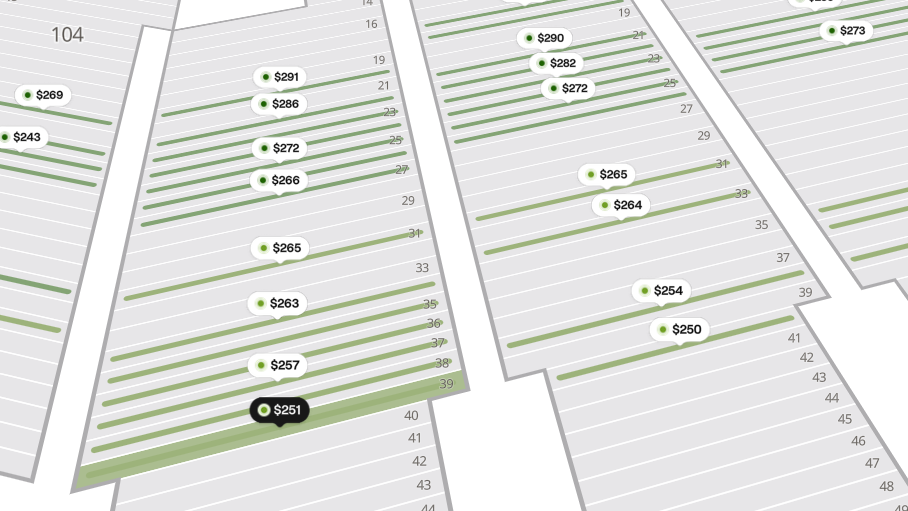
Rather than the cost of seats being random, they seem to be set at regular, incremental prices row by row - getting more expensive the closer you get to the front.
Looking at two blocks behind the goal for Uzbekistan v Congo DR, there are 60 listings of multiple tickets priced between $250 (£190) and $296 (£225) across blocks 102 and 103.
When FIFA released its more expensive 'front' tickets in April, it sent a clear message that it felt the closer you were to the pitch, the more valuable the ticket was.
The price increases by a few dollars, row by row. All priced well below the face value of $380 (£289).
So either a lot of people are losing a lot of money, or it is a plan to shift inventory.
So why would FIFA allegedly be trying to sell on these sites?
FIFA is just like any other promoter. The last thing it wants is loads of unoccupied seats - not just for the optics but also because any empty seat means a value of $0.
The figures show that fans are not prepared to pay high ticket prices for less desirable games.
BBC Sport picked out five matches that would be expected to see lower demand and found that tickets for the more desirable lower-bowl seats are now well below face value.
Jordan v Algeria in Santa Clara showed the greatest fall.
Two tickets comparable in block 121 with a face value of $620 (£471) could be bought for £171 on FIFA's own resale site - 64% cheaper.
On SeatGeek, the tickets were listed at £192, and on StubHub at £ 172.
For the Czech Republic v South Africa match, tickets in block 122 with a face value of £342 were priced below £190 on SeatGeek and StubHub.
This suggests FIFA cannot get the high face value on its own site, leading to speculation that it is trying to sell the tickets elsewhere without reducing the prices itself.
And, after tickets for Chelsea's Club World Cup quarter-final against Palmeiras dropped to just £8.17 ($11.15), the prices may still be some way from bottoming out.
Latest Stories
-
Tiptoe Lane’s tech takeover: The story behind Ghana’s booming informal phone market
49 minutes -
Abanga vows to use social media to counter NDC messaging ahead of 2028 elections
51 minutes -
Okai Mintah seeks Sabah Zita Benson’s support for NDC National Youth Organiser bid
1 hour -
Okai Mintah vows to strengthen NDC campaign machinery ahead of 2028
1 hour -
Mother of four and Jasikan teacher among new Telecel M’ahitti Promo winners
1 hour -
International Youth Shakers Conclave 2026 set to bring global young leaders to London
1 hour -
Gov’t is committed to addressing teachers’ conditions of service, deprived-area allowance – Education Minister
1 hour -
GoldBod’s structure encouraging galamsey – Afenyo-Markin
1 hour -
Tullow starts selling Jubilee, TEN crude to Ghanaian refineries
1 hour -
Local Government Service authorises rationalisation, redistribution of staff
1 hour -
PURC assures consumers of working to ensure quality services in Northern Region
1 hour -
Ghana develops US$4.28bn water financing framework
2 hours -
Christian Council calls for protection of mission schools’ religious identity
2 hours -
Mahama holds discussions with India’s External Affairs Minister
2 hours -
Even when you cough, they come after you — Abanga accuses Mahama govt of criminalising free speech
2 hours